
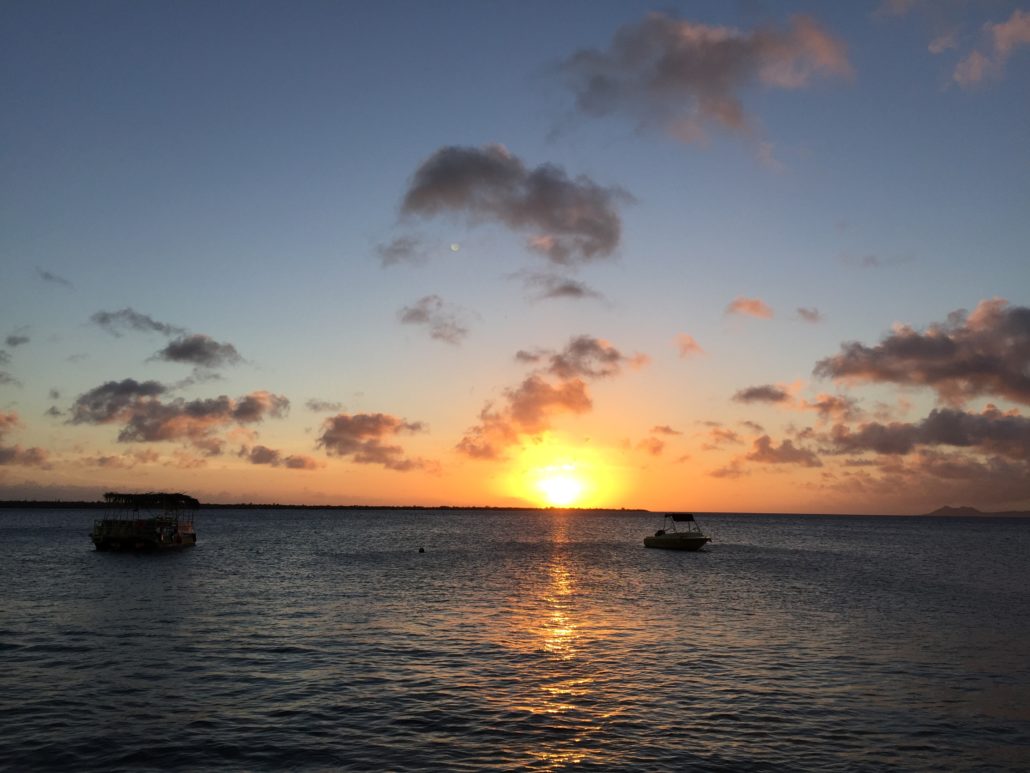
Bonaire is the least traveled of the ABC islands — Aruba, Bonaire, and Curaçao — and that is precisely what makes it extraordinary. While its neighbors have become established Caribbean resort destinations, Bonaire has remained something rarer: a genuinely untouched island with world-class diving and snorkeling, a warm and unhurried local culture, and a natural environment carefully protected for decades. It sits quietly in the southern Caribbean, just 80km north of Venezuela, small enough to drive end to end in an afternoon and rich enough to occupy a diver or snorkeler for weeks.
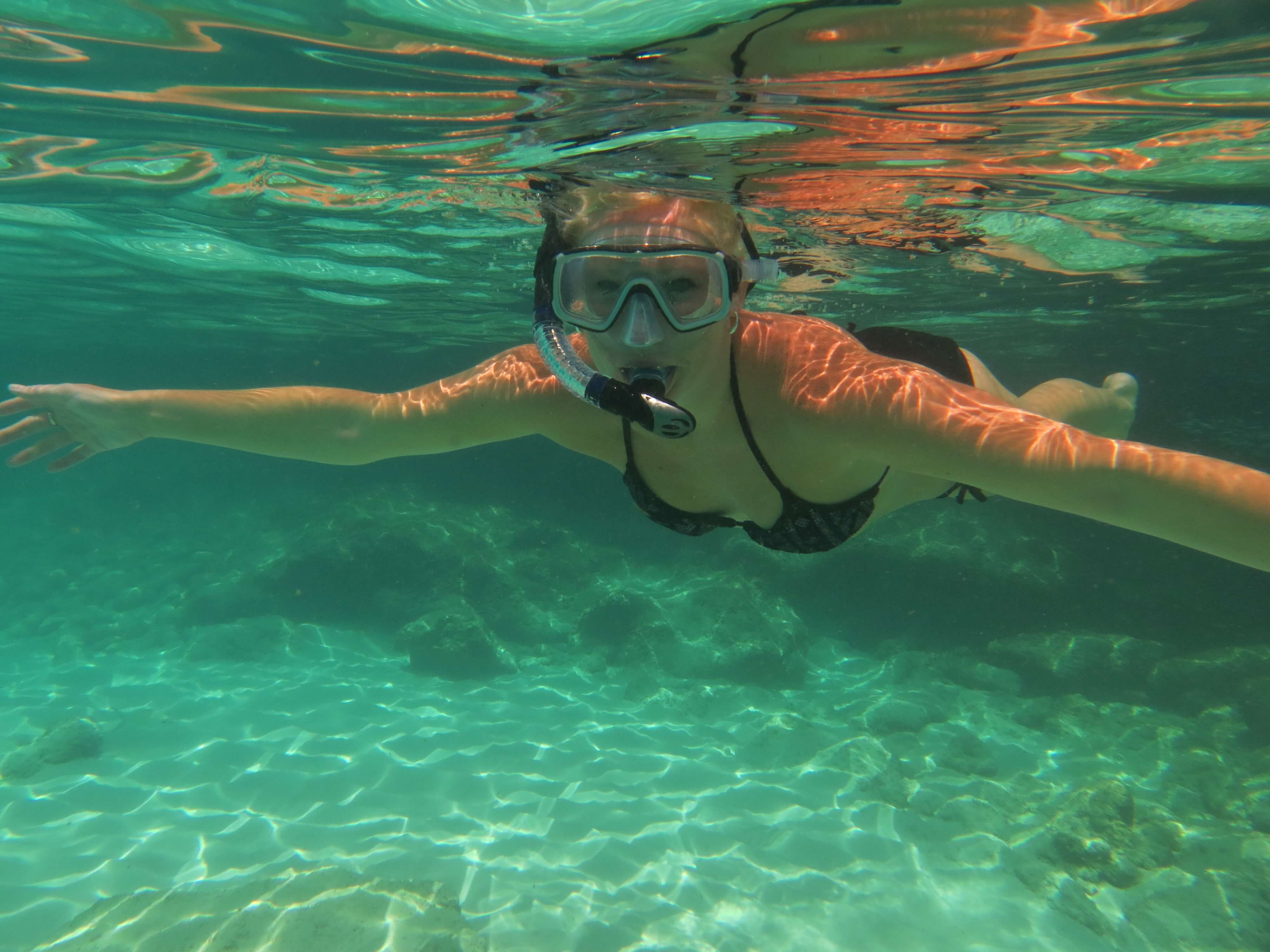
Bonaire holds a special place in our history. As a child, my grandparents were missionaries on the island, volunteering at the still-operational Trans World Radio studios — one of the most powerful shortwave radio broadcasting operations in the world. I was fortunate enough to spend several holidays in Bonaire and to make my first solo international trip here at thirteen years old, flying from the Northeast US to visit them. Since then, the island has changed remarkably little. The peace, the warmth of its people, and the extraordinary clarity of its water remain exactly as I remember them.
Bonaire became a special municipality of the Netherlands in 2010, giving it a stable political environment and a well-maintained infrastructure unusual for an island of its size. The population is approximately 20,000 — a mix of Dutch, Papiamentu-speaking locals, and a substantial expat diving community that has made the island their permanent home. English is widely spoken alongside the local Papiamentu language and Dutch. The island is only 40 minutes by air from Aruba and 15 minutes from Curaçao, making it an easy addition to a broader ABC Islands itinerary.
For our full Caribbean coverage, see our Bonaire destination guide.
Bonaire at a Glance
- Location: Southern Caribbean, 80km north of Venezuela, 40 minutes by air from Aruba
- Size: 294 square kilometers — approximately 40km long and 10km wide
- Currency: US Dollar (USD). The dollar has been the official currency since 2011; cards are accepted at most resorts and restaurants, cash useful for local markets and smaller establishments
- Language: Papiamentu (local creole), Dutch, and English — English is widely spoken throughout the island
- Getting There: Flamingo International Airport (BON) receives direct flights from Amsterdam (KLM), Miami, New York, and connecting flights via Aruba and Curaçao. The airport is small, efficient, and located minutes from Kralendijk, the capital
- Getting Around: Rental cars are available at the airport and in Kralendijk — the two main roads (one north, one south) make navigation straightforward. Taxis are inexpensive and driven by friendly, English-speaking locals. Bicycles, scooters, and electric bikes are available for rent and are a popular way to explore
- Best For: Scuba diving, snorkeling, windsurfing, kitesurfing, flamingo watching, and unhurried Caribbean relaxation
Why Bonaire Is Unlike Any Other Caribbean Island
Bonaire’s defining characteristic is its reef. The Bonaire National Marine Park — established in 1979 and one of the first marine protected areas in the Caribbean — encompasses the entire coastline of Bonaire and Klein Bonaire, the small uninhabited island just offshore. The reef is accessible directly from the shore at dozens of marked dive sites around the island; no boat is required for most dives. This shore diving accessibility, combined with the extraordinary visibility of Bonaire’s water (often exceeding 30 meters) and the health of the reef itself, makes it consistently rated the best shore diving in the Caribbean and among the finest in the world.
The protection of the reef is taken seriously by both the government and the local community. Every diver and snorkeler pays a Nature Fee upon arrival — currently $45 USD — which funds the maintenance and protection of the marine park. Anchoring on the reef is prohibited; mooring buoys are provided at all dive sites. The result of decades of this careful stewardship is a reef in genuinely excellent health, with coral formations, fish populations, and marine biodiversity that Caribbean islands with less rigorous protection cannot match.
Beyond the reef, Bonaire’s interior is a landscape of dry scrub, cactus, and the white salt flats of the southern tip — a terrain that looks more like the American Southwest than a Caribbean island. The Washington Slagbaai National Park in the north covers approximately 20% of the island’s landmass and protects the wild northern coastline, flamingo lagoons, and endemic bird species. The combination of marine park and terrestrial nature reserve means that the overwhelming majority of Bonaire’s natural environment is under active protection — a remarkable achievement for any destination.
The Best Beaches and Snorkeling Spots in Bonaire
Klein Bonaire — No Name Beach
Klein Bonaire is the small, uninhabited island visible from Kralendijk’s waterfront — a 15-minute water taxi ride from the main island that delivers you to one of the finest beach and snorkeling experiences in the Caribbean. No Name Beach, on Klein Bonaire’s sheltered southern shore, is a stretch of extraordinarily soft white sand framed by calm turquoise water and healthy reef beginning just meters from the shoreline.
The snorkeling here is exceptional for all skill levels — the shallow reef is calm, clear, and abundant with marine life, and the absence of any development or infrastructure on the island means you are experiencing the reef in genuinely pristine condition. Water taxis run from the Eden Resort Beach area in Kralendijk every couple of hours; the crossing takes 15 minutes each way. Bring everything you need — water, snacks, sunscreen, and snorkel gear (rentals are available at the resort) — as there are no vendors or facilities on Klein Bonaire. A small shaded pavilion provides the only relief from the sun.
https://www.youtube.com/watch?v=wYPtqElCXZc
Sorobon Beach
Located on the sheltered southeastern tip of the island, Sorobon Beach is one of Bonaire’s finest all-round beaches — calm enough for swimming and snorkeling but with consistent wind conditions that make it the premier windsurfing and kitesurfing location on the island. The Sorobon Beach Resort sits directly on the beach; the Hang Out Beach Bar, a much-loved Bonaire establishment since 1988, is the social center of the beach. Spending a morning snorkeling the reef, a lunch at the Hang Out with a cold Amstel Bright, and an afternoon watching the world-class windsurfers who regularly train here is one of the finest days Bonaire offers.
Bachelor’s Beach
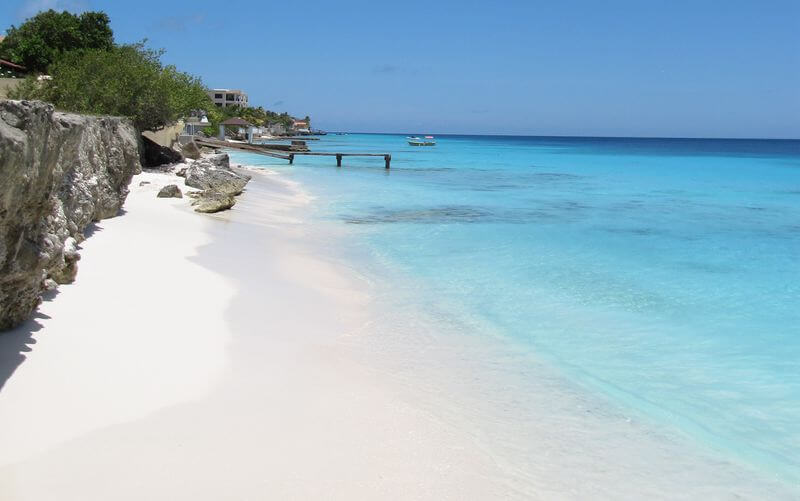
Bachelor’s Beach sits in the Belnem district just south of the airport — a small, intimate stretch of white sand at the bottom of a short cliff, reached by a flight of steps from the roadside parking area. It is one of the most charming and least crowded beaches on the island, popular with locals who appreciate its quiet character. The snorkeling directly off the beach is excellent. The last few steps can be slippery from ocean spray — watch your footing on the descent.
Te Amo Beach
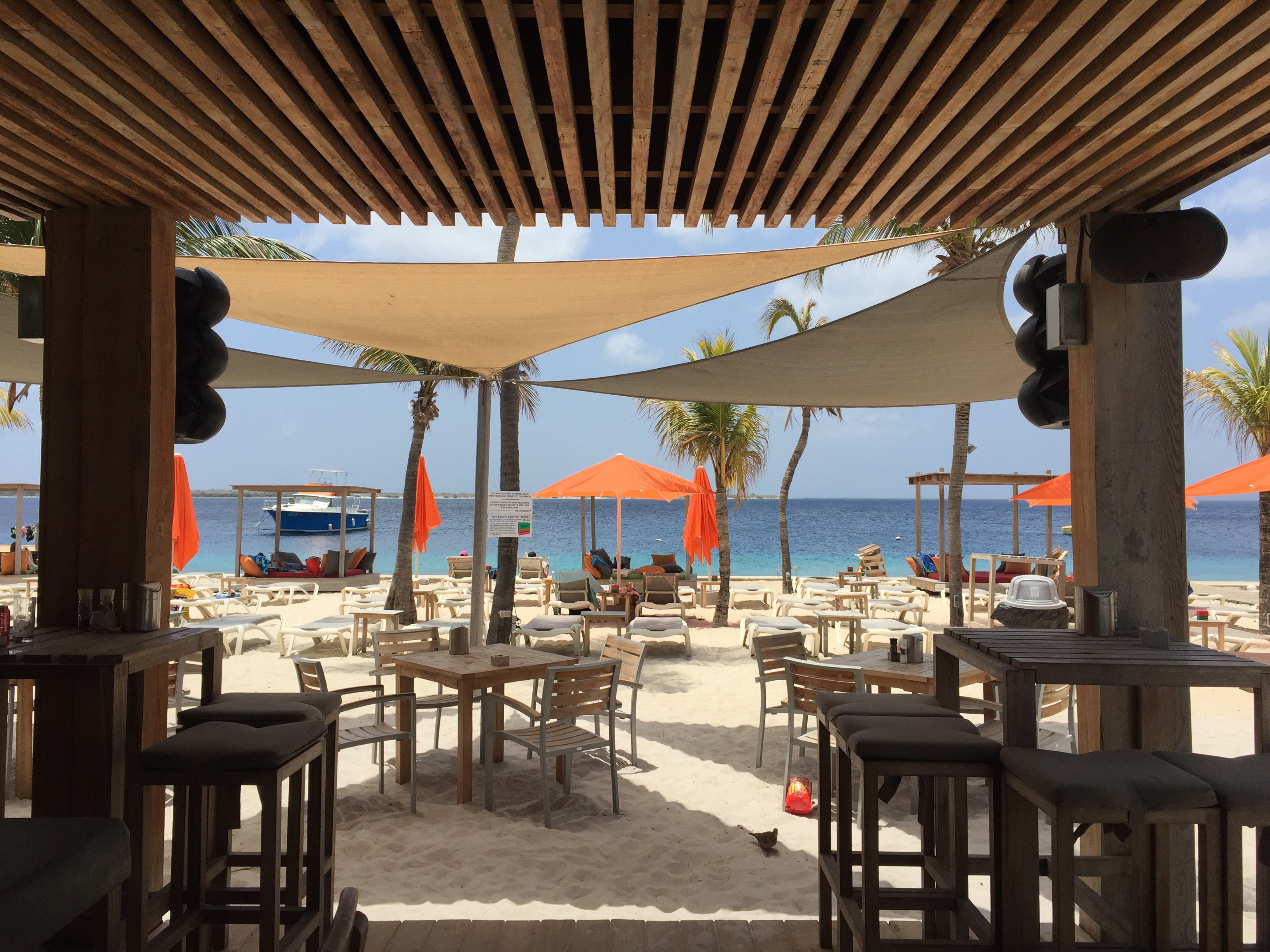
Te Amo is a favorite among Bonaire’s local population — a relaxed beach ideal for swimming, sunbathing, and the kind of unhurried afternoon that Bonaire does better than almost anywhere. The Kite City food truck parks here during certain hours of the day, serving fresh fish dishes that are worth planning your beach time around. Like most Bonaire beaches, the snorkeling from the shore is excellent and the marine life abundant.
Donkey Beach
Bonaire is one of the few Caribbean islands with a significant population of wild donkeys — descendants of animals used in the salt industry that now roam freely across the island’s scrubland. Donkey Beach, named for its frequent visitors, is a local favorite that comes alive on weekends with music, families, and the kind of community beach atmosphere that reflects the warmth of Bonaire’s social culture. The snorkeling and swimming are excellent; the weekend atmosphere is the real reason to visit.
Buddy Dive Resort
Buddy Dive Resort is one of the premier dive resorts on the island and one of our personal favorites — not primarily as a beach but as a diving and snorkeling destination of exceptional quality. The dive sites directly accessible from Buddy Dive’s dock offer some of the finest snorkeling and diving on the island, with a variety of coral formations and marine life that rewards multiple visits at different times of day.
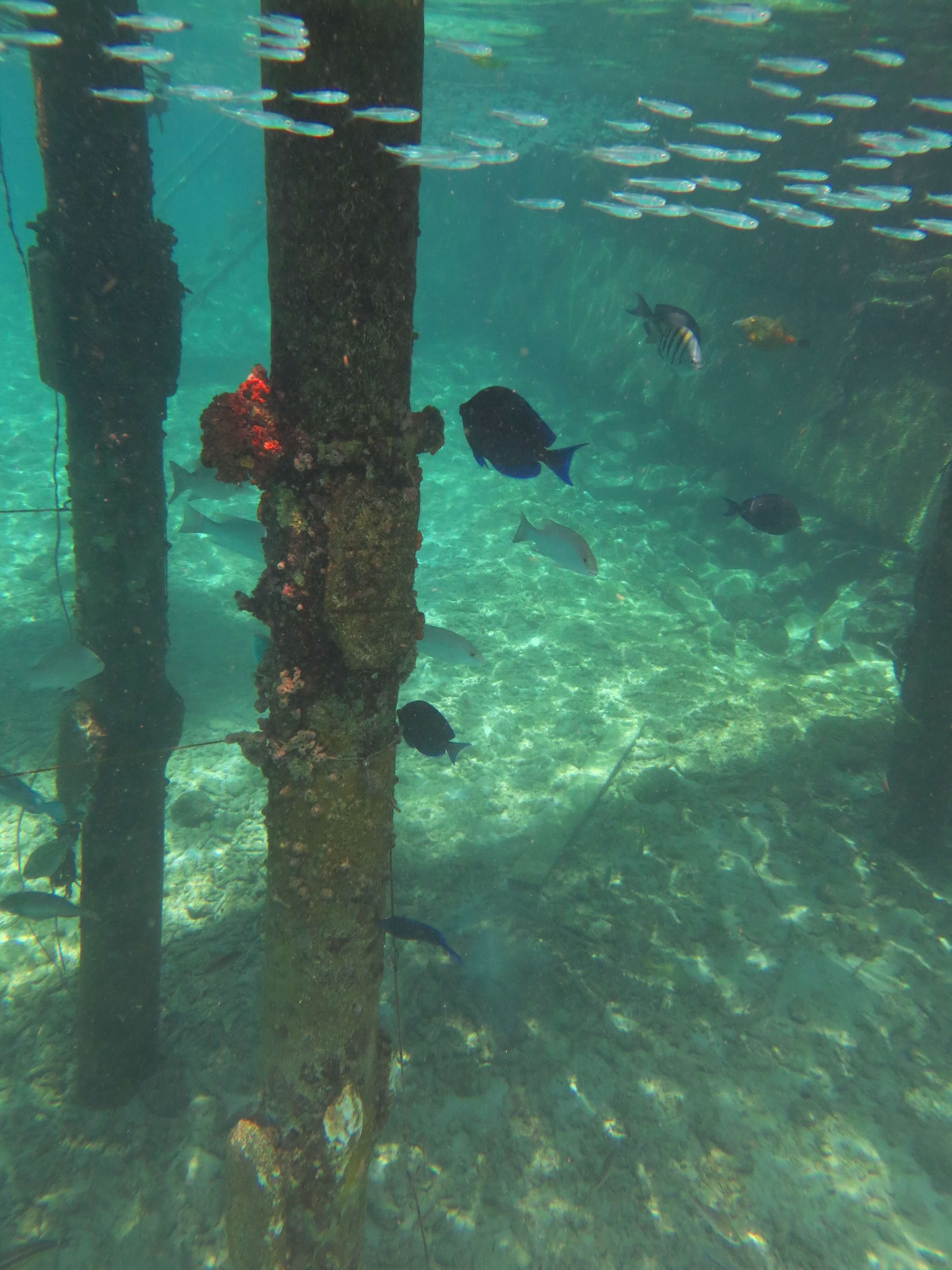
Buddy Dive rents waterproof cameras by the day — a genuinely excellent service that allows you to document the underwater world without bringing your own equipment. The resort restaurant, overlooking the water, serves fresh and well-prepared food; the iguanas that frequent the terrace looking for vegetable scraps from passing plates are friendly, unintimidating, and entirely part of the Bonaire experience. The variety of fish visible immediately off the dock is extraordinary — angelfish, parrotfish, sergeant majors, and the occasional sea turtle are regular sightings within minutes of entering the water.
👉 Bonaire Destination Guide: Everything you need to plan your Bonaire trip →
Salt Flats, Flamingos, and Wildlife
One of the most distinctive and unexpected aspects of Bonaire is its flamingo population. The Pekelmeer Flamingo Sanctuary at the island’s southern tip is one of only four flamingo breeding grounds in the Western Hemisphere — a protected nesting area within the salt flats where the island’s flamingos breed and raise their young. The sanctuary itself is closed to visitors, but the flamingos are visible from the road near the salt flats and from Pink Beach, and the sight of a flock of Caribbean flamingos flying overhead — their brilliant pink upper feathers contrasting with the jet-black undersides of their wings — is one of the most striking wildlife experiences in the Caribbean.
Bonaire’s flamingos are among the pinkest in the world — a product of their diet, which is rich in red carotene from the algae and crustaceans of the salt flats. The intensity of the pink coloration varies with diet and age; the adult birds at full color are extraordinary. The best viewing time is early morning or late afternoon when the flamingos are most active and the light most favorable.
The salt flats themselves — operated by Cargill as a commercial salt harvesting operation since the 1960s — are a striking landscape of geometric white pans and vivid pink-tinged water, punctuated by the small slave huts that remain from the brutal period when enslaved workers harvested salt and were permitted to return to their families in Rincon only on weekends. The huts — barely large enough for a person to lie down in — are a sobering reminder of the island’s history and are preserved as a historical monument.
Washington Slagbaai National Park, covering the wild northern third of the island, is the finest terrestrial nature experience Bonaire offers. The park contains two beaches (Boca Slagbaai and Playa Chikitu), flamingo lagoons, cactus forest, and a diversity of bird species that makes it one of the finest birding destinations in the Caribbean. A rental car or 4WD vehicle is required; the park roads are rough in places but entirely navigable.
Kralendijk — The Capital
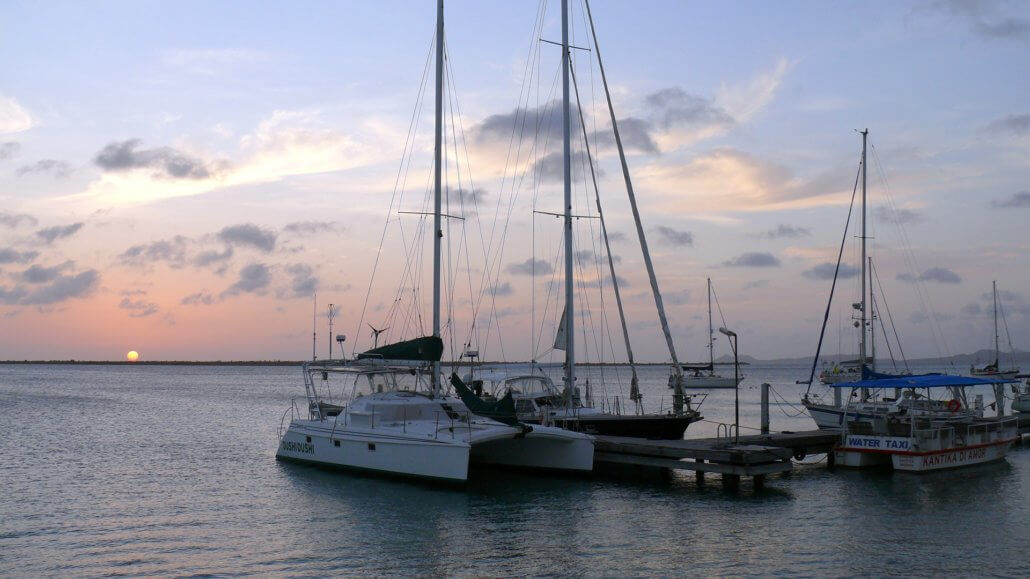
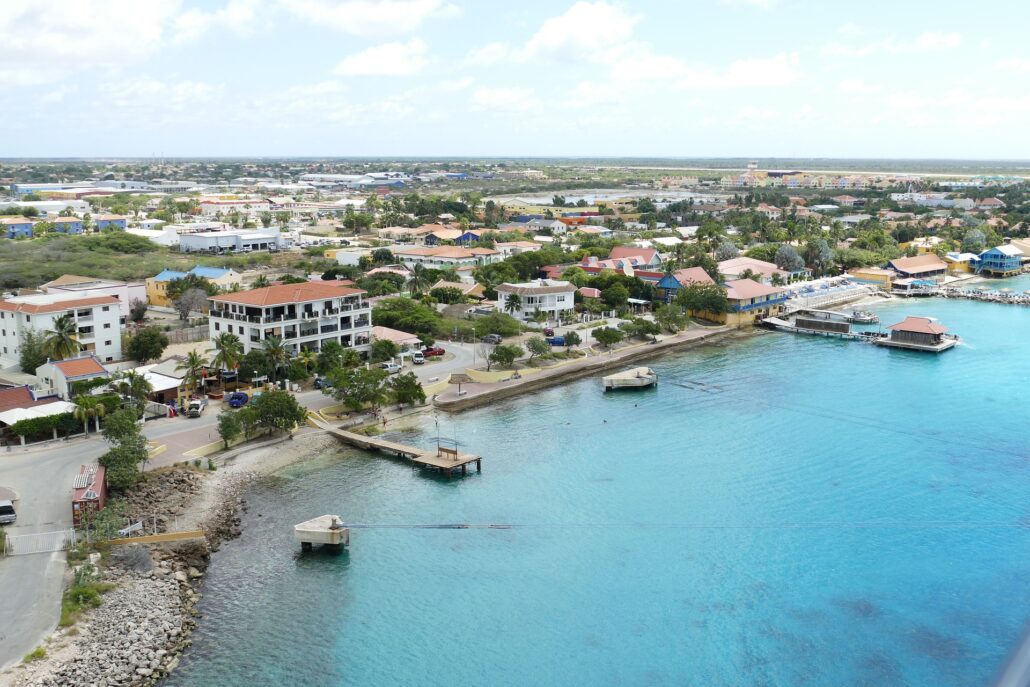
Kralendijk (pronounced “Kral-en-dike”) is Bonaire’s small, colorful capital — a waterfront town of pastel Dutch colonial buildings, dive shops, restaurants, and the relaxed street life of a community that has no interest in performing for tourists. The downtown waterfront promenade is the social center of the town, lined with restaurants and bars facing the harbor and Klein Bonaire beyond. The town is small enough to walk entirely in an afternoon and has everything a visitor needs: supermarkets, dive equipment rental and service, pharmacies, and a Saturday morning market at the Wilhelmina Square that is the best place on the island to buy local produce and crafts.
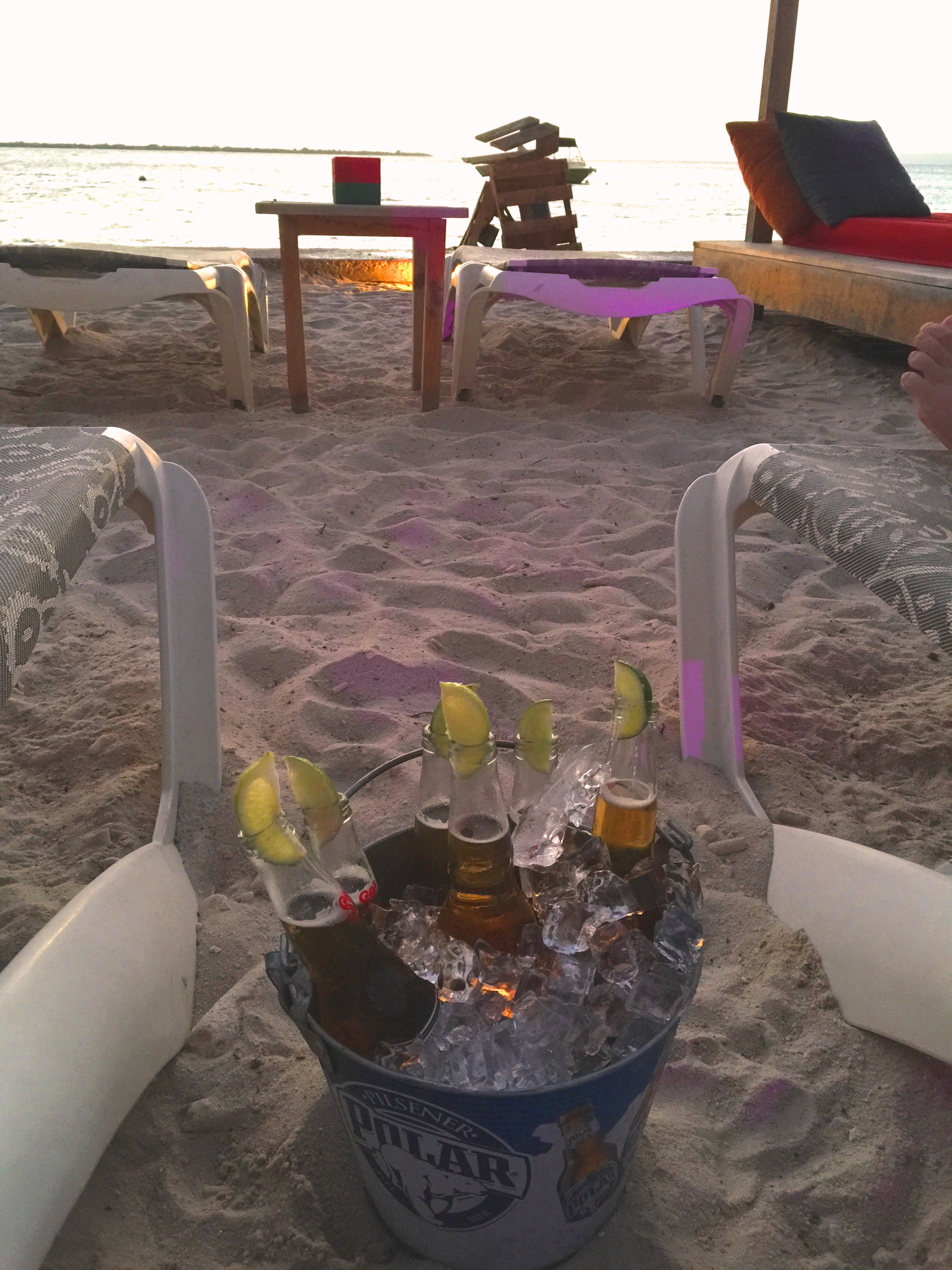
The restaurant scene in Kralendijk punches well above what you might expect from an island of 20,000 people. Fresh fish is the foundation — the catch of the day at any waterfront restaurant is reliably excellent. The local Amstel Bright beer, brewed specifically for the island’s climate, is the correct accompaniment to any outdoor meal. The newer Bonaire Blond — a light, citrus-forward craft beer brewed with locally grown ingredients — is worth seeking out as a newer addition to the island’s drinking culture.
Nightlife in Bonaire
Bonaire’s nightlife is relaxed, unpretentious, and genuinely enjoyable — a Caribbean social scene built around good music, cold drinks, and the kind of easy sociability that comes from an island where everyone eventually knows everyone else.
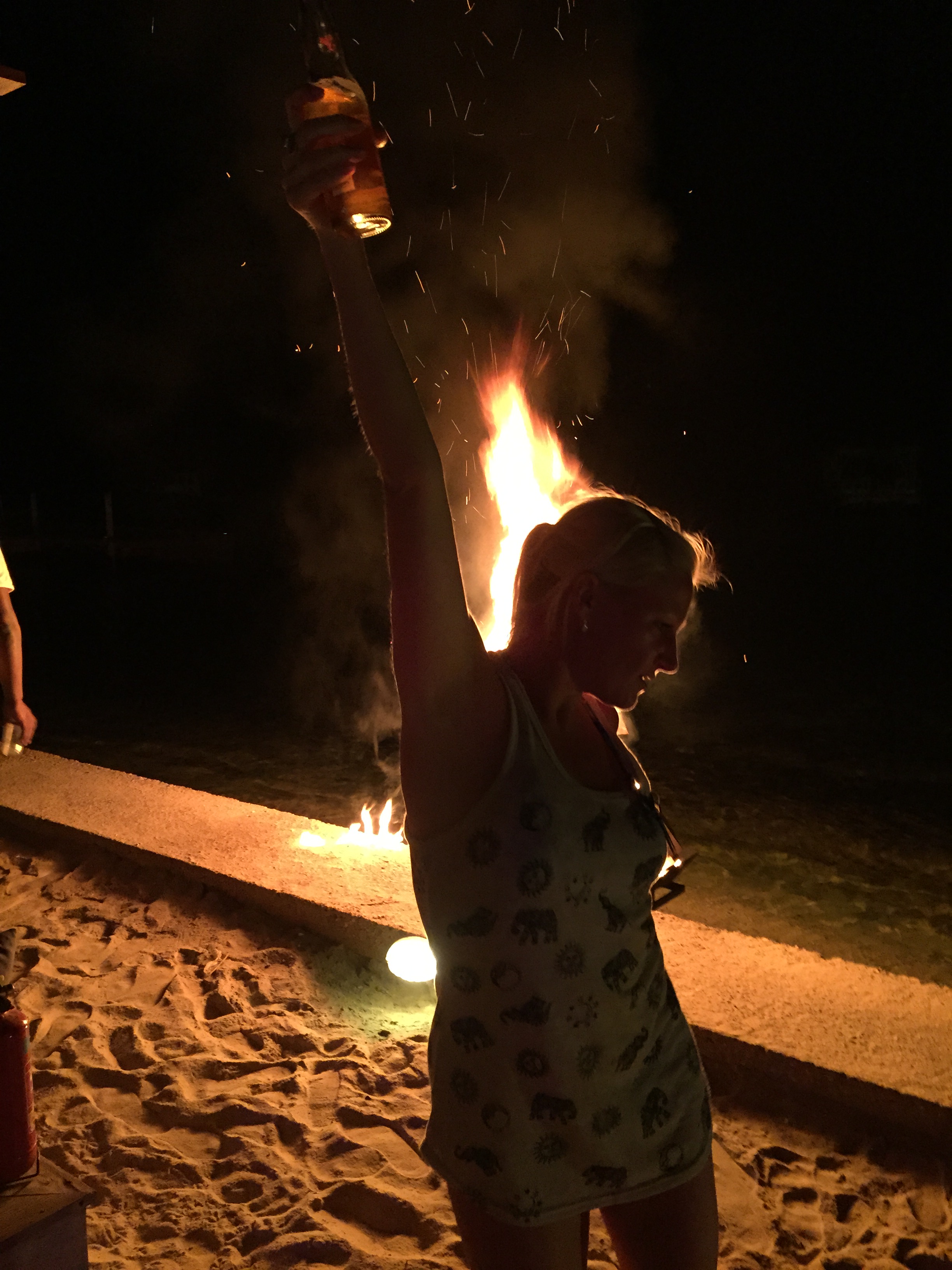
The Spice Beach Club at the Eden Resort is the standout nightlife destination — a waterfront club that lights up every Friday evening with live music, Caribbean cocktails at genuinely reasonable prices, and an atmosphere that reliably produces the kind of spontaneous social connections that travel at its best is built around. It is the best single night out in Bonaire and draws a mix of resort guests, expats, and locals that gives it an authenticity many Caribbean resort nightlife venues lack.
For dancing, Little Havana and Karel’s Beach Bar are the reliable options throughout the week. The Plaza Resort Bonaire hosts Latin night every Saturday evening — a free salsa workshop from 6 to 7pm followed by dancing that runs well into the night. Even if salsa is not in your repertoire, the workshop is a genuinely fun way to spend the early part of a Saturday evening. The casino at Divi Flamingo is open late every night except Sunday for those who prefer tables and slots to dance floors.
The overriding character of Bonaire’s nightlife is friendliness. It is an island where striking up a conversation with the people at the next table is the norm rather than the exception, and where an evening that began with dinner for two regularly ends with a group of ten people you didn’t know three hours earlier. This is part of what makes Bonaire so endearing.
Getting Around Bonaire
Bonaire’s geography makes getting around straightforward. The island has two main roads — one running north and one running south from Kralendijk — and navigating between any two points is simply a matter of deciding which direction to go. A rental car from the airport is the most flexible option and opens up the Washington Slagbaai National Park, the southern salt flats, and the more remote beach and dive sites. Cars are inexpensive to rent and the roads are good.
Taxis are available throughout the island at very reasonable prices — the drivers are almost universally friendly, English-speaking, and knowledgeable about the island. On our last visit we spent several days being driven around by Victor, a wonderful conversationalist who seemed to know everyone on the island and whose commentary on Bonaire’s history, people, and best dive spots was worth more than any guidebook. If you get a driver you like, take their number and use them for the duration of your stay.
Bicycles — both standard and all-terrain — and electric bikes are available for rent from Bonaire Eco Cycling and Scooters Bonaire. The island’s flat southern section is ideal for cycling; the northern terrain is more demanding. Bonaire actively encourages eco-friendly transport by providing free electric bike charging ports in Sorobon, Rincon, and the Wilhelmina Square in Kralendijk.
When to Visit Bonaire
Bonaire sits outside the Caribbean hurricane belt — one of its most practical advantages over other Caribbean destinations. The island’s climate is consistently warm and dry year-round, with average temperatures of 27–32°C and consistent trade winds that keep the heat comfortable. There is no bad time to visit.
The dry season (January to September) offers the most reliable conditions for diving and snorkeling — consistent winds, excellent visibility, and the lowest rainfall of the year. October and November bring slightly more rain and occasional rough seas, but diving remains excellent and visitor numbers are at their lowest, meaning better rates and quieter beaches. The Christmas and New Year period is the busiest and most expensive time to visit.
Windsurfers and kitesurfers should target June and July when the trade winds are at their most consistent and strongest — the conditions at Sorobon Beach during this period are world-class.
Practical Tips for Bonaire
- Pay the Nature Fee on arrival — the $45 USD Bonaire National Marine Park fee is mandatory for all divers and snorkelers and is checked at dive sites. It funds the reef protection that makes Bonaire’s diving possible; pay it without complaint
- Book dive resorts in advance — the best dive resorts (Buddy Dive, Harbour Village, Divi Flamingo) fill up months ahead in peak season. If diving is your priority, book accommodation and dive packages together well in advance
- Bring reef-safe sunscreen — conventional sunscreens containing oxybenzone and octinoxate are harmful to coral and are banned or strongly discouraged in Bonaire. Reef-safe mineral sunscreens are available on the island but are more expensive; bring your own
- Rent a car for the north — the Washington Slagbaai National Park and the northern beaches require a car. A half-day rental is sufficient for a northern exploration combined with the salt flats in the south
- Drink Amstel Bright — the local beer brewed specifically for Bonaire’s climate is light, refreshing, and the correct accompaniment to every beach and dive experience on the island
- Klein Bonaire timing — the water taxi runs every couple of hours; check the schedule before you go and plan your return accordingly. Bring more water than you think you need — the island has no facilities and the sun is intense
- The salt flats are best in the morning — the flamingos are most active in early morning and the light on the salt pans and slave huts is most dramatic before 9am
For our full Bonaire coverage, see our Bonaire destination guide.
Bonaire is a great place to visit. What I loved about this place is its bio-diversity. You have covered Bonaire very well.
Thanks so much! That’s a great compliment, and Bonaire really is an amazing place and one of our favorite spots. There’s so much more that could be said beyond what’s in this post – we absolutely recommend everyone to go there at least once in their lives 🙂
Thanks for all this information. I actually had no idea about this place until today. A friend at work recommended that my husband and I take a trip there so I did a bit of googling. This is by far the most informational article I read. Thank you for sharing this. I am going to check out some other posts! My husband and I like to travel as much as possible so the blog sounds fitting for us! 🙂
I appreciate it, Britanica! Bonaire, believe it or not, is probably our favorite place we’re ever been. Amazing so few have heard of it.
Hi Tracy,
Great information you have there. This is actually my first time of reading your post.
I have been doing some researching for the perfect place in Caribbean for my honeymoon. This place sounds quite like what I’m looking for.
Thank you for sharing this. Will take my time to digest the info here.
Thanks Christine, glad you enjoyed it!