Every time someone asks us where they should go — at dinner parties, in comments, in emails that begin with “we have two weeks and have never left the country” — we feel the same mild paralysis. Not because we don’t have opinions. We have too many opinions. After traveling together to more than a hundred destinations across six continents over more than a decade, the honest answer to “what are the best places to travel in the world” is: it depends entirely on what kind of traveler you are and what you are actually looking for.
This article is our answer — not a ranked list with a number one slot and a trophy, but a genuine attempt to tell you what each of the world’s regions offers at its finest, which specific destinations represent it best, and what kind of traveler each one suits. We have been to most of what we recommend here. Where we haven’t, we say so. We have no interest in telling you that a place is extraordinary if we are not prepared to book a flight back there ourselves.
We have organized this by continent because that is the most useful framework for trip planning. If you are trying to decide between Italy and Japan, you already know they are on different continents — what you need is an honest account of what each one actually delivers and why you might choose one over the other given your specific priorities. That is what we are trying to give you.
Start wherever the compass points. There is no wrong answer.
North America: Bigger Than It Looks on the Map
The paradox of North America as a travel destination is that the people most likely to underestimate it are the ones who live there. Americans tend to travel domestically as a default and internationally as an event, which means they have often experienced enough of the United States to take it for granted and not enough of the rest of the continent — Mexico, Canada’s varied regions, the Caribbean — to appreciate it properly. International visitors, meanwhile, often arrive with a fixed mental map of two or three American cities and miss the extraordinary range of what the continent contains.
The truth is that North America has as much internal variety as Europe, spread across a significantly larger landmass. New Orleans has almost nothing in common with Seattle. The difference between New York City and rural Montana is more dramatic than the difference between London and rural Tuscany. The continent rewards travelers who are willing to look beyond the obvious entry points.
New York City, USA
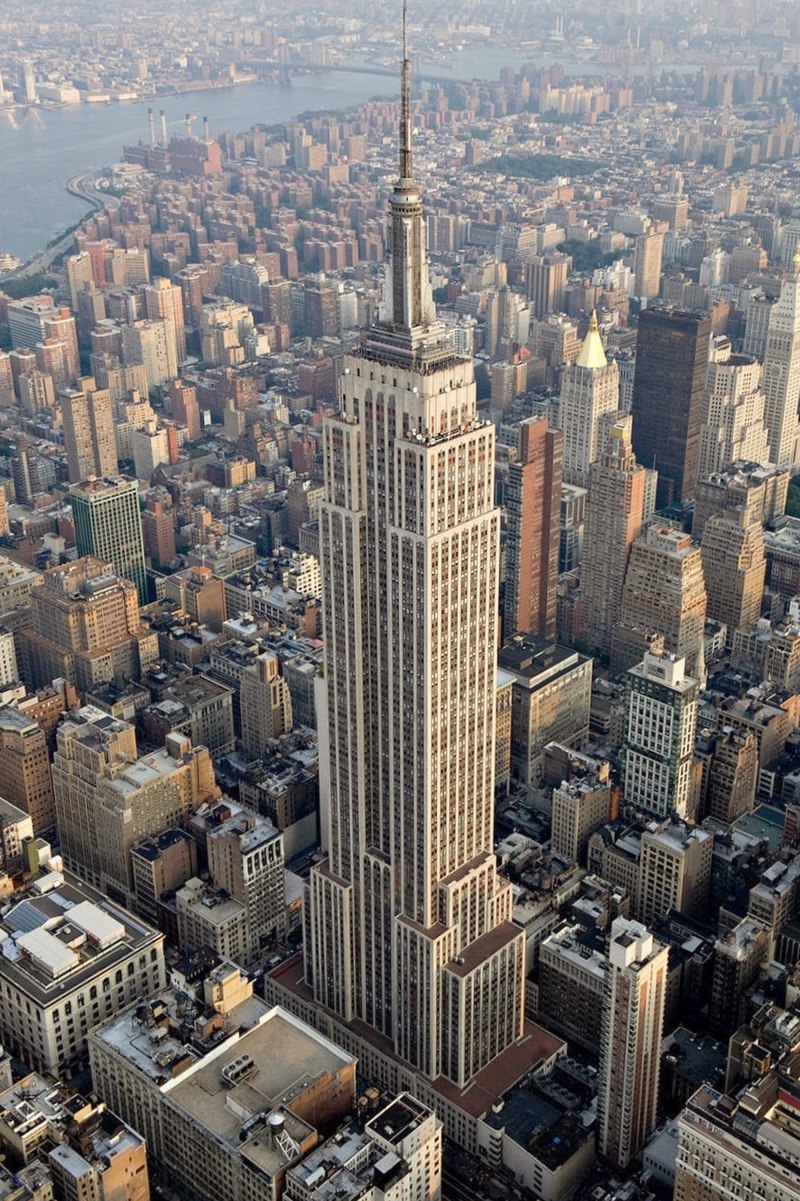
We are not going to pretend that New York is an undiscovered gem — it is the most visited city in the Western Hemisphere and the starting point for more first international trips than anywhere else. The reason is simple: it delivers. The concentration of world-class cultural institutions, restaurants, neighborhoods, and sheer human variety within a walkable urban grid is matched only by London and Tokyo, and the energy of the city — the sense that something significant is happening in every direction at every hour — is genuinely unlike anything else.
What most first-time visitors miss is that New York is not one place. The New York of the Met and Central Park and Fifth Avenue is a real New York, but so is the New York of the Flushing dim sum halls and the Jackson Heights taco trucks and the Red Hook waterfront and the Rockaways on a summer Sunday. The city that most visitors see in three or four days is the glossy surface of something that takes years to understand properly. Give it as much time as you can. It rewards every additional day.
New Orleans, USA
New Orleans is the most culturally specific city in the United States — a place where French colonial history, West African heritage, Caribbean influence, and American culture have merged into something that exists nowhere else and cannot be replicated. The food alone justifies the trip: the gumbo at Dooky Chase, the oyster po’boys at Domilise’s, the beignets at Café Du Monde, the Commander’s Palace bread pudding soufflé. But the food is inseparable from the music, which is inseparable from the architecture, which is inseparable from the specific melancholy and joy that the city seems to exist in simultaneously.
The French Quarter is unavoidable and genuinely beautiful — the wrought-iron balconies, the courtyards behind closed gates, the street musicians at Jackson Square — but the city reveals itself most clearly in the neighborhoods that most visitors never reach: the Garden District’s antebellum mansions, the Tremé’s Creole cottages, the Frenchmen Street bars where the jazz is live and local and free to walk into any night of the week.
Mexico: The Interior, Not the Resort Strip
Mexico is one of the most systematically underestimated travel destinations in the world, primarily because the version of it that most international visitors experience — the all-inclusive resort corridor from Cancún to Los Cabos — is the least representative of what the country actually is. Mexico City is one of the great cultural capitals of the Americas, with a museum infrastructure, a food scene, and an architectural range that rivals any city in Europe. Oaxaca is a world-class food destination in a colonial city of stunning physical beauty. The Yucatán Peninsula contains the most significant concentration of Maya archaeological sites in the world alongside a Caribbean coastline of genuinely extraordinary quality.
The practical point is this: if you have been to Mexico and you have only been to a beach resort, you have not been to Mexico. The country deserves more of your time and a different kind of attention.

Europe: The Deepest Bench in the World
Europe has more significant travel destinations per square kilometer than any other continent on earth. This is not an opinion — it is a function of the density of history, art, architecture, and culinary culture that accumulated in a relatively small landmass over three thousand years of continuous civilization. The question for any traveler planning a European trip is not “is there enough to see?” but “how do I choose what to prioritize from an essentially unlimited supply of extraordinary things?”
The answer we always give is: go deeper rather than wider. A week in Rome spent properly — not racing between landmarks but eating in the neighborhood restaurants, walking the streets before the tourists arrive, spending two unhurried hours in the Borghese Gallery — will give you more of Europe than a ten-day sprint through six capitals that leaves you with photographs and jet lag. The continent rewards slowness and rewards return visits. The traveler who has been to Rome four times understands Rome. The traveler who has been to Rome once, Paris once, Barcelona once, and Amsterdam once understands very little of any of them.
Rome, Italy
Rome is the city that justifies the entire concept of Western civilization — a place where 2,500 years of continuous human habitation have left an archaeological and artistic record of such density that it is impossible to walk more than a few blocks without standing in front of something that changed the history of the world. The Colosseum. The Pantheon. The Forum. The Vatican Museums and the Sistine Chapel. The Borghese Gallery. Caravaggio in a dozen different churches scattered across the city, most of them free to enter.
What makes Rome different from a museum is that it is still alive — three million people go about their daily lives among the ruins, eating lunch at tables twenty meters from a Roman temple, taking the bus past the Circus Maximus, buying fruit from a market in a piazza that has been used as a market for two thousand years. The relationship between the ancient and the contemporary in Rome is unlike anything else in Europe and it is what makes the city endlessly fascinating rather than simply impressive.

Barcelona, Spain
Barcelona makes the case that a single architect can define a city’s identity more completely than any other force in urban history. Antoni Gaudí’s work — the Sagrada Família, Park Güell, Casa Batlló, La Pedrera, the Palau Güell — accounts for a disproportionate share of why Barcelona receives the visitors it does, and justifiably so. The Sagrada Família is the most extraordinary building currently under construction anywhere on earth: a basilica begun in 1882 that combines Gothic structure with Art Nouveau ornament and Gaudí’s own distinctive organic geometry into something that has no precedent and no successor in the history of architecture.
Beyond Gaudí, Barcelona has the Gothic Quarter — a medieval street network of genuine antiquity and genuine beauty — a food culture that rivals any in Spain, beaches of decent quality within walking distance of the city center, and a Catalan identity that gives the city a cultural specificity distinct from the rest of Spain. It is one of the most complete travel destinations in Europe: something significant in every direction, at every price point, in every category.
Paris, France
Paris is the most written-about city in the world and the most photographed and the most anticipated, which means it arrives burdened by more expectation than almost any destination can carry. The honest assessment is that it delivers — not always in the way visitors expect, not always immediately, and not always on a first visit — but it delivers.
The Louvre is overwhelming. The Musée d’Orsay is the finest Impressionist collection in the world. The Eiffel Tower is genuinely more moving in person than in any photograph. Notre-Dame, currently being restored after the 2019 fire, remains one of the great Gothic buildings of Europe even in its scaffolded state. And the Paris that exists outside the monument circuit — the neighborhood bistros, the Sunday morning markets, the booksellers along the Seine, the café terraces where Parisians spend hours over a single coffee — is the part that earns the city’s reputation rather than its landmarks.

London, United Kingdom
London’s case as a travel destination rests partly on the fact that its major cultural institutions are free. The British Museum — one of the greatest repositories of human history and art ever assembled — costs nothing to enter. Nor do the National Gallery, the Tate Modern, the Natural History Museum, the V&A, the Science Museum, or the National Portrait Gallery. This is not a minor logistical detail; it means that a traveler with a week in London and a modest budget can access more world-class culture than is available in any other city on earth at any price.
Beyond the museums, London has a food scene that has been genuinely transformed in the past twenty years — the multicultural cooking of Peckham, Brixton, Dalston, and Shepherd’s Bush reflects the city’s demographics in ways that produce a concentration of excellent world cuisine second only to New York. The neighborhoods — Shoreditch, Notting Hill, Borough, Marylebone, the South Bank — each have distinct characters worth spending time in. And the city’s relationship with its own history — the way medieval churches sit next to glass towers, the way the Thames connects centuries of different Londons — gives it a layered quality that rewards sustained attention.
Dublin, Ireland
Ireland‘s reputation in international travel tends to cluster around a handful of images — green fields, Guinness, pub culture — that are not inaccurate but that significantly undersell the country’s depth. Dublin is a genuinely literary capital in a way that few cities can claim: the connection to Joyce, Beckett, Wilde, Yeats, and Heaney is not merely commemorative but alive in the city’s intellectual culture, its bookshops, its conversation, and its specific way of talking about language and history that reflects a society that has thought seriously about both for a long time.
Trinity College and the Book of Kells, the National Museum’s Viking Dublin collection, the Chester Beatty Library — which holds one of the finest collections of Islamic, East Asian, and Western manuscripts in the world and is free — and the literary pub crawl through the streets that Joyce and Wilde and Behan walked are all essential. But the best Dublin experiences tend to be unscheduled: the session that materializes in a pub on a Tuesday night, the conversation with a stranger that goes on longer than it has any reason to, the specific quality of Irish hospitality which is less performative and more genuine than almost anywhere else in Europe.
Portugal: Lisbon, Porto, and the Algarve
Portugal has become, in the past decade, one of the most talked-about travel destinations in Europe, and the conversation is justified. Lisbon is a city of extraordinary physical beauty — built across seven hills above the Tagus estuary, covered in azulejo-tiled facades and viewed from a network of miradouros (viewpoints) that turn the city’s topography into an asset — with a food culture of exceptional quality, a fado music tradition that is one of the most moving musical forms in Europe, and an affordability relative to other Western European capitals that makes it accessible to a wider range of travelers than Paris or London.
Porto, three hours north by train, is the city that most of the travelers we know who have been to both prefer. The Ribeira waterfront along the Douro River, the port wine lodges of Vila Nova de Gaia visible across the water, the azulejo panels at São Bento station, the Livraria Lello bookshop with its extraordinary Art Nouveau interior, and the francesinha — Porto’s signature sandwich of layered meats in a spiced beer and tomato sauce that has no equivalent anywhere else — combine into a city experience that is dense enough to sustain several days and specific enough to be irreplaceable.
The Algarve, Portugal’s southern coast, has two characters that coexist without quite integrating: the heavily developed resort strip from Albufeira to Lagos, which offers excellent beaches, reliable sun, and tourism infrastructure of every kind; and the wilder western coast around Sagres and the Costa Vicentina, which is protected as a natural park, essentially undeveloped, and produces the most dramatic coastal walking in Portugal. The golden limestone cliffs of Ponta da Piedade near Lagos are among the finest coastal scenery in Europe at any time of year.
Greece: Athens, Santorini, and the Islands
Greece offers two travel experiences that are exceptional in their categories but that attract different types of travelers and rarely overlap. Athens is one of the great archaeological cities of the world — the Acropolis, the National Archaeological Museum, the Ancient Agora, and the Acropolis Museum together constitute the finest concentration of ancient Greek art and architecture available to any visitor anywhere — and a city that has been significantly underrated as a contemporary destination. The neighborhoods of Monastiraki, Psiri, and Exarchia have a food and bar scene that has transformed in the past decade, and the city’s relationship between ancient monuments and modern urban life — three million people going about their daily business while the Parthenon watches from the hill above — is one of the most extraordinary urban environments in the world.
The Greek islands offer something entirely different: the light of the Aegean, the caldera of Santorini, the whitewashed villages of the Cyclades, the beaches of Crete and Rhodes, the relative quiet of the smaller islands that still feel genuinely off the tourist circuit. Santorini is worth visiting despite its crowds and its prices because the landscape — the flooded volcanic caldera ringed by black cliffs, the villages perched on the rim, the Assyrtiko wines produced from vines grown in volcanic soil — is genuinely extraordinary and available nowhere else. But the travelers who love Greece most tend to be the ones who have moved beyond Santorini to the quieter islands: Paros, Folegandros, Milos, Naxos, where the Cycladic character is equally present and the crowds significantly less so.
The combination of Athens plus one or two islands is the right structure for a first Greece trip. Athens plus Crete, for travelers who want depth over scenery, is arguably the stronger combination — Crete is Greece’s most complex and most historically layered island, with Minoan palaces, Venetian harbor towns, mountain villages, and a food culture that is the finest of any Greek island.
Florence is the city that produced the Renaissance and has never let anyone forget it, which means its relationship with tourists is ancient and occasionally fraught — the crowds at the Uffizi and the Accademia are real and require planning — but also means that the density of great art per square kilometer is simply unmatched. Botticelli’s Birth of Venus. Michelangelo’s David. Brunelleschi’s dome. Ghiberti’s Baptistery doors. Fra Angelico’s frescoes at the Convent of San Marco. All of this in a city of 380,000 people you can walk across in thirty minutes.
The Florentine food culture is equally specific and equally rewarding: bistecca alla Fiorentina from a wood-fired grill, ribollita in a trattoria that has been serving the same bean soup since before your parents were born, the lampredotto sandwich from a street cart in the San Lorenzo market. Florence is a city where you eat standing up at a counter at noon and look at Michelangelo in the afternoon, and both experiences are among the finest of their kind anywhere in the world.
South America: Ancient Civilizations, Modern Energy
South America is the continent that produces the strongest reactions in the travelers we know who have been there. People who go to Peru come back changed in a way that people who go to, say, Switzerland rarely do. People who go to Argentina for two weeks end up staying for two months. The continent has an intensity — of landscape, of food, of history, of social energy — that is difficult to prepare for and impossible to forget.
It is also more varied than its geographic footprint suggests. The Atacama Desert in Chile and the Amazon Basin in Brazil occupy the same continent but share almost no climatic, cultural, or ecological characteristics. The Buenos Aires café culture and the Andean communities of Peru are both South American and almost entirely unrelated. Traveling the continent well requires understanding it as a collection of distinct and largely independent cultures rather than as a single destination.
Machu Picchu and the Sacred Valley, Peru
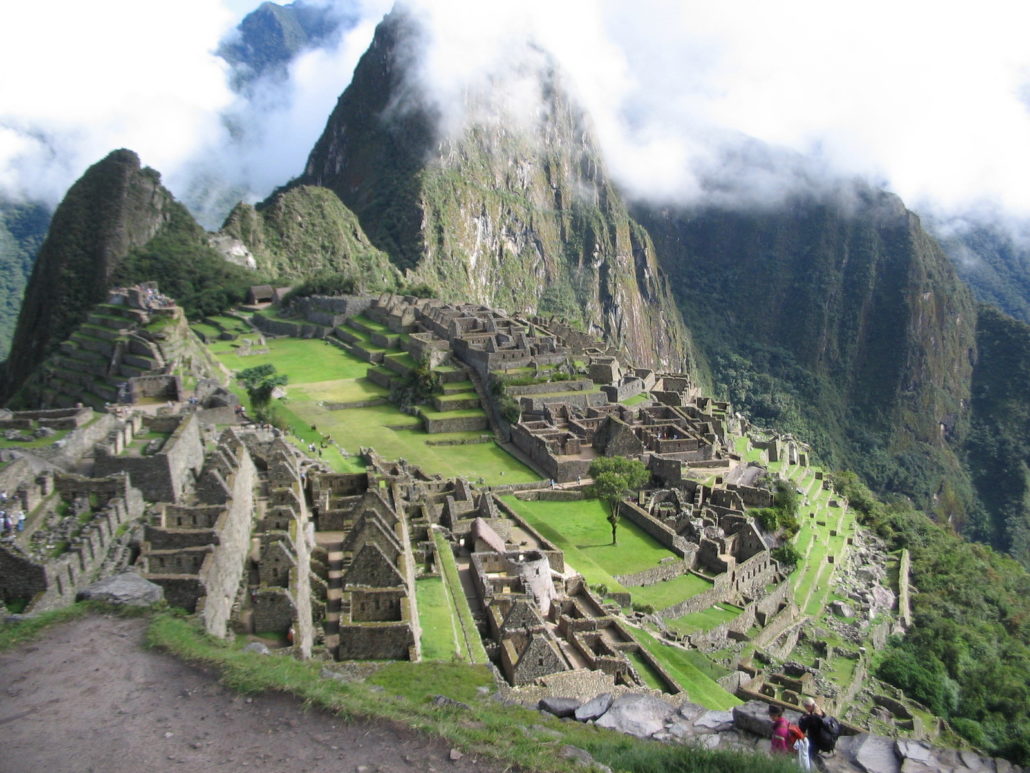
Machu Picchu is one of a small number of destinations in the world where the reality genuinely exceeds the reputation. We say this having arrived with significant expectations and having left with the specific, disorienting sense of having encountered something that our existing frameworks for understanding the world were inadequate to contain. The Inca citadel built on a ridge above the Urubamba River at 2,430 meters of elevation, with cloud forest below and the snow-capped peak of Huayna Picchu rising above it, is not simply beautiful. It is evidence of a civilization whose relationship with the landscape it inhabited was so sophisticated and so specific that standing in it produces something closer to awe than to the standard tourist appreciation of a famous view.
The practical points: book entry tickets far in advance through the official system (they sell out months ahead in peak season), arrive on the first bus of the morning, and hire a guide for at least part of your visit. The site is large and its significance is not self-evident from the structures alone — understanding what you are looking at requires context that a good guide provides and that signage cannot.

Buenos Aires, Argentina
Buenos Aires is the city that most convincingly makes the case that South America produces a version of European urban culture — the boulevards, the café culture, the architecture, the opera house, the literary tradition — that is distinct from the European original rather than simply derivative of it. The city has its own specific character: the tango, which is not Spanish dance adapted for export but a specifically Porteño art form that emerged from the immigrant neighborhoods of La Boca and San Telmo; the asado culture, which treats the grilling of beef as both a social institution and a technical discipline; the late-night energy of Palermo and the intellectual life of the cafés where Borges wrote.
Buenos Aires rewards travelers who stay long enough to find its rhythms rather than spending three days and leaving having seen the monuments. It is a city where the best things happen after midnight and the best conversations happen over a third glass of Malbec at a table you did not expect to be at.
Rio de Janeiro, Brazil
Rio’s physical setting is genuinely among the most extraordinary of any city in the world — the combination of dramatic granite peaks, Atlantic ocean, tropical forest, and urban density in a geography that makes no logical sense is something that has to be seen to be believed. The view from the top of Sugarloaf Mountain, looking across Guanabara Bay to the city and the mountains behind it, is the kind of panorama that makes you understand why people have been writing about Rio for two centuries.
The city is also more complex than its postcard image suggests — more socially stratified, more politically layered, more economically varied. Copacabana and Ipanema are real and beautiful, but they are a sliver of a city of 6.7 million people whose full range extends into the hills and the north zones that most visitors never reach. The food — the botequim culture of neighborhood bars serving cold beer and petiscos at any hour, the churrascarias, the açaí bowls that are a dietary staple rather than a health food trend — is better and more specific than its international reputation suggests.
Oceania: The Ends of the Earth, Done Properly
Oceania demands the most from travelers in terms of commitment — the distances are real, the flights are long, and the time zone adjustments are significant — and rewards that commitment in ways that no other region quite matches. New Zealand and Australia are among the most logistically comfortable destinations in the world for English-speaking travelers: the infrastructure is excellent, the people are genuinely welcoming, and the landscapes are among the most varied and spectacular on earth. The Pacific Islands offer something rarer still — genuine remoteness and a quality of light and water that the more heavily touristed parts of the world cannot produce.
New Zealand: Both Islands
New Zealand packs more landscape variety into a country the size of the United Kingdom than seems physically possible. The North Island is volcanic, subtropical in the north, culturally rich in Māori heritage, and home to the country’s two main cities. The South Island is alpine, glaciated, fjorded, and so dramatically beautiful in places — the road between Queenstown and Milford Sound, the Mackenzie Basin under a full moon, the Marlborough Sounds from the water — that it produces in travelers the specific disorientation of being somewhere more beautiful than their previous experience had prepared them for.
The country also has exceptional food and wine — the grass-fed lamb is the finest in the world, the Central Otago Pinot Noir and Marlborough Sauvignon Blanc have established New Zealand as a serious wine country, and the café culture (the flat white was either invented here or in Australia depending on who you ask and how much you enjoy the argument) is excellent throughout both islands. Give it at least two weeks. Give it three if you can.

Sydney, Australia
Sydney makes the case for urban life in a way that very few cities can — a harbor of extraordinary beauty, an opera house that is genuinely the most architecturally significant building in the Southern Hemisphere, beaches of world-class quality within thirty minutes of the city center, and a food culture shaped by proximity to some of the world’s finest seafood and by the multicultural demographics of a city where a third of the population was born outside Australia.
The standard Sydney itinerary — Opera House, Harbour Bridge, Bondi — is standard because it is good. But Sydney also has Newtown and Surry Hills and Chippendale and Glebe, neighborhoods with independent restaurant scenes and café cultures and the kind of everyday quality of life that makes the city consistently rank among the world’s most livable. The Blue Mountains are ninety minutes to the west. The Hunter Valley wine region is two hours to the north. The surrounding geography is as rewarding as the city itself.
Fiji and French Polynesia: When the Ocean Is the Point
There is a category of travel whose purpose is specifically the quality of the water, the light, and the physical sensation of being in a tropical marine environment of extraordinary clarity and beauty. French Polynesia and Fiji both occupy this category, and both deliver it to a degree that justifies the cost and the flight time required to reach them.
Bora Bora’s lagoon — a turquoise expanse surrounded by a barrier reef, with the volcanic peak of Mount Otemanu rising above the flat water — is genuinely as beautiful as its photographs suggest. The overwater bungalow format, which originated here, makes environmental sense in this specific context: the clarity of the water directly below the glass floor panels is not a design gimmick but a genuine feature of a lagoon where visibility extends to thirty meters. Fiji’s 300 islands offer a wider range of experiences at generally lower prices — from luxury private island resorts to village homestays to serious dive tourism at sites like the Somosomo Strait on Taveuni.
Africa: Scale, Wildlife, and the Civilizations That Preceded Everything
Africa is the most dramatically undervisited continent relative to what it offers. The reasons are partly infrastructural — travel in some parts of the continent requires more planning and more budget than equivalent travel in Europe or Asia — and partly perceptual, the result of a media representation that has historically emphasized difficulty and danger at the expense of the extraordinary cultural richness, natural spectacle, and human warmth that defines most of the travel experiences available on the continent.
The reality is that Africa has some of the finest travel experiences available anywhere in the world, a concentration of wildlife that has no equivalent on any other continent, ancient civilizations of extraordinary complexity and achievement, and modern cities of genuine sophistication. The challenge is choosing — the continent is vast, the variety is enormous, and the logistical demands vary significantly by destination.
The Serengeti and Masai Mara, Tanzania and Kenya
The annual wildebeest migration — 1.5 million animals moving in a circuit between the Serengeti in Tanzania and the Masai Mara in Kenya, following the seasonal rains across the savannah — is the largest land migration of any mammal on earth and one of the most extraordinary natural spectacles available to any traveler at any price. The specific moment of a river crossing — the herds massing on the bank, the crocodiles waiting in the water, the chaos and noise and movement of thousands of animals committing to a crossing that kills a percentage of them — is something that photographers and naturalists have been trying to adequately describe for decades without success. You have to see it.
Safari planning in East Africa is a subject that deserves more space than we have here, but the core point is this: go with a good operator, stay in camps rather than lodges when possible (the proximity to wildlife is genuinely different), and allocate more time than seems necessary. The Serengeti is large enough that the quality of your game drive depends significantly on where you are in it and at what time, and experienced guides know things about animal behavior and movement patterns that no amount of independent research can replicate.

Egypt: Civilization at Its Most Ancient
Egypt contains the oldest surviving monumental architecture in the world and the greatest concentration of ancient civilizational achievement available to any traveler. The Pyramids of Giza — built as tombs for pharaohs around 2500 BC — are the last surviving Wonder of the Ancient World and the only one that has been continuously visible to every generation of humans who has lived since their construction. Standing at their base, looking up at the scale of the limestone blocks and trying to understand what it meant to build something this large with the technology available in 2500 BC, produces a specific kind of cognitive vertigo that very few other built structures generate.
The Egyptian Museum in Cairo holds the greatest collection of ancient Egyptian art and artifacts in the world, including the treasures of Tutankhamun’s tomb — the gold mask, the canopic jars, the golden throne — which are, without qualification, among the most extraordinary objects ever made by human hands. Luxor, four hours south of Cairo by train, contains the Valley of the Kings (where Tutankhamun’s tomb was found), the Karnak Temple complex, and the Luxor Temple — a concentration of ancient monuments that would be unrivaled anywhere else in the world.
Cape Town, South Africa
Cape Town makes the case for itself more emphatically than almost any other city in the world — the combination of Table Mountain rising sheer above the city, the Atlantic and Indian Oceans meeting at the Cape of Good Hope forty kilometers to the south, the winelands of Stellenbosch and Franschhoek forty minutes inland, and a food and cultural scene of genuine sophistication produces a travel experience with no reasonable parallel.
The cable car ride to the flat summit of Table Mountain, where the fynbos vegetation contains more plant species per square meter than anywhere else on earth, is one of the finest single excursions available in any city in the world. Chapman’s Peak Drive along the Atlantic coast is one of the world’s great coastal roads. The V&A Waterfront has the best concentration of restaurants and bars in southern Africa. And the surrounding wine regions — particularly the Hemel-en-Aarde Valley for Pinot Noir and Chardonnay — produce wines that are now seriously competitive at the international level.

Asia: The Continent That Rewards the Most Preparation
Asia is the most internally varied continent in the world — the differences between Japan and India, between Singapore and Nepal, between the urban density of Shanghai and the temple landscapes of Bagan are so vast that calling them all “Asia” is barely more useful than calling Europe and North Africa “the Northern Hemisphere.” What they share is a density of extraordinary travel experiences and, in most cases, a cultural complexity that rewards travelers who arrive with genuine curiosity rather than a checklist.
The continent also rewards repeat visits more than any other. Japan on a first visit is astonishing. Japan on a third visit, when you understand enough of the cultural logic to notice the things you missed before, is something else entirely. This is true across the continent — the more you bring to Asia, the more it returns.
Japan: Tokyo, Kyoto, Osaka
Japan is the destination that most consistently exceeds every expectation travelers bring to it, across every category of what makes travel worthwhile. The food is the most technically accomplished and most varied national cuisine in the world. The cities are among the most organized, most functional, and most aesthetically considered urban environments on earth. The cultural traditions — the tea ceremony, the ryokan inn culture, the kaiseki dinner, the craft traditions of lacquerware and ceramics and textiles — are maintained with a precision and a seriousness that have no equivalent in any other country. And the landscape, from the subtropical south to the snow country of Hokkaido, is extraordinary in every season.
The practical argument for a first Japan trip covering Tokyo, Kyoto, and Osaka is that these three cities represent three distinct Japanese identities — the global megacity, the ancient cultural capital, and the food-obsessed merchant city — in a geographic cluster that makes them easy to move between by Shinkansen. They are also, collectively, enough for two weeks and worth returning to for significantly longer.

Cambodia: Angkor Wat
Angkor Wat is the largest religious monument ever built — a 12th-century Hindu temple complex covering 162 hectares, surrounded by a moat 190 meters wide, decorated with the most extensive series of bas-relief carvings in the world, and set in a jungle whose roots have grown into and around the stones in ways that have become part of the monument’s character. It was built at the height of the Khmer Empire, which at its peak controlled more of Southeast Asia than any other power before or since.
The complex is larger and more varied than most visitors anticipate — Angkor Wat is the main temple, but the Angkor Archaeological Park contains dozens of other temples, including Ta Prohm (where the jungle has been allowed to reclaim the structure), Bayon (with its 54 towers each carved with four faces looking in different directions), and the walled city of Angkor Thom. A minimum of two full days is required to see the main sites adequately. Arriving at Angkor Wat itself at sunrise — when the first light hits the towers reflected in the lotus pond — is worth setting the alarm for regardless of how tired you are.
India: Rajasthan and Beyond
India is the travel destination that most resists generalization and most punishes travelers who arrive with a fixed idea of what it will be. It is the largest democracy on earth, the world’s most populous country, a civilization of 5,000 years of continuous history, and a place of such internal variety — linguistic, religious, culinary, architectural, climatic — that a traveler who has spent three weeks in Rajasthan knows very little about what India is in Kerala or Bengal or Tamil Nadu.
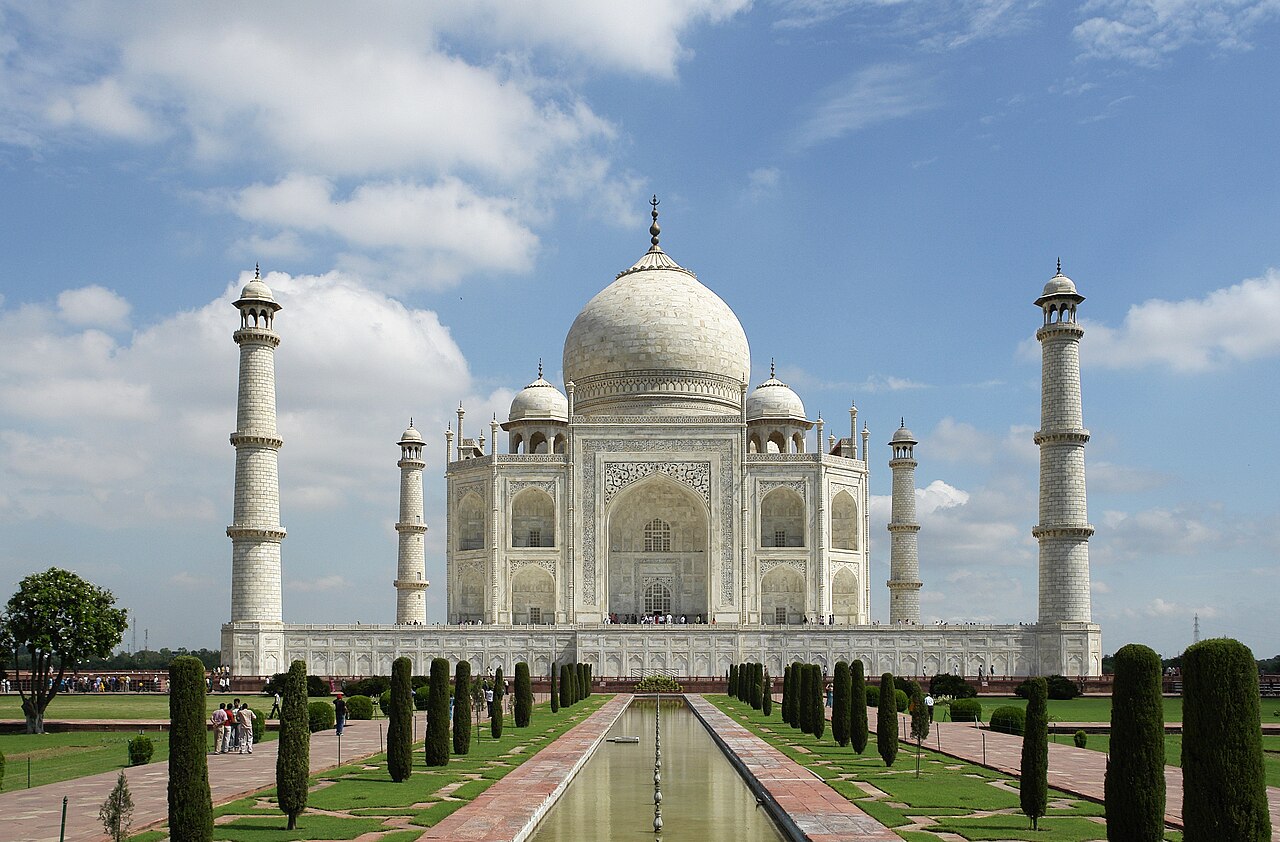
What Rajasthan offers specifically is some of the most spectacular palace and fort architecture in the world — Jaipur’s Amber Fort, Jodhpur’s Mehrangarh, Udaipur’s City Palace on the lake, the desert city of Jaisalmer — alongside a craft and textile tradition of extraordinary quality and a culinary culture that is more varied and more sophisticated than any international Indian restaurant has ever suggested. The Taj Mahal at Agra — technically Uttar Pradesh rather than Rajasthan but standard on any northern circuit — is, like Machu Picchu, one of the structures that demonstrates what we mean when we say a place exceeds its reputation.
Southeast Asia: Vietnam, Thailand, Indonesia
Southeast Asia has been on the backpacker circuit long enough that parts of it have become infrastructure for a specific kind of Western tourism rather than genuine travel destinations, and the difference between the Thailand of the Full Moon Party and the Thailand of Chiang Mai’s old city and the night markets of Lampang is significant. The region rewards travelers who do their research and go slightly off the standard circuit — and it is forgiving enough that even the most beaten-path destinations retain enough genuine character to be worth visiting.
Vietnam is our personal favorite in the region — a country of extraordinary geographic variety (the north and the south are so different that first-time visitors are often surprised they share a nationality), one of the world’s great street food cultures, and an archaeological and historical depth that the standard tourist circuit (Hanoi, Hội An, Ho Chi Minh City) only begins to suggest. The train journey down the coast — past the Hải Vân Pass, the lagoons of Huế, the rice paddies of the central lowlands — is one of the great railway journeys of Asia.
Hanoi is the more austere and historically layered of Vietnam’s two main cities — French colonial architecture alongside Chinese-influenced temple culture alongside Soviet-era monuments alongside the extraordinary Old Quarter where 36 streets each historically dedicated to a different trade still function as a living neighborhood market. The food culture of Hanoi is specific and worth pursuing deliberately: pho eaten for breakfast at a sidewalk plastic-chair restaurant, bún chả (grilled pork and noodles) at lunchtime, egg coffee in the late afternoon at a café whose recipe has not changed since 1946. The city rewards walking and rewards getting lost, which produces different things in different neighborhoods but rarely produces nothing.
Ho Chi Minh City, which most of its residents still call Saigon, is the economic engine of Vietnam and a city of extraordinary energy — more chaotic than Hanoi, more commercially aggressive, more visibly in motion. The War Remnants Museum is an essential and genuinely difficult experience: the documentation of the American War from the Vietnamese perspective, presented without diplomatic softening, produces an understanding of the conflict that no American history education adequately conveys. The Jade Emperor Pagoda, built by the Cantonese community in 1909 and still functioning as an active place of worship, is one of the finest religious buildings in Southeast Asia. The food — the specific Ho Chi Minh City versions of pho (sweeter, more herbs, more garnishes than the Hanoi version), the banh mi from street carts, the seafood in District 4 — is worth traveling for independently of everything else the city offers.
Thailand’s enduring appeal rests on a combination of elements that are genuinely difficult to replicate elsewhere: the food, which is among the most complex and most immediately satisfying in Southeast Asia; the Buddhist temple culture, which produces architectural landscapes of extraordinary beauty; the beaches of the southern islands, which at their best — Koh Lanta, the Similan Islands, the quieter reaches of Koh Samui — are among the finest in the world; and a hospitality culture that is genuine rather than performative. Bangkok is one of the great cities of Asia — underrated as a cultural destination because it is so easily dismissed as a transit hub, but containing the Grand Palace complex, Wat Pho’s reclining Buddha, the floating markets of Damnoen Saduak, and a street food scene that has been celebrated by every serious food writer who has spent time there.
Bali, Indonesia’s most visited island, has absorbed enough international tourism to have developed a dual character — the Bali of the Seminyak beach clubs and the Canggu digital nomad cafés, and the Bali of the rice terraces of Ubud and the water temple at Tirta Gangga and the sacred spring at Tirta Empul where Balinese Hindus come for ritual purification. Both exist simultaneously and both are real. The cultural Bali — the temple ceremonies that take place throughout the year, the gamelan music that appears unexpectedly from behind walls in village streets, the offerings left at every threshold every morning — is more rewarding and more specific than anything the tourist infrastructure provides, and it is available to anyone willing to leave the resort zone.
Antarctica: The Last Frontier
We have not been to Antarctica. We want to be direct about this because we have been direct about personal experience throughout this article, and pretending otherwise would be a disservice. What we know about it comes from people we trust who have, and from the research we have done in preparation for the trip we intend to take.
What those sources consistently say is this: Antarctica is the one destination that exceeds every expectation in a way that is qualitatively different from even the finest travel experiences available elsewhere. The scale of the silence, the quality of the light on the ice, the proximity to wildlife that has no evolutionary reason to fear humans, and the specific experience of standing on a continent that only a few hundred thousand people have ever visited — these produce something closer to a philosophical reckoning than a travel experience.

The logistics are significant. Expedition cruises from Ushuaia in Argentina cross the Drake Passage in approximately 48 hours — notoriously rough water that requires either sea legs or medication — and access the Antarctic Peninsula during the southern summer (November through March). Prices range from around $5,000 per person for a basic berth on a larger ship to well above $20,000 for a small expedition vessel with specialist naturalists and Zodiac landing access. The difference between these options is not primarily comfort but access — smaller ships get closer to the shore, make more landings, and give you more time in the landscape.
Book at least a year ahead. Go if you possibly can.
How to Actually Decide Where to Go
After everything above, the question we most often get is still: but where should I go? And the honest answer is that the list above, however long, cannot answer that question. What it can do is give you the information to answer it yourself.
The questions that actually determine the right destination are not “which is most famous” or “which do most people visit” — they are: how much time do you have, and what do you want to feel at the end of it? If the answer is stimulation and cultural density, Tokyo or New York or London. If the answer is physical awe at a natural landscape, New Zealand’s South Island or Patagonia or the Norwegian fjords. If the answer is genuine immersion in an ancient civilization, Rome or Kyoto or Cairo or Cusco. If the answer is warmth and seafood and a slower pace, the Algarve in Portugal or the Oaxacan coast in Mexico or the Amalfi Coast in Italy.
There is also a question of what kind of traveler you are, which is something most people know intuitively but rarely articulate when planning. Some travelers want to understand a place — to know its history, its food culture, its social context, the logic behind what they are seeing. For these travelers, destinations with deep and accessible history (Rome, Kyoto, Cairo, Cusco) and destinations with strong food cultures (Japan, Italy, Mexico, Peru, Vietnam) will consistently outperform destinations that are primarily beautiful or primarily comfortable. Other travelers want to feel something physically — the scale of a mountain range, the quality of water in a tropical lagoon, the cold of an Antarctic morning — and for these travelers the landscape-driven destinations (New Zealand, Norway, Patagonia, Fiji) will deliver what the cultural cities cannot.
Most travelers are both, in different proportions at different points in their lives. A traveler in their twenties with two weeks and a flexible budget should probably go to Japan — it is the destination that most consistently produces the “this changed how I see the world” response in people who encounter it without excessive prior knowledge, and it is the kind of place that rewards being experienced young enough to absorb it fully. A traveler in their forties who has already done the European circuit and wants something genuinely new should probably go to Peru or Vietnam — both are accessible enough not to require significant logistical expertise and both will produce experiences that no European trip can replicate. A couple celebrating a significant anniversary should probably go to the Amalfi Coast or Santorini or the Douro Valley — places where the physical beauty of the setting, the quality of the food and wine, and the specific romance of the landscape combine into something that ordinary life cannot provide.
We have also learned, over years of travel together, that the itinerary matters less than the disposition you bring to it. The travelers who have the best experiences in any destination are almost always the ones who arrive ready to be surprised — who have done enough preparation to understand what they are looking at but not so much that they have formed fixed expectations that the reality will disappoint. Machu Picchu is more extraordinary than any photograph has prepared anyone for, but only if you arrive knowing enough about the Inca civilization to understand what you are standing in. Tokyo is more stimulating than any city guide has suggested, but only if you are willing to follow something interesting down a side street rather than staying on the route that gets you to every listed attraction before dinner.
The practical suggestions we return to most often, regardless of destination: go slower than you think you need to. Eat where the locals eat, which means not at the restaurant that has an English menu posted in the window facing the street. Spend at least one morning with no itinerary and see what happens. Talk to people. Read about the place before you arrive rather than after you return. And give yourself permission to love somewhere you did not expect to love and to be underwhelmed by somewhere you thought you would adore — both of these are legitimate outcomes and both of them are more interesting than the trip that delivers exactly what was promised.
The world is large and most of it is extraordinary. The only mistake is not going.
👉 For detailed planning guides to every destination we cover, see our Destinations hub.
👉 For a custom day-by-day itinerary for any destination on earth, try our free AI Itinerary Builder.
👉 For what to eat in every city we cover, see our What to Eat guides.