
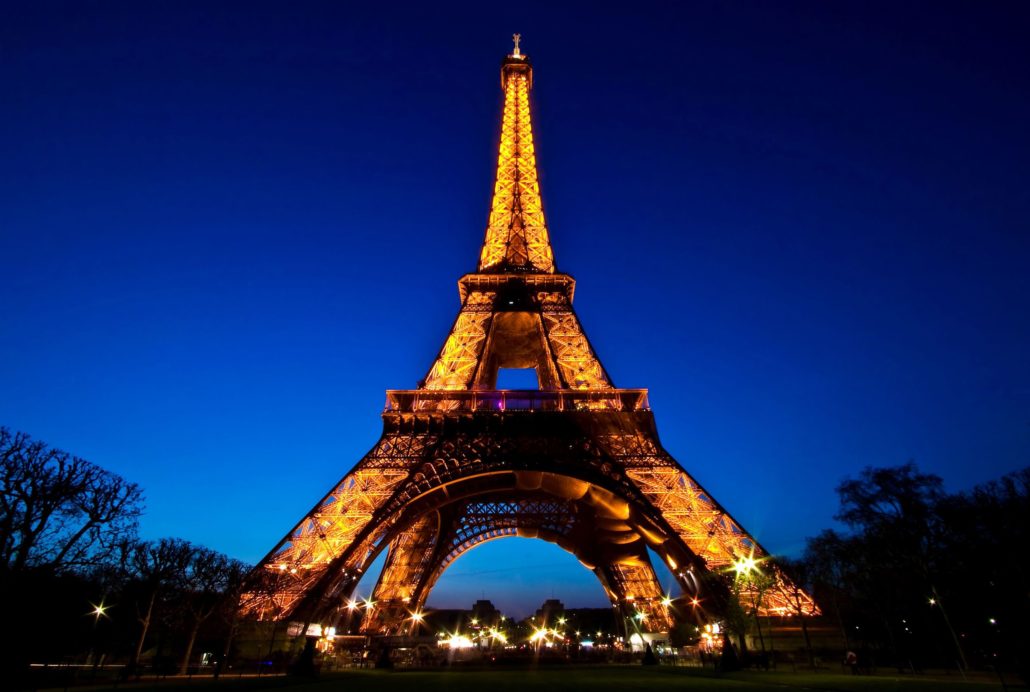
France is the world’s most visited country for good reason — it has more to offer, across more categories of travel, than almost anywhere else on earth. Paris alone is one of the great cities of human civilization. Lyon is the undisputed capital of French gastronomy. Nice anchors the Côte d’Azur, one of the most celebrated coastlines in the world.
Three cities that each represent a different France — and each reward a different kind of traveler.
France is a country of profound regional diversity — in food, landscape, architecture, dialect, and character — and the three cities we cover illustrate that diversity well. Paris, the capital, is a world unto itself: a city that has been the center of art, fashion, gastronomy, literature, and political philosophy for several centuries, and that still operates with an intensity and density of cultural life that no other city quite matches. Lyon, two hours south by TGV, has no interest in competing with Paris and is better for it — a city of two rivers, Renaissance architecture, and the most serious restaurant culture in France. Nice, on the Mediterranean coast near the Italian border, is a city shaped by both French and Italian influence, with a light, a landscape, and a cuisine that feel genuinely southern in a way that Paris and Lyon do not.
Understanding France well means understanding these regional differences. The food you eat in Lyon is not the food you eat in Nice. The pace of Nice is not the pace of Paris. These are not merely different cities — they are different Frances, each worth experiencing on its own terms.
The country that defined Western cooking, explored through three of its greatest expressions.
French cuisine is the foundation on which most of Western professional cooking is built — its techniques, its terminology, its structure of courses, and its insistence on quality ingredients and precise execution have shaped restaurant culture around the world. Within France, the regional variations are significant enough that eating in Lyon is a fundamentally different experience from eating in Nice or Paris.
- Lyon’s bouchon tradition — small, convivial restaurants serving the rich, offal-forward cuisine of Lyonnaise cooking (quenelles de brochet, andouillette, cervelle de canut, tablier de sapeur) — is one of the most specifically regional dining cultures in France and worth engaging with seriously
- Niçoise cuisine reflects the city’s Italian heritage and Mediterranean position — socca (chickpea flour flatbread), pissaladière (onion tart), salade niçoise as it actually exists in Nice (no green beans, no cooked vegetables), and fresh seafood from the Mediterranean define the local tradition
- Paris operates at every level from the world’s greatest fine dining to exceptional boulangeries and bistros — the city’s cheese shops, wine bars, covered markets (Marché d’Aligre, Marché des Enfants Rouges), and patisseries are as worthy of attention as its starred restaurants
- French wine is too large a subject for a summary, but the three cities anchor three important regions: Burgundy is accessible from Lyon, Provence rosé and Bandol are the wines of Nice and the Côte d’Azur, and the Champagne region and Loire Valley are within reach of Paris
- The boulangerie — the neighborhood bread bakery — is one of France’s great cultural institutions and the quality of bread across all three cities is a daily reminder of what the standard can be
Three cities, each with a complete set of guides.
Every city below includes a city guide covering neighborhoods and logistics, a food guide covering what to eat and where to find it, and an accommodation guide covering where to stay and why. The guides are designed to work together — use them in combination to build a complete picture of each destination.
Paris is one of a small number of cities that genuinely exceeds its reputation — a place where the density of things worth seeing, eating, and experiencing is higher than any reasonable expectation. The Louvre, the Musée d’Orsay, the Centre Pompidou, Sainte-Chapelle, Notre-Dame (rebuilt and reopened in 2024), and the Musée Rodin represent only a fraction of the city’s museum offering. The neighborhoods — Le Marais, Saint-Germain-des-Prés, Montmartre, Canal Saint-Martin, Belleville — each have distinct characters and reward exploration on foot. The food infrastructure of the city — its boulangeries, fromageries, wine bars, bistros, and covered markets — is available at every price point and every level of formality. Paris takes time to understand and rewards every additional visit with new depth.
Lyon is France’s gastronomic capital — a designation that Lyonnais consider not a boast but a simple statement of fact — and a city that rewards visitors who come specifically to eat. The bouchon tradition, the Halles Paul Bocuse indoor market, the constellation of starred restaurants (Paul Bocuse’s L’Auberge du Pont de Collonges among them), and the density of serious mid-range restaurants in the Presqu’île and Vieux-Lyon neighborhoods make it one of the finest cities in the world for eating at every level. Beyond food, the Renaissance architecture of Vieux-Lyon (a UNESCO World Heritage Site), the traboules (covered passageways through buildings), and the city’s position at the confluence of the Rhône and Saône give it a physical character as distinctive as its cuisine.
Nice is the capital of the French Riviera and the gateway to the Côte d’Azur — a city of 340,000 people with a beautiful Baroque old town (Vieux-Nice), a long seafront promenade (the Promenade des Anglais), and a light quality that has attracted painters from Matisse to Chagall. The Matisse Museum and the Chagall National Museum are both exceptional. The Cours Saleya flower and food market in Vieux-Nice is one of France’s best daily markets. Nice works equally well as a destination in its own right and as a base for exploring the surrounding Côte d’Azur — Monaco (20 minutes by train), Cannes, Antibes, Èze, and the Gorges du Verdon are all accessible for day trips.
France rewards depth over breadth. Resist the urge to cover too much.
France’s TGV high-speed rail network makes multi-city itineraries genuinely practical — Paris to Lyon takes 2 hours; Lyon to Nice takes 2.5 hours — and the temptation to cover all three cities plus additional destinations in a single trip is understandable. The better approach is to give each city the time it deserves rather than moving quickly between all of them.
Getting between cities. SNCF’s TGV network is France’s best asset for intercity travel. Book at sncf-connect.com — advance booking yields significantly better prices and is essential on popular routes during peak season. Paris to Lyon runs every 30–60 minutes; Lyon to Nice has frequent daily services.
How long to allocate. Paris deserves a minimum of four days on a first visit — five or six to begin to understand it properly. Lyon rewards three to four days, particularly for food-focused travelers. Nice works well as three days with day trips, or two days as part of a broader Côte d’Azur itinerary.
Seasons. Paris and Lyon are excellent year-round — spring (April–June) and autumn (September–October) are the finest months for both. Nice and the Côte d’Azur peak in summer (July–August) when the French Riviera is at its most crowded and most expensive; May, June, and September are significantly better for visitors who want warmth without peak crowds.
Explore more of our France coverage below.