
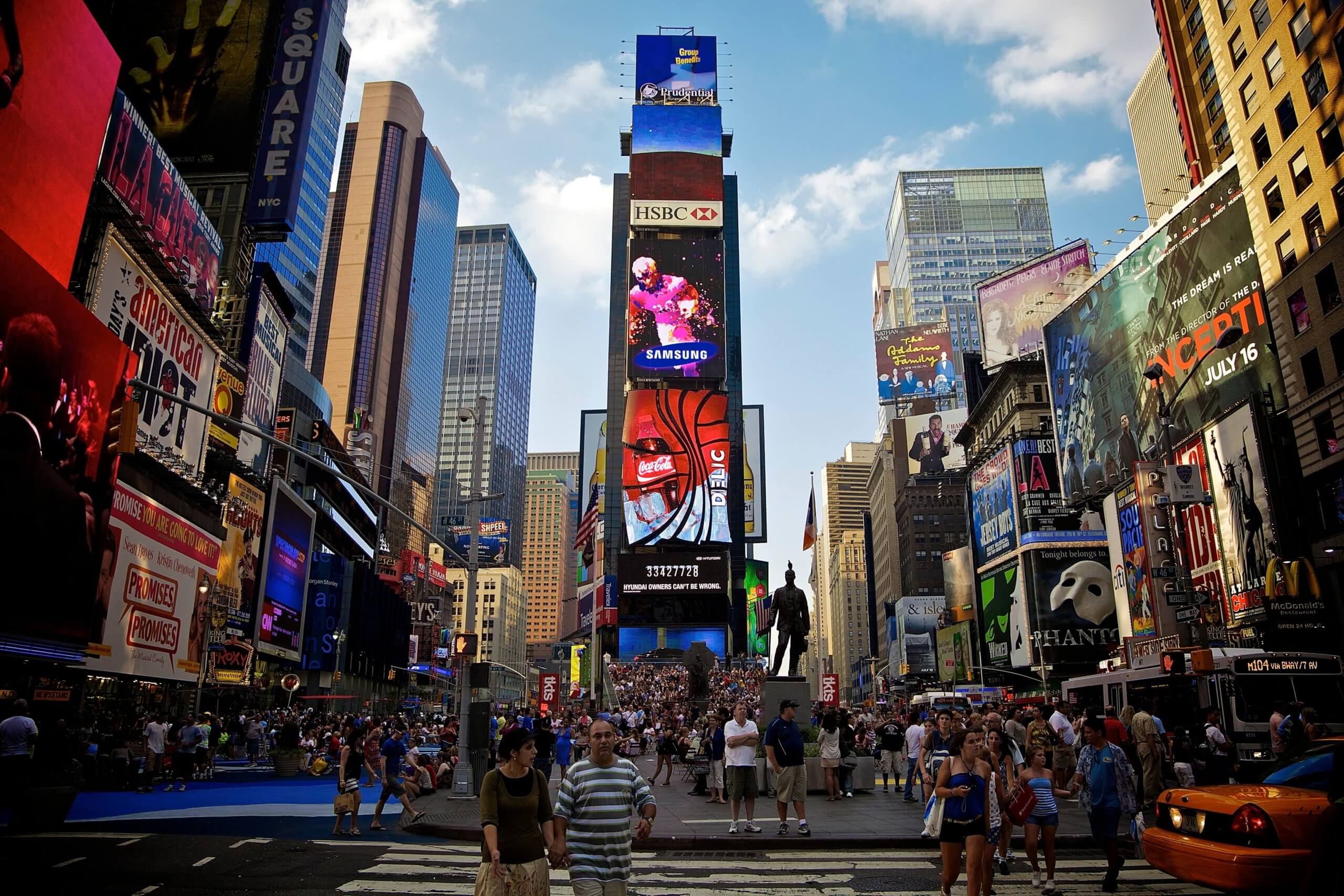
The United States is a continent-sized country of extraordinary regional variety — twelve cities that each represent a distinct American identity, from New York’s vertical density to New Orleans’ Caribbean-inflected culture, from the Pacific coast to the Gulf of Mexico and everywhere in between.
Fifty states, one continent, and twelve cities that together cover the full range of what America actually is.
The United States is large enough that its cities function as separate destinations rather than stops on a single national itinerary — the distance from New York to Los Angeles is roughly the same as from London to Tehran, and the cultural, culinary, climatic, and architectural differences between American cities are correspondingly significant. New York and New Orleans are both American but have almost nothing in common. Seattle and Miami share a country but not a recognizable version of it.
This regional diversity is one of America’s great travel assets and one that international visitors often underestimate. First-time visitors tend to divide their trip between New York and Los Angeles or New York and Miami — both solid choices — but the cities that often produce the strongest impressions are the ones visitors arrive at less prepared: New Orleans, San Francisco, Chicago, and Nashville all have characters so specific and so developed that they reward visitors who approach them with genuine curiosity rather than a checklist.
The world’s most varied food landscape — regional cuisines, immigrant traditions, and a craft food culture that has transformed American eating.
American food culture is frequently caricatured internationally in ways that bear no relationship to what is actually available in the country’s best cities. The US has some of the world’s finest restaurants, an extraordinary range of regional food traditions, and a craft food movement — in coffee, beer, spirits, cheese, and charcuterie — that has transformed American eating over the past two decades.
- Regional American food traditions are as distinct as the regions of France or Italy — New Orleans’ Creole and Cajun cooking, Texas barbecue, New York’s deli culture and pizza, the seafood traditions of New England, the Tex-Mex border cuisine of San Antonio, and the Pacific Rim-influenced cooking of San Francisco and Seattle are all genuinely different and all worth engaging with in their places of origin
- American barbecue is a serious regional tradition — Texas brisket smoked over post oak for 12+ hours, Kansas City ribs, Memphis dry-rub ribs, and Carolina pulled pork with vinegar sauce are four distinct and non-interchangeable traditions, and the best versions require the same kind of pilgrimage that serious food travel demands anywhere
- The American craft beer revolution has produced some of the world’s most interesting brewing — Pacific Northwest IPAs, Vermont sour beers, Kentucky barrel-aged stouts, and the terroir-driven brewing of California and the Northeast have collectively raised American beer from a global punchline to a genuine world leader
- New Orleans food culture is one of the most distinct and most deeply rooted in the United States — gumbo, jambalaya, po’boys, beignets, and the specific Creole and Cajun traditions that blend French, African, and Caribbean influences are available nowhere else in the form they take here
- American brunch culture — particularly in New York, Los Angeles, San Francisco, and Austin — is a serious institution that extends well beyond eggs Benedict, and the quality of brunch at good independent restaurants in these cities is consistently excellent
Twelve cities, each with a complete set of guides.
New York is the most internationally recognizable American city and one of the great cities of the world — a place where the density of culture, food, architecture, and human variety within a concentrated urban area is matched only by London and Tokyo. The Metropolitan Museum of Art, MoMA, the Whitney, the Guggenheim, and the Brooklyn Museum represent one of the world’s great art museum concentrations. The neighborhoods — Manhattan’s West Village, Lower East Side, and Harlem; Brooklyn’s Williamsburg, Park Slope, and Bushwick; the Bronx and Queens — each have distinct characters worth understanding rather than treating as interchangeable. New York is expensive for accommodation but extraordinarily rich in free and low-cost experiences.
Los Angeles is the most misunderstood major American city — a sprawling, car-dependent metropolis that rewards visitors who understand its structure rather than expecting it to behave like a compact European capital. The Getty Center (free admission, with one of the world’s finest art collections), the Los Angeles County Museum of Art, the Getty Villa (Greek and Roman antiquities in a Malibu hillside setting), and the neighborhoods of Silver Lake, Los Feliz, Highland Park, and Venice all reward time. The food scene — particularly Korean food in Koreatown, Mexican food across East LA, and the Japanese food of Little Tokyo and Sawtelle — is exceptional and reflects the city’s demographics more accurately than the celebrity restaurant circuit. A rental car is non-negotiable.
Chicago is America’s architectural capital — the city where the skyscraper was invented, where Louis Sullivan and Frank Lloyd Wright developed the principles of modern architecture, and where the Chicago School produced a built environment of extraordinary quality and variety that is still being added to. The Art Institute of Chicago holds one of the world’s finest art collections including the greatest concentration of Impressionist and Post-Impressionist painting outside Paris. The Chicago River architecture boat tour is one of the best two hours available in any American city. The food scene — deep-dish pizza (a specific and polarizing Chicago institution), Chicago-style hot dogs, and a serious fine dining scene — is consistently excellent.
San Francisco is one of America’s most beautiful cities — compact by American standards, built on hills with the bay on three sides, and with a food culture that has been at the forefront of American cooking since the 1970s when Alice Waters at Chez Panisse pioneered the farm-to-table movement. The Ferry Building Marketplace, the Mission District’s burritos and taquerias, Chinatown (the oldest in North America), the neighborhoods of the Castro, Haight-Ashbury, and the Richmond, and the day trip to wine country in Napa and Sonoma (an hour north) are all essential. San Francisco is expensive and has significant social challenges that are visible in the city center — approach it with clear eyes and genuine curiosity.
New Orleans is America’s most culturally distinct city — a place where French colonial history, African heritage, Caribbean influence, and American culture have merged to produce something genuinely unlike anywhere else in the country. The French Quarter, the Garden District, the Tremé (the oldest African American neighborhood in the United States), the live jazz on Frenchmen Street, the Creole cooking at restaurants like Commander’s Palace and Dooky Chase, and the specific New Orleans tradition of drinking on the street (legal in the city) make it one of America’s most memorable destinations. Mardi Gras is extraordinary and requires booking accommodation a year ahead.
Austin is Texas’s cultural capital — a city of live music, exceptional barbecue, a thriving tech industry, and a counterculture tradition that has survived the city’s rapid growth. Nashville is America’s country music capital and a city that has developed a food scene and hospitality culture well beyond its honky-tonk reputation. Las Vegas is a destination unlike any other — an adult entertainment city in the Nevada desert where the casino resort architecture, the concentration of celebrity chef restaurants, and the sheer spectacle of the Strip reward visitors who approach it on its own terms rather than expecting anything resembling normal city life.
Seattle is the Pacific Northwest’s great city — coffee culture (the birthplace of Starbucks, but more importantly the city that developed American specialty coffee), Pike Place Market, the Museum of Pop Culture, and proximity to Olympic National Park and the Cascades. Miami is the most internationally diverse city in the US — a Latin American capital on the Atlantic with South Beach’s Art Deco architecture, the Wynwood Walls street art district, and a Cuban food culture in Little Havana that is unique in the country. Tampa is Florida’s most underrated city — Ybor City’s Cuban heritage, the Tampa Riverwalk, Busch Gardens, and a growing food scene make it a legitimate destination rather than just a gateway.
Orlando is the theme park capital of the world — Walt Disney World, Universal Orlando, SeaWorld, and LEGOLAND collectively make it the most visited tourist destination in the United States by attendance. Planning a Disney or Universal trip requires significant advance research — park reservations, Lightning Lane passes, and restaurant bookings at popular in-park restaurants all need to be made weeks or months ahead. Beyond the theme parks, Orlando has a genuinely good independent food and arts scene in the NOMA (North Mills Avenue) and Thornton Park neighborhoods that is largely invisible to visitors who never leave the resort corridor.
Fly between regions. Treat each city as its own destination. The distances are real.
Getting around. Domestic flights are the practical way to move between American cities — the distances are too great for rail in most cases, and Amtrak’s intercity service, while scenic on certain routes (the California Zephyr, the Coast Starlight), is too slow for time-limited visitors. Southwest, Delta, United, American, and budget carriers including Spirit and Frontier all operate extensive domestic networks. Book in advance for better fares.
Car culture. Most American cities outside New York require a car to experience properly. Los Angeles, Miami, Austin, Nashville, and Tampa are all car-dependent in ways that European cities are not. Rental cars are available at all major airports and are an expected part of travel in most of the country.
Tipping. Tipping in the US is not optional social convention but the primary mechanism through which service workers are paid — restaurant servers receive a base wage of $2.13 per hour in many states, with tips making up the remainder of their income. The standard tip at sit-down restaurants is 20% of the pre-tax bill. Not tipping is not an acceptable cultural difference; it directly impacts the worker’s income.
Explore more of our United States coverage below.