
The Perfect France Itinerary
Ten days covering the capital, the food city the world underestimates, and the south that painters have been trying to capture for two centuries. With a two-week extension for travelers who want more.
Most France Itineraries Make the Same Mistake
They treat the country as Paris plus a few days somewhere else. Paris for five days, a night in Nice, maybe a day trip to Versailles. It is not a bad trip. But it is not France — it is the front page of France, and the country has considerably more than a front page.
France is the most visited country in the world for a reason. It has one of the world's two or three greatest food cultures, a wine landscape of extraordinary diversity, a coastline spanning the Atlantic, the English Channel, and the Mediterranean, Alpine and Pyrenean mountain ranges, and a collection of medieval towns and river valleys that most international visitors never reach. The challenge of a France itinerary is not finding enough to do — it is making honest choices about what to prioritize and what to leave for next time.
This itinerary covers Paris, Lyon, and Provence in ten days at a pace that allows for genuine engagement rather than landmark sprinting. It makes specific arguments for specific choices. Where we tell you to skip something, we mean it.
The TGV Is Your Best Friend
France's high-speed rail network connects Paris to Lyon in two hours, Paris to Marseille in three hours twenty minutes, and Paris to Nice in five and a half hours. These journey times are competitive with flying once you account for airport check-in and transfer time, and the train deposits you in the center of each city rather than at an airport forty minutes out.
Book through sncf-connect.com or Rail Europe. Advance booking — ideally six to eight weeks ahead for peak season — yields significantly better prices than booking close to departure. The difference between an advance TGV fare and a walk-up fare on the same route can be €80–100 per person.
Within Paris, the Metro covers the city comprehensively. A weekly Navigo pass covers all Metro, bus, and RER journeys within Paris and is the correct tool for a four-day stay. For Provence and the Luberon villages specifically, a rental car unlocks the landscape in a way that public transport cannot — the villages are close together on a map but the roads between them require a car, and the driving itself through lavender fields and dry-stone Provençal landscape is part of the experience.
Paris
Four days in Paris is not too long. If you have been before, four days is still not too long — it is the minimum required to move past the first layer of the city and start to understand what makes it genuinely extraordinary rather than simply famous.
The instinct to pack Paris days with monuments is understandable and mostly wrong. The Louvre alone contains enough significant art to occupy a full day if you take it seriously, and taking the Louvre seriously while also doing the Musée d'Orsay, Notre-Dame, the Eiffel Tower, Versailles, and Montmartre in four days produces a trip that consists entirely of queuing and being slightly too tired to appreciate what you are looking at. Choose less. See it properly.
Arrive, check in, and resist the temptation to immediately begin sightseeing. Paris rewards the traveler who arrives into its rhythm rather than imposing a pace on it. Walk to wherever looks interesting from your hotel. Find a café and sit in it for longer than feels efficient. Eat dinner late — 8pm is not unreasonably late in Paris, and the best neighborhood restaurants fill between 8 and 9:30pm.
If you are in the Marais, the 3rd and 4th arrondissements reward an afternoon of aimless walking more than almost any other neighborhood in the city. The Place des Vosges — Paris's oldest planned square, built in 1612, surrounded by red-brick arcaded buildings — is one of the finest urban spaces in Europe and is best appreciated by sitting in it rather than photographing it from the perimeter. The Musée Picasso nearby is one of Paris's best museums: comprehensive, rarely as crowded as the major institutions, housed in a beautiful 17th-century mansion.
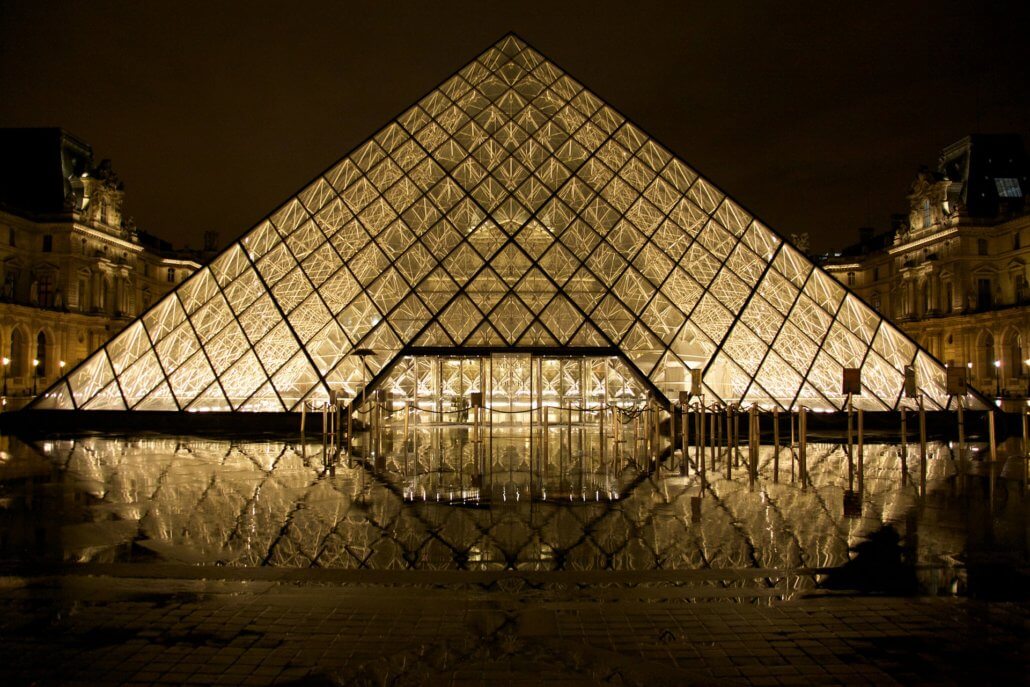
Allocate your second morning to the Louvre. Book tickets in advance at louvre.fr — the queue without advance tickets in peak season runs to 90 minutes or more. Arrive at opening, go directly to what you most want to see, and leave before noon when the crowds peak. The Winged Victory of Samothrace and the Dutch Masters rooms are less visited than the Mona Lisa corridor and reward a focused visit.
Spend your afternoon on the Left Bank. The Musée d'Orsay holds the world's greatest collection of Impressionist painting — Monet, Renoir, Degas, Van Gogh — in a more manageable scale than the Louvre. The Sainte-Chapelle, on the Île de la Cité near Notre-Dame, has the finest medieval stained glass in France: 15 panels covering 600 square meters, flooding the upper chapel with colored light on a clear morning in a way that is one of the most purely beautiful things available in Paris.
The Palace of Versailles is 35 minutes from central Paris by RER C. Arrive before 9am, book tickets in advance at chateauversailles.fr, focus on the State Apartments and the Hall of Mirrors, and leave by noon before the coach groups arrive. The Hall of Mirrors alone justifies the journey — 73 meters of gilded walls and arched mirrors reflecting the gardens below is one of the most theatrically impressive interiors in Europe.
Spend your evening in Montmartre. The hill is touristy around the Sacré-Cœur, but the streets behind it — the Place du Tertre, the old vineyard, the Abbesses neighborhood — are quieter and more genuinely Parisian. The view from the steps of Sacré-Cœur at sunset over the city is one of Paris's finest. Eat dinner in the neighborhood: the streets around Abbesses Metro have unpretentious bistros that show a different Paris from the tourist corridors below.
Use your fourth day to move at a Paris pace. The Canal Saint-Martin in the 10th arrondissement — a tree-lined urban canal with iron footbridges and a neighborhood of independent cafés and bookshops — shows a side of Paris that the major monuments do not. The Palais Royal gardens, a few minutes from the Louvre, are passed by visitors walking to the museum without most of them noticing: a colonnaded garden behind a 17th-century palace, quiet on most mornings, with covered galleries housing antique shops and quiet cafés.
Book your morning TGV to Lyon before dinner. Departures before 8am are typically cheaper and arrive in time for a full first day in the south.
Lyon — The City Most France Itineraries Skip
Lyon is the most significant error most France itineraries make. France's third city is, by the consistent assessment of chefs, food writers, and serious travelers, the finest food city in France — which makes it, by extension, one of the finest food cities in the world. Paul Bocuse built his career here. The bouchon — the specifically Lyonnais bistro serving traditional cooking in a format essentially unchanged since the 19th century — is one of the most specific and most rewarding culinary experiences in Europe. The Halles de Lyon Paul Bocuse is the finest food market in France.
Lyon also has a UNESCO World Heritage historic center of significant beauty. The traboules — covered passageways threading through the Renaissance fabric of the Presqu'île and Vieux Lyon neighborhoods — are unique to the city and reward exploration with a guide who knows which ones are accessible. The Musée des Confluences, a contemporary science and natural history museum at the tip of the peninsula where the Rhône and Saône rivers meet, is one of the finest museum buildings in France.
Arrive from Paris in time for lunch. Drop your bags and walk directly to the Halles de Lyon — open Tuesday through Sunday until 10:30am on weekdays, later on weekends — to eat standing at the stalls. The concentration of French cheese, charcuterie, bread, chocolate, and fresh produce in a single covered market is unmatched anywhere in the country. Buy provisions, taste what is offered, and understand immediately why Lyon's claim to culinary supremacy is not marketing but lived reality.
Spend your afternoon in Vieux Lyon, the Renaissance quarter on the west bank of the Saône. The traboules here — some accessible through open courtyards, others through unmarked doors — thread through interiors that feel genuinely medieval. The Cathédrale Saint-Jean has an astronomical clock from the 14th century that still functions. Eat dinner at a certified bouchon. The Toques Blanches Lyonnaises association identifies traditional establishments with a plaque at the door — this is the credential that matters.
Two days in Lyon is the right allocation — enough to eat in multiple bouchons, visit the Halles on a morning when you have appetite and time, explore the Presqu'île neighborhood between the two rivers, and possibly take a day trip to one of the Beaujolais villages thirty minutes north by regional train. The specific Lyonnais dishes worth seeking out: quenelles de brochet (pike dumplings in crayfish sauce), salade lyonnaise (frisée with lardons and a poached egg in a warm vinaigrette), andouillette for the adventurous, and the cheese trolley at any serious table, which will contain varieties available nowhere outside the region.
The Musée des Beaux-Arts de Lyon, on the Place des Terreaux, has one of France's finest collections outside Paris — strong in Dutch and Flemish masters and exceptional in its medieval and Renaissance rooms. Free on the first Sunday of each month. Book your morning TGV to Marseille on day seven's evening.
Provence & the Riviera
The train from Lyon to Marseille takes 1 hour 40 minutes and arrives in one of France's most complex and most genuinely interesting cities. Marseille is not what most visitors expect — rougher around the edges than Parisian France, multicultural in ways that reflect its North African and Mediterranean heritage, and possessed of a food culture centered on bouillabaisse, socca, and a street life energy that is more North African souk than French grande ville.
Most itineraries send visitors directly to Nice, bypassing Marseille. This is an error. The MuCEM (Museum of European and Mediterranean Civilisations) at the entrance to the old port is one of France's finest contemporary cultural buildings. The Calanques — dramatic limestone inlets of turquoise water accessible by boat or on foot — are unique in Europe. The Vieux Port at any hour of day is one of the most specifically alive urban spaces in France.
Spend your morning in Marseille — the Vieux Port, the MuCEM, and Notre-Dame de la Garde on the hilltop above the city with its panoramic views over the bay. Take an afternoon bus or train to Aix-en-Provence, an hour away, which is the Provence of the postcard imagination: a handsome university city of 17th and 18th-century architecture, plane-tree-lined boulevards, and the Cours Mirabeau, one of France's finest urban boulevards. The Atelier Cézanne — the artist's studio preserved as he left it in 1906, with the objects he painted still arranged on the shelves — is one of the most moving small museums in France for anyone with an interest in painting.
The Luberon — the mountain range east of Aix — contains the cluster of hilltop villages that represent Provence at its most concentrated and most beautiful: Gordes, Roussillon, Ménerbes, Lacoste, Bonnieux. Roussillon is built from and surrounded by ochre cliffs of extraordinary color intensity — red, orange, and burnt sienna against the Provençal blue sky — that were mined here for centuries. Gordes, perched on a cliff face above the Imergue valley, is the most photographed village in Provence; visit early morning or late afternoon to avoid the midday crowds. The Sénanque Abbey three kilometers from Gordes, set in a valley of lavender fields at their peak in July, is one of the most beautiful settings of any Cistercian monastery in France.
A rental car is the right tool for the Luberon. The villages are close together on a map but the roads between them require a car, and the driving through lavender fields, cherry orchards, and the dry-stone landscape of inland Provence is part of the experience rather than dead time between destinations.
Nice is a better city than its Riviera reputation suggests — more substantial, more Italian in character (it was part of the Kingdom of Sardinia until 1860), with a food culture rooted in the specific Niçoise tradition. Salade niçoise made with fresh tuna rather than canned. Socca — a chickpea pancake eaten hot from a wood-fired oven — from a vendor in the Cours Saleya market. Pissaladière, a caramelized onion and anchovy tart that is available everywhere and is worth seeking at a good boulangerie rather than a restaurant. The Cours Saleya morning market is the finest on the Riviera. The Musée Matisse, set in a 17th-century Genoese villa above the city, holds the world's largest Matisse collection and is among the finest artist's museums in France.
From Nice: Monaco is 22 minutes east by train — the Oceanographic Museum is exceptional and justifies the trip independently of the casinos. Antibes is 17 minutes west with a good old town and the Musée Picasso in the 14th-century Grimaldi castle. Cannes is most interesting during the film festival and relatively less so outside it.
Add Bordeaux and the Loire Valley
If you have fourteen days rather than ten, the additional four days are best spent in Bordeaux and the Loire Valley. Both connect to Paris by TGV and both represent France at its most specifically French — wine culture in one, royal château culture in the other.
Bordeaux — Two Days
Bordeaux's 18th-century neoclassical city center — the Place de la Bourse, the quais along the Garonne, the Grand Théâtre — is UNESCO World Heritage listed and genuinely beautiful in the way that cities planned at a single moment of architectural consensus tend to be. The Cité du Vin, a contemporary wine museum shaped like a decanter, is worth half a day. Saint-Émilion — a medieval hilltop village of golden limestone surrounded by classified vineyards, 45 minutes by train — is one of the most beautiful small towns in France on its own terms independent of its wine reputation.
The Loire Valley — Two Days
The Loire Valley contains over 300 Renaissance châteaux along 280 kilometers of river. The three that matter most for a two-day visit are Chambord (Francis I's hunting lodge of 440 rooms and a double-helix staircase attributed to Leonardo da Vinci), Chenonceau (which spans the Cher River on five arches and is the most photogenic château in France), and Cheverny (the finest preserved interiors and the inspiration for Moulinsart in Hergé's Tintin). The Loire à Vélo cycle route covers the valley on flat, well-marked paths passing most major châteaux — rental bikes are available at the train stations in Blois and Tours.
- May, June, and September are France's finest travel months — reliable weather, excellent light, and crowds that have not yet reached July–August peak
- Book TGV tickets six to eight weeks ahead for best prices — the difference between advance and walk-up fares on the Paris–Marseille route can exceed €100 per person
- French restaurants serve lunch noon–2pm and dinner from 7:30pm — arriving after 2pm typically means finding the kitchen closed regardless of how hungry you are
- Begin every interaction in France with "bonjour" — the supposed Parisian coldness toward non-French speakers is almost entirely a response to visitors who open in English without acknowledgment that they are in a French-speaking country
- The plat du jour at lunch is almost always the best value at any traditional French restaurant — freshly made, often the chef's best work of the day, priced at a fraction of the carte equivalent
- A good baguette from a boulangerie using the MOF designation (Meilleur Ouvrier de France) is something genuinely different from any bread available in most of the world — the queue outside a boulangerie at 7:30am is the most reliable quality signal
The Bottom Line
Ten days covering Paris, Lyon, and Provence gives you three genuinely different Frances — the monumental and intellectual capital, the food capital the world has undervalued for decades, and the landscape and light that painters have been trying to capture since the Impressionists arrived in the south in the 1880s. It is enough to fall in love with the country. It is not enough to understand it, which is exactly as it should be — France is the kind of destination that rewards return visits across a lifetime rather than a single comprehensive sweep.
Go. Come back. The country will still have more to show you.