
Australia’s east coast cities are among the most livable in the world — and among the most underestimated as travel destinations. Sydney, Melbourne, and Brisbane each have a distinct character, a serious food culture, and a relationship with the outdoors that shapes everything from neighborhood layout to how people spend their weekends.
Three cities on one coast, each with a personality entirely its own.
Australia is vast — roughly the size of the continental United States — but the majority of its population and its most visited destinations are concentrated along the east coast. Sydney, Melbourne, and Brisbane form the core of Australian urban life, and the three cities have developed distinct identities despite their geographic proximity. Sydney is defined by its harbor and its outdoor confidence; Melbourne by its laneways, coffee culture, and arts scene; Brisbane by its subtropical warmth and a more relaxed pace that has increasingly attracted people and investment away from the larger southern cities.
For travelers, the east coast structure makes multi-city itineraries practical. The three cities are connected by frequent flights, and the distances between them — while significant on a map — are manageable. What requires more planning is understanding each city’s internal geography, because Australia’s urban areas are large and spread out in ways that European and many North American cities are not. Where you stay relative to what you want to do matters considerably.
One of the world’s great multicultural food landscapes, shaped by geography and immigration.
Australia’s food culture is genuinely exceptional and consistently surprises visitors who arrive without high culinary expectations. Decades of immigration from across Asia, the Mediterranean, and the Middle East have produced a food landscape that draws on a remarkable range of traditions — and Australian chefs have developed a distinctive approach that integrates these influences with outstanding local produce and seafood.
- Coffee culture in Melbourne and Sydney is among the world’s best — Australia developed its own espresso tradition independently and the standard is consistently high across all three cities
- Seafood is exceptional, particularly Sydney rock oysters, Moreton Bay bugs (a sweet, lobster-like crustacean from Queensland), and barramundi
- Asian food — particularly Vietnamese, Chinese, Japanese, Thai, and Korean — is integrated into daily Australian eating rather than being treated as specialty cuisine; some of the best versions of these cuisines outside Asia are found in Sydney and Melbourne
- Brunch culture is a serious institution, particularly in Melbourne, where the quality of weekend brunch spots consistently outperforms equivalents in most other countries
- Australian wine — particularly from the Barossa Valley, Clare Valley, Yarra Valley, and Margaret River — is world-class and significantly more affordable in Australia than when exported
Three cities, each with a complete set of guides.
Every city below includes a city guide covering neighborhoods and logistics, a food guide covering what to eat and where to find it, and an accommodation guide covering where to stay and why. The guides are designed to work together — use them in combination to build a complete picture of each destination.
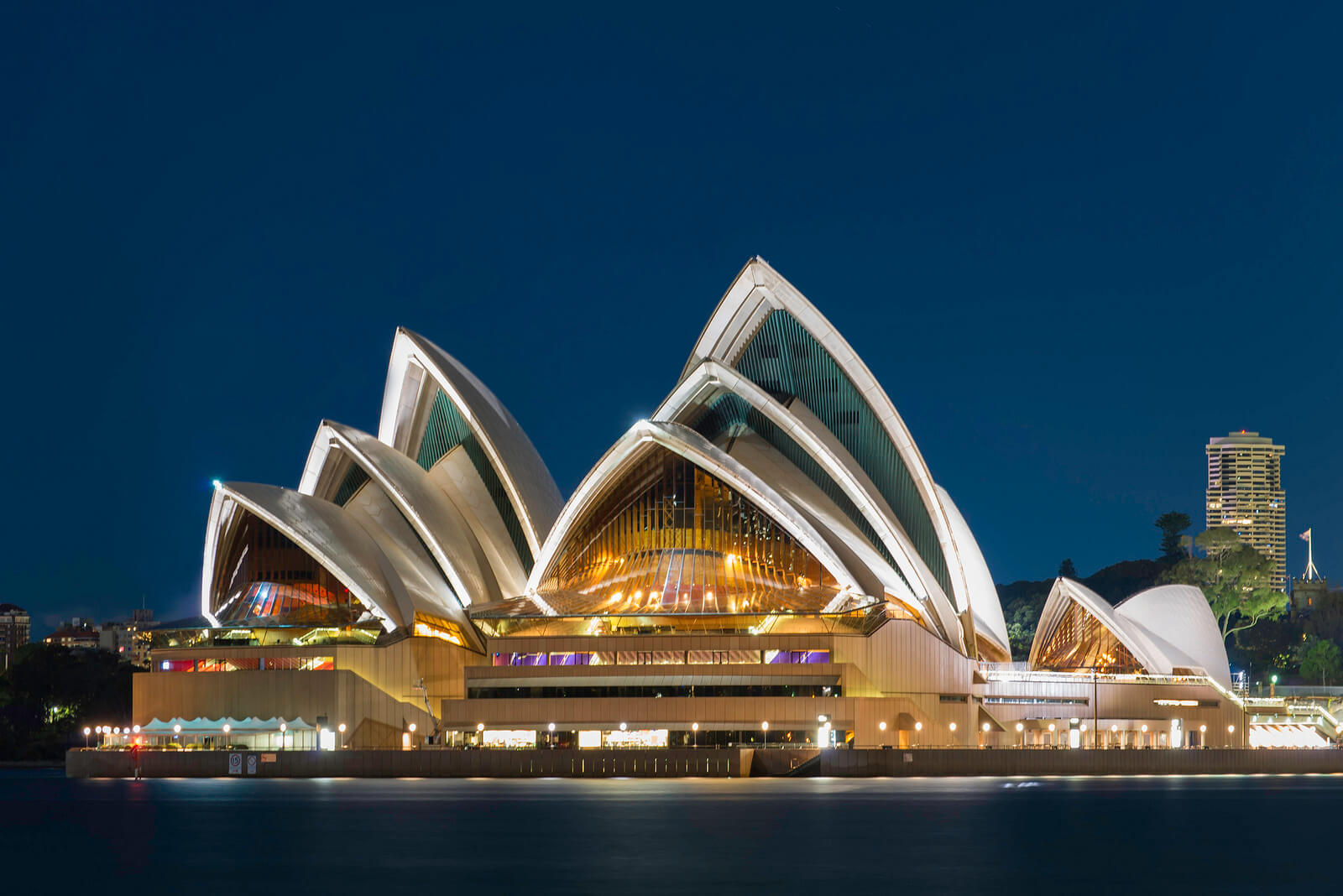
Sydney is one of the world’s great harbor cities — a place where the relationship between the urban fabric and the water is fundamental to daily life rather than merely scenic. The Opera House and Harbour Bridge are genuine icons, but Sydney’s depth lies in its neighborhoods: Surry Hills and Newtown for food and bars, Bondi for the beach culture, Paddington for galleries and independent shopping, and the inner west for the city’s most interesting restaurant scene. Sydney is large and its attractions are spread out — neighborhood choice and transit planning are essential for making the most of limited time.
Melbourne is Australia’s cultural capital and its best city for food — a claim contested by Sydneysiders but broadly accepted by anyone who has eaten seriously in both. The laneway coffee culture, the Queen Victoria Market, the concentration of independent restaurants in Fitzroy, Collingwood, and St Kilda, and the city’s genuine commitment to arts, sport, and street life give it a character distinct from Sydney’s harbor-focused, outdoor-oriented personality. Melbourne rewards the kind of aimless neighborhood exploration that Sydney’s geography doesn’t always facilitate — the inner suburbs are dense, walkable, and consistently interesting.
Brisbane is the most underestimated of Australia’s major cities and the one that has changed most dramatically in the past decade. The subtropical climate — warm, sunny, and reliably good — shapes the city’s outdoor culture and its food scene, which leans toward fresh, light, and produce-driven cooking. The South Bank precinct, the Fortitude Valley neighborhood, and the riverside areas around New Farm and West End are the most rewarding parts of the city for visitors. Brisbane also works well as a base for day trips to the Gold Coast, the Sunshine Coast, and the Moreton Bay islands.
Plan around the distances. Australia rewards time more than efficiency.
The most common mistake visitors make in Australia is underestimating scale — both at the country level and within individual cities. Sydney and Melbourne are genuinely large cities with spread-out attractions, and trying to cover too much in too little time consistently produces a worse experience than focusing on fewer neighborhoods and staying longer.
Getting between cities. Domestic flights are the practical way to move between Sydney, Melbourne, and Brisbane — journey times of around 1.5 hours and frequent departures on Qantas, Virgin Australia, and Jetstar. Book ahead for better prices. Trains exist but are slow for intercity travel; the Sydney–Melbourne Overland is scenic but takes 11 hours.
How long to allocate. Sydney and Melbourne each deserve a minimum of four days. Five to six days per city allows for day trips — the Blue Mountains from Sydney, the Yarra Valley from Melbourne — without feeling rushed in the city itself. Brisbane works well as three to four days, with at least one day trip built in.
Seasons. Australia’s seasons are reversed from the Northern Hemisphere. Summer (December–February) is hot and can be extreme in parts of the country. The shoulder seasons — March to May and September to November — offer the best conditions across all three east coast cities. Sydney and Brisbane are year-round destinations; Melbourne’s weather is famously unpredictable regardless of season.
Explore more of our Australia coverage below.