
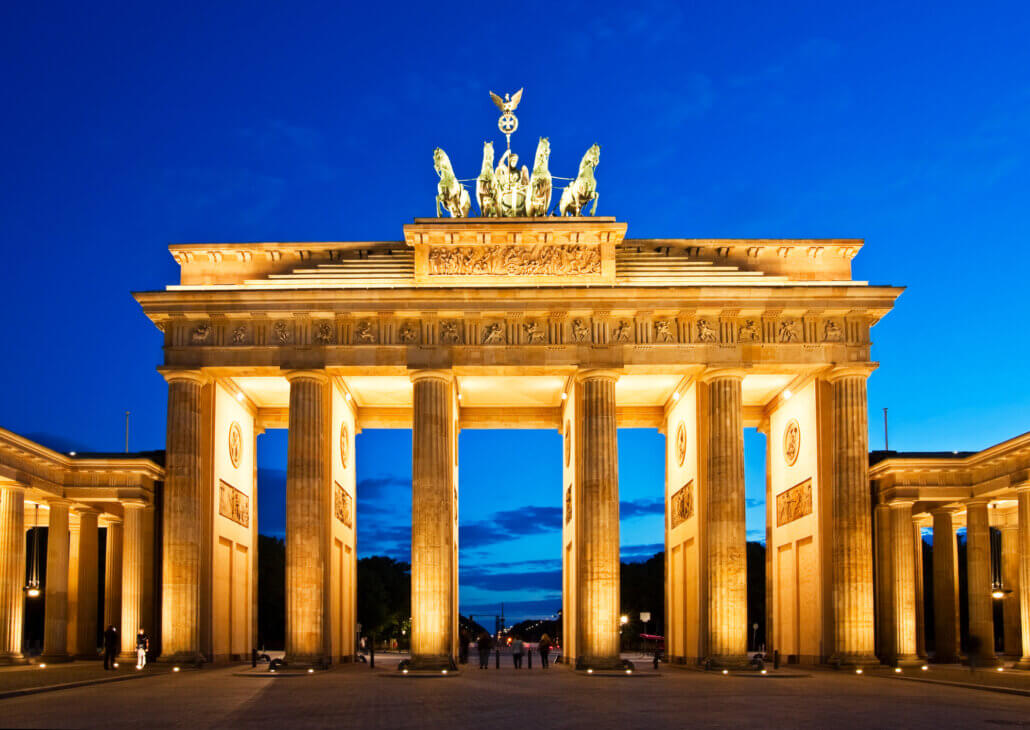
Germany is a country of strong regional identities and three cities that could not be more different from each other. Berlin is one of the world’s great contemporary cities — raw, creative, and still redefining itself. Munich is prosperous, tradition-conscious, and the gateway to the Alps. Hamburg is a port city of maritime confidence and one of Northern Europe’s best food and music scenes.
A federal country of distinct regions — three cities that each represent a different Germany entirely.
Germany’s federal structure has produced a country of strong regional identities, and its three largest cities illustrate this more clearly than any summary could. Berlin, the capital, is a city still processing its 20th-century history — the division, the Wall, the reunification — while simultaneously operating as one of Europe’s most dynamic creative and cultural capitals. Munich, the capital of Bavaria, has an identity so distinct from Berlin’s that it might as well be a different country: conservative, prosperous, Catholic, and deeply proud of its beer, its food, and its Alpine proximity. Hamburg, on the North Sea, is Germany’s second-largest city and its principal port — an outward-looking, cosmopolitan city with a long maritime trading tradition and a self-sufficiency that comes from having been one of Europe’s great independent commercial cities.
Visitors who treat Germany as a single, uniform destination miss what makes it interesting. The differences between Berlin, Munich, and Hamburg — in food, architecture, pace, and character — are genuine and significant, and approaching each city on its own terms produces a much more rewarding experience than treating them as interchangeable stops on a Germany itinerary.
Beer culture, regional traditions, and a contemporary food scene that has outgrown its bratwurst reputation.
German food has suffered from an international reputation built largely around a narrow set of items — sausages, pretzels, schnitzel, sauerkraut — that are genuine staples but represent only one dimension of a regional food culture of considerable depth and variety. The food of Bavaria is genuinely different from the food of Hamburg, which is genuinely different from the food of Berlin’s contemporary restaurant scene.
- Bavarian food — Weißwurst (white veal sausages eaten before noon by tradition, with sweet mustard and a pretzel), Schweinshaxe (roasted pork knuckle), Obatzda (Camembert spread) — is a regional tradition taken seriously in Munich and quite different from what you eat in Berlin or Hamburg
- Hamburg’s maritime tradition produces excellent North Sea seafood — Matjes herring, smoked eel, Bismarck herring — and the Fischmarkt (fish market) on the Elbe, held Sunday mornings from dawn, is one of the city’s great food experiences
- Berlin’s contemporary food scene has developed its own identity over the past two decades — a young, international, street food-forward culture that reflects the city’s demographics and its openness to influence from across Europe, the Middle East, and Asia
- German beer culture is regional and serious — Bavarian Weißbier and Helles lager in Munich’s beer gardens; Pilsner and craft beer in Hamburg and Berlin — and drinking beer in the context in which it was made (a Munich biergarten in summer, a Berlin Kneipe in winter) is a specifically German experience worth having
- German bread culture is among the world’s finest and most diverse — over 300 distinct bread varieties are recognized, from the dense, sour rye loaves of the north to the soft pretzels of Bavaria
Three cities, each with a complete set of guides.
Every city below includes a city guide covering neighborhoods and logistics, a food guide covering what to eat and where to find it, and an accommodation guide covering where to stay and why. The guides are designed to work together — use them in combination to build a complete picture of each destination.
Berlin is one of Europe’s most compelling cities and one of its most historically layered — a place where the physical evidence of division, war, and reunification is still visible on nearly every street in the former border areas. The Berlin Wall Memorial, the Holocaust Memorial, the Topography of Terror, and the DDR Museum are all within easy reach of each other. But Berlin is equally a city of extraordinary museums (Museum Island is a UNESCO World Heritage Site), excellent contemporary art, the best nightlife in Europe, and a food scene in Kreuzberg, Neukölln, and Prenzlauer Berg that has developed a genuine identity. Berlin is large, spread out, and rewards multiple visits — no single trip covers it comprehensively.
Munich is Germany’s most prosperous city and its most self-consciously traditional — a place that takes its beer gardens, its Bavarian food culture, its museums, and its Alpine proximity seriously and without apology. The Deutsches Museum (the world’s largest science and technology museum), the Alte Pinakothek (one of Europe’s great Old Master collections), the English Garden (larger than Central Park, with a river wave that surfers ride year-round), and the Marienplatz at the city center are all worth extended time. Oktoberfest in late September and early October draws over six million visitors annually and is a genuine cultural spectacle — loud, beery, and unlike anything else in Europe — rather than a simple tourist event.
Hamburg is Germany’s gateway to the world — a port city that has been one of Europe’s great trading hubs since the medieval period and that wears its maritime history and commercial confidence visibly. The Speicherstadt (warehouse district, now a UNESCO World Heritage Site), the HafenCity waterfront development, the Elbphilharmonie concert hall (Herzog & de Meuron’s extraordinary glass wave building on the waterfront), and the Reeperbahn entertainment district all represent different facets of a city that is simultaneously historic and contemporary. Hamburg also gave the world the Beatles — the band developed its stage craft playing clubs here in the early 1960s — and the city’s music and nightlife scene reflects that heritage.
Germany’s rail network makes multi-city itineraries efficient. Give Berlin the most time.
Germany has one of Europe’s best intercity rail networks, and Deutsche Bahn connects Berlin, Munich, and Hamburg with frequent, comfortable services. The distances are significant — Berlin to Munich is about 600 kilometers — but the ICE high-speed trains cover them efficiently.
Getting between cities. Deutsche Bahn’s ICE network connects all three cities: Berlin to Hamburg takes approximately 1 hour 45 minutes; Berlin to Munich around 4 hours; Hamburg to Munich around 5.5 hours. Book at bahn.com — advance Sparpreis fares offer significant savings over walk-up prices and are worth booking weeks ahead for popular routes.
How long to allocate. Berlin deserves a minimum of four days — five or six for a first visit. Munich works well as three to four days, with a day trip into the Bavarian Alps (Berchtesgaden, Neuschwanstein) for visitors with outdoor interests. Hamburg rewards two to three days comfortably, with the option of day trips to Lübeck or the North Sea coast.
Seasons. Germany is a year-round destination. Munich in summer is excellent for beer gardens and Alpine day trips; Berlin in summer has long days, outdoor culture, and festivals. Munich’s Oktoberfest (mid-September to early October) requires booking accommodation months in advance. Hamburg and Berlin are both worth visiting in winter — the Christmas markets are among Europe’s best, and the indoor cultural life is exceptional.
Explore more of our Germany coverage below.