

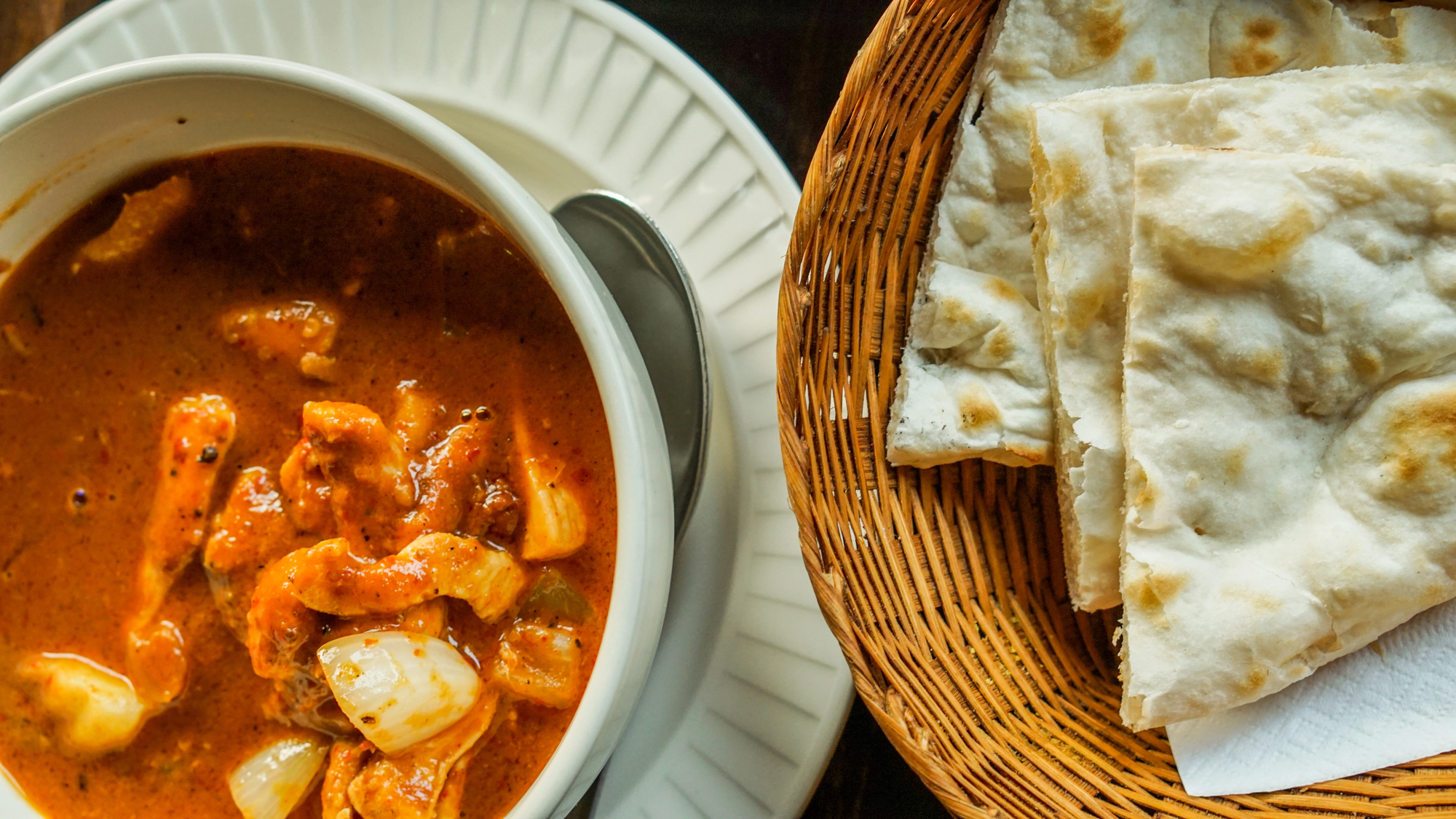
Gordon Ramsay’s chicken curry is not a traditional Indian curry. It is a British chicken curry — the kind developed in the Bangladeshi-owned curry houses of Britain’s cities over fifty years of adapting South Asian cooking techniques to British ingredient availability and British taste preferences. Understanding this distinction matters not because it diminishes the dish but because it explains what makes it taste the way it does and connects it to one of the most interesting food culture stories in modern culinary history.
The recipe is fast, approachable, and genuinely good — Ramsay strips the preparation down to its essential elements and produces a curry that a competent home cook can execute in thirty minutes without a specialist spice cabinet or any prior curry-making experience. It is the right recipe to start with before moving into more complex regional Indian preparations.
The British Curry House and Its History
The curry house is one of Britain’s most distinctive food institutions and one of the most underappreciated stories in culinary history. Beginning in the 1960s and accelerating through the 1970s and 1980s, Bangladeshi immigrants — primarily from the Sylhet region of what is now Bangladesh — opened restaurants across Britain serving a style of cooking adapted from Bengali and broader South Asian traditions to suit British palates and budgets.
The dishes they developed — chicken tikka masala, balti, korma, vindaloo, madras — are genuinely Indian in their spice foundations but British in their construction. The creamy, tomato-enriched sauces that define British curry house cooking reflect both South Asian cooking techniques and the British preference for milder, richer flavors than most traditional Indian regional cooking delivers. The result is not authentic regional Indian food. It is a distinct cuisine — British-Indian — that is authentic to its own cultural context and genuinely excellent within it.
By the 1980s Britain had more Indian restaurants than Italy had pizza restaurants — a statistic that captured something real about how completely the curry house had become embedded in British food culture. Friday night curry was a national ritual. The Brick Lane area of East London — historically the center of Bangladeshi immigration to Britain — had a street lined with curry houses that became a pilgrimage destination for food travelers from across the world.
Traveling in Britain with any interest in food means engaging with the curry house tradition. The best curry houses in Birmingham’s Balti Triangle — the area around Sparkbrook and Balsall Heath where the balti dish was developed in the 1970s — serve food that represents the British-Indian culinary tradition at its most developed. The curry houses of Bradford, Glasgow, and Manchester each have their regional variations and local reputations worth exploring.
Gordon Ramsay and British Cooking
Gordon Ramsay is a Michelin-starred chef trained in classical French technique who has spent much of his public career making the case that good cooking does not require French training or restaurant technique — that the fundamentals of flavor development, seasoning, and quality ingredients can produce extraordinary food in a home kitchen in thirty minutes. His chicken curry recipe is a perfect expression of this philosophy: professional techniques (blooming spices, building flavor in stages, finishing with fresh herbs) applied to an accessible everyday dish.
The chicken curry is also Ramsay being honest about his own food culture. He grew up in Britain. He loves curry. The recipe reflects what a skilled British cook would make for a weeknight dinner — not what a Michelin-starred kitchen would produce, but something genuinely good that respects the food tradition it comes from.
The Recipe
Ingredients (serves 4)
- 1½ lbs boneless skinless chicken thighs, cut into 1½-inch pieces
- 3 tablespoons vegetable oil
- 1 large onion, finely diced
- 4 cloves garlic, minced
- 1 tablespoon fresh ginger, grated
- 2 teaspoons ground cumin
- 2 teaspoons ground coriander
- 1½ teaspoons ground turmeric
- 1 teaspoon garam masala
- ½ teaspoon cayenne pepper (more to taste)
- 1 tablespoon tomato paste
- 1 14-oz can chopped tomatoes
- 1 cup chicken stock
- ½ cup heavy cream or coconut milk
- Salt to taste
- Fresh cilantro, roughly chopped
- Juice of ½ lemon
Instructions
Brown the chicken. Season the chicken pieces with salt. Heat 2 tablespoons of oil in a large wide pan or Dutch oven over high heat until smoking. Brown the chicken in batches until golden on all sides — about 3 minutes per side. Do not crowd the pan. Remove and set aside. The browning develops flavor compounds that define the finished curry’s depth. Skipping this step produces a noticeably inferior result.
Build the base. Reduce heat to medium. Add the remaining oil and the onion. Cook, stirring occasionally, until the onion is deeply golden and caramelized — about 12 to 15 minutes. Do not rush this. The caramelized onion is the flavor foundation of the curry. Add the garlic and ginger and cook for 2 minutes more.
Bloom the spices. Add the cumin, coriander, turmeric, garam masala, and cayenne. Stir constantly for 60 to 90 seconds until the spices are fragrant and beginning to stick to the pan. Add the tomato paste and stir for 1 minute more. This blooming process activates the fat-soluble flavor compounds in the spices and is the step that separates a well-made curry from a flat one.
Add the tomatoes and stock. Pour in the chopped tomatoes and chicken stock, scraping up any browned bits from the bottom of the pan. Return the browned chicken to the pan. Bring to a simmer, then reduce heat to medium-low. Cook uncovered for 20 minutes until the chicken is cooked through and the sauce has thickened.
Finish. Stir in the cream or coconut milk. Simmer for 5 minutes. Taste and adjust salt and cayenne. Add the lemon juice. Remove from heat and stir in the fresh cilantro.
Serve with basmati rice, naan bread, or both. A cooling raita — yogurt with grated cucumber and mint — alongside is not traditional in the British curry house context but is very good.
Spice Quality and Sourcing
The quality of the spices matters more in curry than in almost any other preparation because the spices are the dish’s primary flavor source rather than a supporting element. Spices stored for more than a year lose their volatile compounds and produce a flat, papery flavor regardless of quantity used. Buying spices in small quantities from a South Asian or Middle Eastern grocery store — where turnover is high and freshness is greater than at standard supermarkets — produces noticeably better curry.
Whole spices, toasted in a dry pan and ground immediately before using, produce better flavor than pre-ground. The investment in a small spice grinder or mortar and pestle pays dividends in every curry, every spice rub, and every spiced preparation made thereafter.
India and the Real Curry Landscape
Traveling in India with an interest in food means immediately confronting how different Indian regional cooking is from any curry house version. The food of Kerala — coconut milk-based seafood curries, appam and stew — has almost nothing in common with the food of Punjab — rich buttery dal makhani, tandoor-cooked meats. The food of Tamil Nadu — dosas, idlis, sambar, rasam — is as different from Mughal-influenced Hyderabadi cooking as French cooking is from Hungarian.
The British curry house tradition drew primarily from the cooking of Bangladesh and Punjab — a small slice of the Indian subcontinent’s extraordinary culinary diversity. Exploring that diversity through travel in India produces a completely different understanding of what South Asian cooking is and how limited the curry house version, excellent as it is on its own terms, actually represents.
For everything you need to plan a trip to India see our India destination guide. For more Gordon Ramsay recipes see our Gordon Ramsay Lasagne al Forno and our Gordon Ramsay Shepherd’s Pie. For British food culture see our national dishes of England and our best foods in London guide.
Ingredients
Method
- Brown the chicken. Season the chicken pieces with salt. Heat 2 tablespoons of oil in a large wide pan or Dutch oven over high heat until smoking. Brown the chicken in batches until golden on all sides — about 3 minutes per side. Do not crowd the pan. Remove and set aside. The browning develops flavor compounds that define the finished curry's depth. Skipping this step produces a noticeably inferior result.
- Build the base. Reduce heat to medium. Add the remaining oil and the onion. Cook, stirring occasionally, until the onion is deeply golden and caramelized — about 12 to 15 minutes. Do not rush this. The caramelized onion is the flavor foundation of the curry. Add the garlic and ginger and cook for 2 minutes more.
- Bloom the spices. Add the cumin, coriander, turmeric, garam masala, and cayenne. Stir constantly for 60 to 90 seconds until the spices are fragrant and beginning to stick to the pan. Add the tomato paste and stir for 1 minute more. This blooming process activates the fat-soluble flavor compounds in the spices and is the step that separates a well-made curry from a flat one.
- Add the tomatoes and stock. Pour in the chopped tomatoes and chicken stock, scraping up any browned bits from the bottom of the pan. Return the browned chicken to the pan. Bring to a simmer, then reduce heat to medium-low. Cook uncovered for 20 minutes until the chicken is cooked through and the sauce has thickened.
- Finish. Stir in the cream or coconut milk. Simmer for 5 minutes. Taste and adjust salt and cayenne. Add the lemon juice. Remove from heat and stir in the fresh cilantro.
- Serve with basmati rice, naan bread, or both. A cooling raita — yogurt with grated cucumber and mint — alongside is not traditional in the British curry house context but is very good.