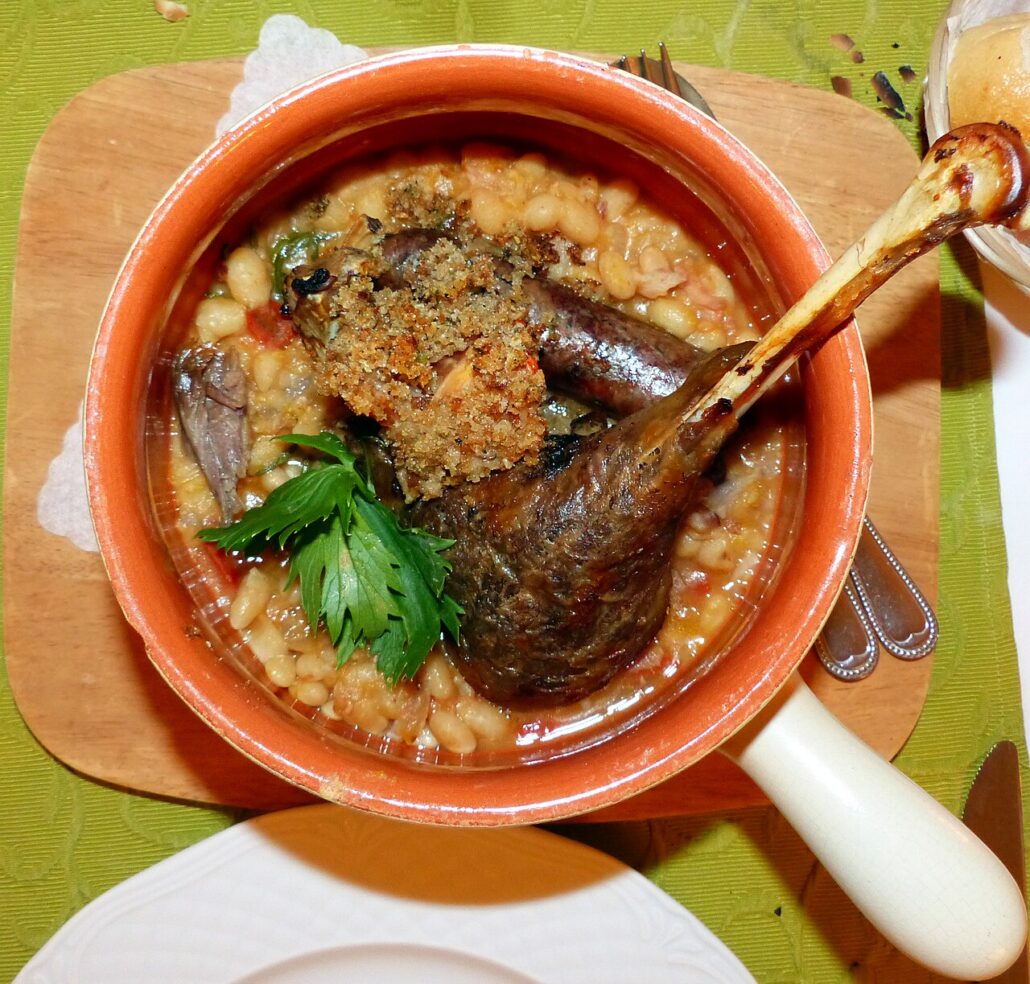
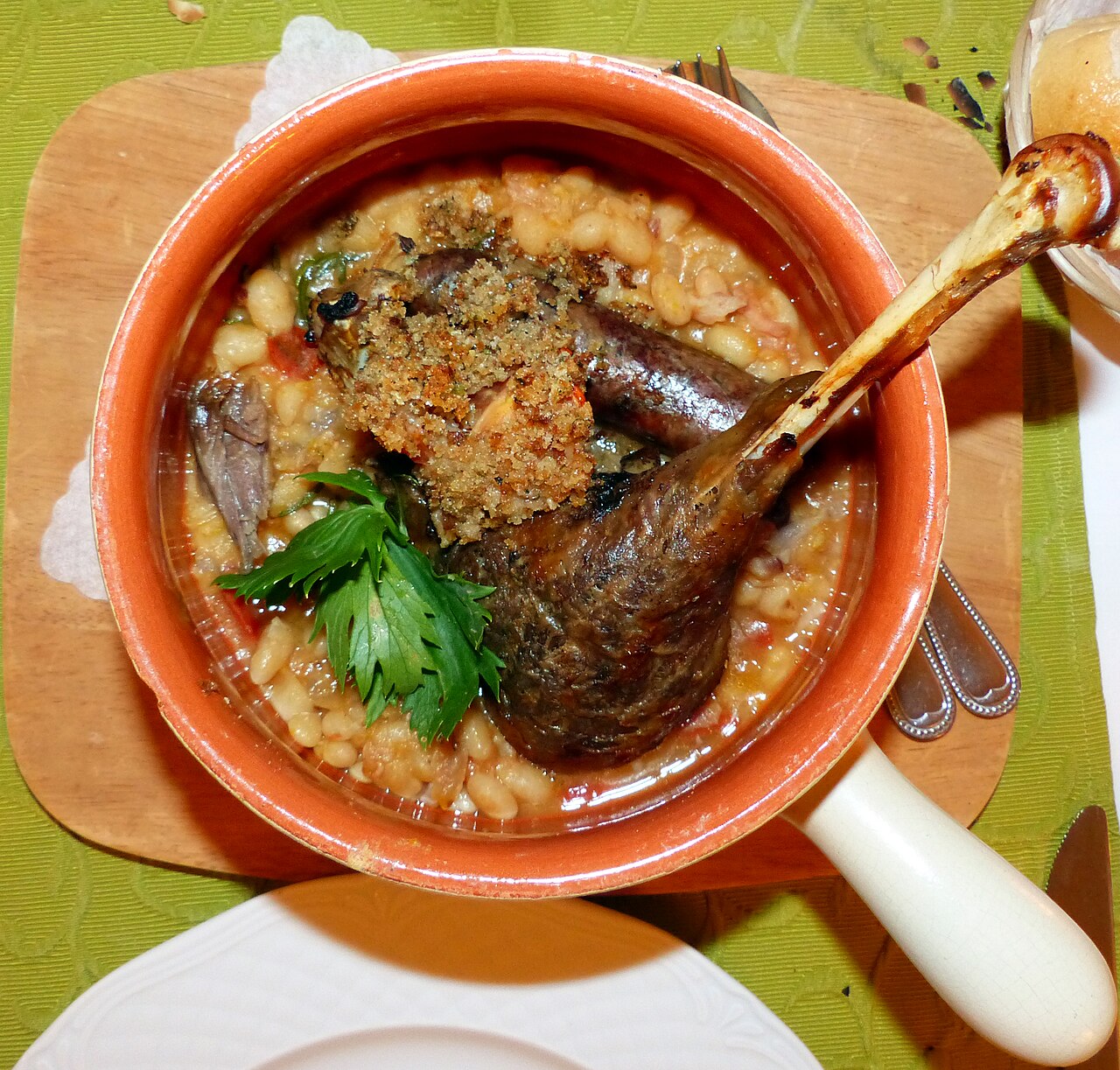
Cassoulet is the most ambitious and most rewarding dish in the French peasant cooking tradition — a slow-baked casserole of white beans, duck confit, Toulouse sausages, and pork, named for the earthenware cassole in which it is cooked, that has been made in the Languedoc region of southwestern France for at least six centuries. Making it properly is a two-day project involving multiple cooking steps, the right beans, and the patience to let the dish develop the characteristic golden crust that forms and reforms on the surface during the long baking.
The effort is proportional to the result. A properly made cassoulet — served in the earthenware dish it was cooked in, at a table in the Languedoc, with a glass of Minervois wine and good bread — is one of the most satisfying things to eat in France. Making it at home produces something close enough to the original to justify the investment of time.
The Three Cities of Cassoulet
Cassoulet is the subject of the most sustained culinary rivalry in French regional cooking — the debate between the cities of Castelnaudary, Carcassonne, and Toulouse about which produces the authentic original. The debate has been ongoing since at least the 19th century and shows no sign of resolution.
Castelnaudary claims to have invented cassoulet during the Hundred Years War when the besieged city gathered its remaining provisions — beans, pork, and sausages — into a single pot to feed the defending army. The Castelnaudary version uses pork (shoulder, belly, and rind), local Castelnaudary sausages, and sometimes lamb but traditionally no duck. The Carcassonne version adds partridge or mutton in season. The Toulouse version — the most widely known outside France — replaces the lamb with duck confit and uses the specifically pork-and-herb Toulouse sausage that defines the city’s charcuterie tradition.
The version in this recipe is closest to Toulouse, using duck confit and Toulouse sausages, because these are the ingredients most widely available outside France and because the duck confit version is the one most travelers encounter when they visit the Languedoc. The region is accessible from both Bordeaux and the Mediterranean coast — Carcassonne with its extraordinary medieval citadel, a UNESCO World Heritage Site and the most completely preserved medieval fortified city in Europe, is the most obvious base for exploring cassoulet country. The restaurant tables inside the citadel walls serve cassoulet that varies in quality from excellent to tourist-grade — research specific restaurants before booking a meal there. The town below the citadel — the Ville Basse — has more reliably good options at more honest prices.
The Beans
Cassoulet requires lingot blanc beans — the specific white bean variety grown around Castelnaudary and in the Tarbais region that has a thin skin, a creamy interior, and an ability to absorb the cooking liquid while maintaining its shape through the long baking that dried haricot beans or cannellini, however good, do not fully replicate. Tarbais beans from France are available at specialty food stores and online retailers. They are worth finding for a dish that requires this much other investment.
If Tarbais or lingot beans are unavailable, dried flageolet beans or Great Northern beans are the best substitutes. Cannellini work but produce a slightly thicker, creamier texture than the ideal. Do not use canned beans — the long braising and baking time is what causes the beans to absorb the flavors of the cooking liquid, and canned beans have neither the structure nor the opportunity to do this.
The Duck Confit
Duck confit — duck legs cured in salt and herbs, then cooked slowly in their own fat — is available at specialty food stores and French delicatessens in vacuum packs that are a perfectly acceptable shortcut for a dish that already requires significant other labor. Making duck confit from scratch adds another day to the process and produces a superior result but the store-bought version is adequate if the alternative is not making cassoulet at all.
The Recipe
Ingredients (serves 6 to 8)
Start the day before:
- 500g (about 1 lb) dried Tarbais or lingot blanc beans, soaked overnight in cold water
For the bean braise:
- 200g (about 7 oz) pork rind, cut into pieces
- 200g (about 7 oz) smoked bacon or pancetta, in one piece
- 1 large onion, peeled and studded with 4 cloves
- 1 bouquet garni (bay leaves, thyme, parsley stems)
- 4 cloves garlic
- Salt
For the meat elements:
- 4 duck confit legs, store-bought or homemade
- 500g (about 1 lb) Toulouse sausages or good quality pork sausages
- 300g (about 10 oz) pork shoulder, cut into large pieces
- 2 tablespoons duck fat or lard
For the tomato base:
- 1 large onion, finely diced
- 4 cloves garlic, minced
- 400g (14 oz) canned crushed tomatoes
- 1 tablespoon tomato paste
- 1 cup dry white wine
- Fresh thyme and bay leaves
For the crust:
- 1 cup fresh breadcrumbs
- 2 tablespoons duck fat, melted
Instructions
Day one — cook the beans. Drain the soaked beans. Place in a large pot with the pork rind, smoked bacon, clove-studded onion, bouquet garni, and garlic. Cover with cold water by 5cm. Bring to a boil, skim the foam, then simmer gently for 45 minutes to 1 hour until the beans are just tender but not fully cooked — they will finish cooking in the cassoulet. Season with salt only in the last 10 minutes of cooking. Drain, reserving the cooking liquid. Remove and discard the onion and bouquet garni. Slice the bacon into pieces and keep the pork rind. Set everything aside.
Brown the meats. Heat duck fat or lard in a large skillet over high heat. Season the pork shoulder pieces and brown on all sides until deeply colored. Remove. Brown the sausages until golden. Remove. The duck confit does not need browning — the confit process has already developed its color and flavor.
Make the tomato base. In the same skillet over medium heat, cook the diced onion until softened. Add the garlic, tomatoes, tomato paste, white wine, thyme, and bay leaves. Simmer for 15 minutes until slightly reduced. Season with salt and pepper.
Assemble. Preheat oven to 300°F. Line the bottom of a large deep earthenware or cast iron casserole with the pork rind pieces, skin-side down. Add half the beans. Layer the pork shoulder, sausages (halved), and duck confit legs over the beans. Cover with the remaining beans. Pour the tomato base over everything. Add enough reserved bean cooking liquid to just barely cover the beans — the liquid level should be at the top of the beans, not above them.
First bake and crust formation. Toss the breadcrumbs with melted duck fat. Scatter over the surface of the cassoulet. Bake uncovered for 1 hour. A golden crust will form on the surface. Break the crust with a spoon and push it gently into the beans — this is the traditional cassoulet technique, repeated multiple times during cooking to develop the crust. Add more bean cooking liquid if the cassoulet looks dry. Return to oven. Repeat the crust-breaking and baking cycle two more times — 30 minutes per cycle — for a total baking time of approximately 2 hours. The final crust should be deep golden and the cassoulet should be bubbling gently around the edges.
Rest for 15 minutes before serving directly from the cassoulet dish at the table. Serve with crusty bread and a simple green salad. Open the Minervois.
For everything you need to plan a France trip including the Languedoc see our complete France itinerary. For more French recipes see our Croque Monsieur, our Steak au Poivre, and our French Crêpes. For the best French wine regions to visit see our best European wine regions guide.
Ingredients
Method
- Day one — cook the beans. Drain the soaked beans. Place in a large pot with the pork rind, smoked bacon, clove-studded onion, bouquet garni, and garlic. Cover with cold water by 5cm. Bring to a boil, skim the foam, then simmer gently for 45 minutes to 1 hour until the beans are just tender but not fully cooked — they will finish cooking in the cassoulet. Season with salt only in the last 10 minutes of cooking. Drain, reserving the cooking liquid. Remove and discard the onion and bouquet garni. Slice the bacon into pieces and keep the pork rind. Set everything aside.
- Brown the meats. Heat duck fat or lard in a large skillet over high heat. Season the pork shoulder pieces and brown on all sides until deeply colored. Remove. Brown the sausages until golden. Remove. The duck confit does not need browning — the confit process has already developed its color and flavor.
- Make the tomato base. In the same skillet over medium heat, cook the diced onion until softened. Add the garlic, tomatoes, tomato paste, white wine, thyme, and bay leaves. Simmer for 15 minutes until slightly reduced. Season with salt and pepper.
- Assemble. Preheat oven to 300°F. Line the bottom of a large deep earthenware or cast iron casserole with the pork rind pieces, skin-side down. Add half the beans. Layer the pork shoulder, sausages (halved), and duck confit legs over the beans. Cover with the remaining beans. Pour the tomato base over everything. Add enough reserved bean cooking liquid to just barely cover the beans — the liquid level should be at the top of the beans, not above them.
- First bake and crust formation. Toss the breadcrumbs with melted duck fat. Scatter over the surface of the cassoulet. Bake uncovered for 1 hour. A golden crust will form on the surface. Break the crust with a spoon and push it gently into the beans — this is the traditional cassoulet technique, repeated multiple times during cooking to develop the crust. Add more bean cooking liquid if the cassoulet looks dry. Return to oven. Repeat the crust-breaking and baking cycle two more times — 30 minutes per cycle — for a total baking time of approximately 2 hours. The final crust should be deep golden and the cassoulet should be bubbling gently around the edges.
- Rest for 15 minutes before serving directly from the cassoulet dish at the table. Serve with crusty bread and a simple green salad. Open the Minervois.