Welcome to the City That Never Sleeps
There is no city in the world quite like New York City. It is too big, too loud, too expensive, too fast — and completely, utterly impossible to forget. First-time visitors often arrive with a mental image assembled from decades of film and television, and then discover the reality is simultaneously less glamorous and far more thrilling than anything they’d imagined.
New York City is five boroughs, 8.3 million people, 120 languages, 24,000 restaurants, and roughly 843 miles of shoreline. As the most tourism-heavy city in America, it is impossible to see everything. The goal of your first trip isn’t to conquer the city — it’s to start a relationship with it. This guide will help you spend your time wisely, avoid the traps that catch first-timers, and leave with a list of reasons to come back.
When to Visit New York City
New York City is a year-round destination, but timing matters.
Spring (April–June) is the sweet spot. Central Park is in bloom, temperatures are mild, and the city has a particular energy that feels like possibility. This is widely considered the best time to visit.
Fall (September–November) is a close second. The summer crowds have thinned, temperatures are crisp and comfortable, and the foliage in Central Park and Brooklyn’s Prospect Park is stunning. October in New York is close to perfect.
Summer (June–August) is hot, humid, and crowded. Hotel prices surge, subway platforms become genuinely unbearable, and every major attraction fills to capacity. That said, summer has its own rewards: free outdoor concerts, rooftop bars, the US Open tennis tournament, and the long golden light of late evenings. Come prepared and embrace it.
Winter (December–February) is cold and occasionally brutal, but New York at Christmas is one of the great urban spectacles in the world. The Rockefeller Center tree, the department store windows on Fifth Avenue, ice skating in Bryant Park, the holiday markets in Union Square and Columbus Circle — it’s worth braving the cold. January and February are the quietest and cheapest months to visit; hotel rates drop significantly.
Getting There and Getting Around
Flying In
New York is served by three major airports. JFK (John F. Kennedy International) handles most international flights and is connected to Manhattan by the AirTrain and subway (about 60–75 minutes, roughly $10). Newark (EWR) in New Jersey is another major international hub; take the NJ Transit train to Penn Station (about 30 minutes, roughly $18). LaGuardia (LGA) is the closest to Manhattan and primarily serves domestic routes; take the Q70 bus to the subway or budget for a taxi or rideshare.
Avoid taking a taxi or Uber from JFK unless you’re splitting the cost — it’s expensive and traffic-dependent. The AirTrain + subway combination is reliable, cheap, and faster than driving at most hours.
The Subway
The New York City subway runs 24 hours a day, 7 days a week, 365 days a year. It is the best way to get around the city. A single ride costs $2.90 with an OMNY card (tap-and-pay using your credit card or phone at any turnstile). If you’re staying more than a few days, an unlimited weekly MetroCard ($34) is worth it.
Don’t be intimidated by the system. Download the Citymapper or Google Maps app, which give real-time subway directions and alert you to service changes. The subway map looks complex but the core lines you’ll use (1/2/3, 4/5/6, A/C/E, N/Q/R/W, L) cover virtually every major neighborhood.
Pro tip: Avoid the subway during rush hour (7–9 a.m. and 5–7 p.m.) if you’re carrying luggage or have a tight connection to make. Platforms get dangerously packed.
Walking
New York City is one of the most walkable cities in the world. Many of the best experiences happen on foot — crossing the Brooklyn Bridge, wandering through the West Village, strolling the High Line. Good shoes are non-negotiable.
Taxis and Rideshare
Yellow cabs and Uber/Lyft are plentiful. They’re useful for late nights or when you’re carrying bags, but Manhattan traffic can make a ten-block ride take 40 minutes during peak hours. Walk when you can; subway when you can’t; cab when you must.
Where to Stay in New York City
New York City hotels are expensive by any global standard. The average hotel room in Manhattan runs $250–$400 per night, and that’s for something middling. Here’s how to think about where to stay.
Midtown Manhattan
Most first-timers stay in Midtown — it’s central, convenient, and close to major landmarks. The downside is that Midtown is the least characterful part of the city. It’s corporate, crowded with tourists, and lacks neighborhood flavor. If you’re here to maximize sightseeing efficiency, Midtown works. If you want to feel the texture of the city, look elsewhere.
Best for: Convenience, Times Square access, business travelers.
Lower Manhattan and the Financial District
An underrated choice for first-timers. Hotels are often cheaper than Midtown, and you’re a short walk from the 9/11 Memorial, the Brooklyn Bridge, the Staten Island Ferry, and the ferries to the Statue of Liberty. The neighborhood has transformed dramatically in recent years with good restaurants and bars.
Best for: Value, proximity to downtown sights, quieter evenings.
Greenwich Village and Chelsea
Staying in the Village puts you in the heart of one of the most beautiful and historically rich neighborhoods in the city. Tree-lined streets, excellent restaurants, easy subway access, and a genuine neighborhood feel. Chelsea has the added draw of proximity to the High Line and Hudson Yards. Expect to pay a premium.
Best for: First-timers who want to feel like they live in New York, food lovers, couples.
Brooklyn (Williamsburg or DUMBO)
Staying in Brooklyn is a great choice for travelers who want a slightly slower pace, excellent coffee and restaurant scenes, and easy access to Manhattan via the L train (Williamsburg) or the A/C/F trains (DUMBO). DUMBO also offers some of the most iconic views of the Manhattan skyline and Brooklyn Bridge.
Best for: Repeat visitors, younger travelers, those who want a neighborhood feel at lower prices.
The Non-Negotiables: What You Must Do
1. Walk the Brooklyn Bridge
The Brooklyn Bridge is one of the great engineering achievements of the 19th century, and walking across it remains one of the best free things you can do in New York. Start on the Manhattan side (take the 4/5/6 to Brooklyn Bridge–City Hall) and walk to DUMBO on the Brooklyn side. The views of the skyline are exceptional in every direction. Allow 30–45 minutes. Go early in the morning to avoid the crowds — by midday, the pedestrian walkway becomes a slow-moving mass of people.
2. Spend a Morning in Central Park
At 843 acres, Central Park is bigger than Monaco. You could spend a full day here and not see everything. For first-timers, the highlights are the Bethesda Fountain and Terrace, the Mall (a canopied elm walkway unlike anything else in the city), the Reservoir, and the Conservatory Garden for something quieter and less trafficked. In summer, check the schedule for SummerStage — free outdoor concerts throughout the season.
3. Visit the Metropolitan Museum of Art
The Met is the largest art museum in the Western Hemisphere, and one of the greatest in the world. The Egyptian Wing (including the Temple of Dendur), the European paintings collection, the American Wing, the Arms and Armor Hall, the Costume Institute — you could visit a dozen times and still not exhaust it. Admission is suggested (you can pay what you wish), though the suggested price is $30 for adults. Allow at least three hours; a full day is better.
4. See the 9/11 Memorial and Museum
The two reflecting pools occupy the footprints of the original Twin Towers, and they are among the most affecting pieces of public memorial design anywhere in the world. The names of the nearly 3,000 victims are inscribed around the pools’ edges. The museum below is thorough, moving, and at times difficult — which is precisely what it should be. Book tickets in advance. This is not something to rush.
5. Take the Staten Island Ferry
The Staten Island Ferry is completely free, runs 24 hours a day, and offers some of the best views of the Statue of Liberty and the Manhattan skyline you’ll find anywhere. Most visitors take it one way and immediately return — that’s fine. Take it at dusk for the best light.
6. Explore the High Line
The High Line is a 1.45-mile elevated park built on a former freight rail line on Manhattan’s West Side. It runs from Gansevoort Street in the Meatpacking District to 34th Street near Hudson Yards. The plantings change with the seasons, there’s public art throughout, and the views of the Hudson River and the city below are excellent. Walk it south to north in the afternoon when the light is best.
7. Eat Your Way Through a Neighborhood
New York City’s food scene is one of the greatest on earth, and the best experiences are rarely at the famous places. Pick a neighborhood — the East Village, Carroll Gardens in Brooklyn, Jackson Heights in Queens — and spend a morning or afternoon eating. A bagel with lox at a proper Jewish deli. A slice of pizza folded in half, standing up. A soup dumpling in Flushing. A dollar oyster at happy hour. This is the real culinary culture of New York, and it costs almost nothing.
What to Skip (Or Approach Carefully)
Times Square
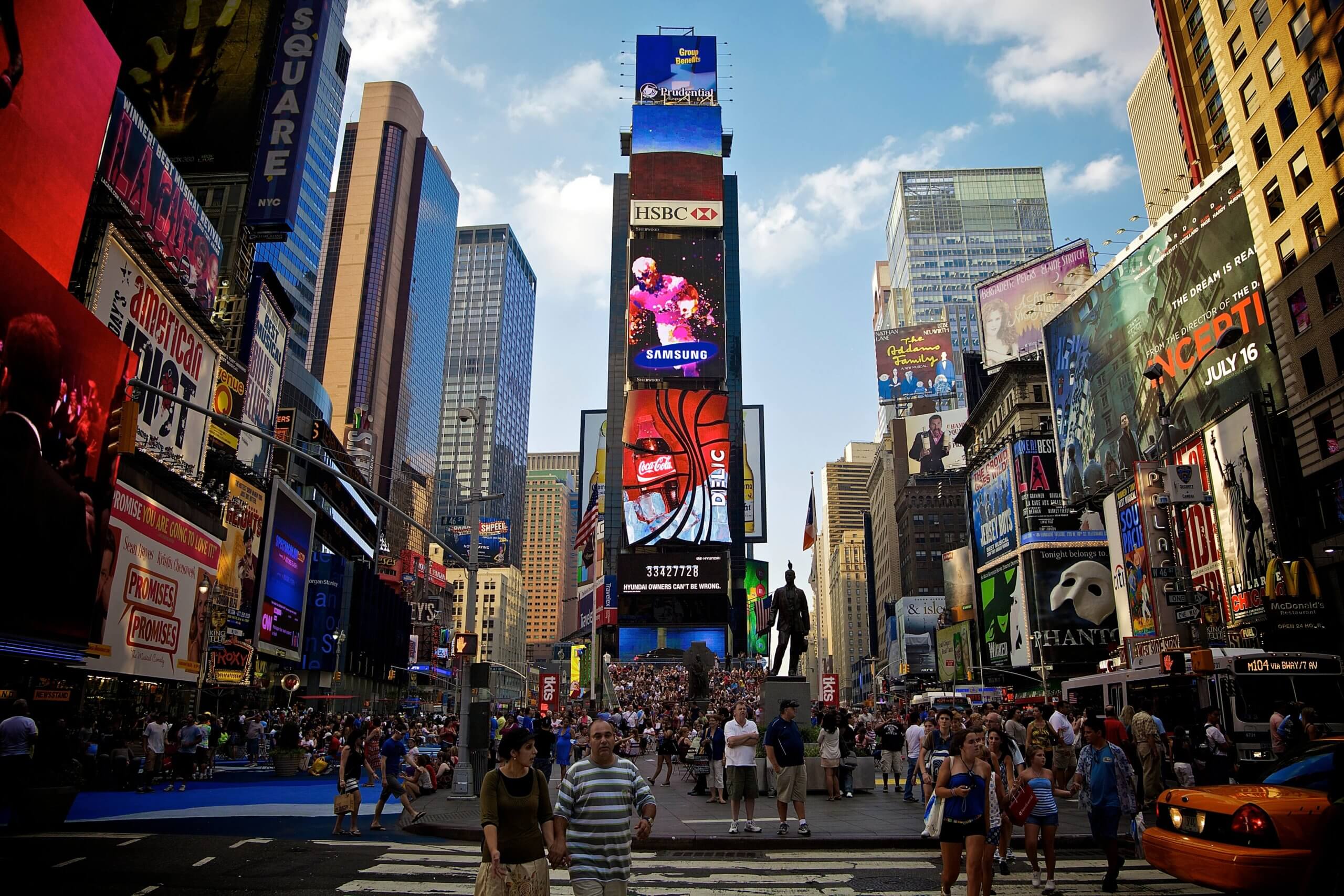
Times Square is spectacular in the way that a controlled explosion is spectacular — overwhelming, chaotic, and best appreciated briefly. See it once, take your photo, and move on. Do not eat at the restaurants surrounding it (they are almost universally overpriced and mediocre), do not pay the costumed characters for a photo, and do not linger unless you genuinely enjoy sensory overload.
The Top of the Rock vs. the Empire State Building
Both are iconic observation decks, but you don’t need both. The Top of the Rock at 30 Rockefeller Plaza has a decisive advantage: it faces south, which means you can see the Empire State Building itself as part of your view. The Empire State Building’s observation deck, while iconic, looks out at a view that doesn’t include… the Empire State Building. Both require advance booking and have significant queues. If you only do one, do the Top of the Rock.
Overpriced Midtown Restaurants
The restaurants surrounding Times Square, the Empire State Building, and Rockefeller Center are almost universally tourist traps. Walk ten blocks in any direction and the quality-to-price ratio improves dramatically. Never make a restaurant choice based on proximity to a landmark.
Rushing Through Too Many Neighborhoods
First-time visitors often try to see everything — Midtown, downtown, Brooklyn, the Village, Harlem, the High Line, all in three days. The result is exhaustion and a shallow experience everywhere. Choose three or four neighborhoods and go deep. Get a coffee and sit with it. Walk slowly. Duck into a bookstore. You’ll leave knowing New York better than someone who sprinted through ten neighborhoods in a weekend.
Where to Eat in New York City
Breakfast and Bagels
New York bagels are a non-negotiable experience. Russ & Daughters on the Lower East Side has been serving bagels with lox since 1914 and remains the gold standard. Absolute Bagels on the Upper West Side is beloved by Columbia students and serious bagel enthusiasts. Murray’s Bagels in the Village is another institution. Order a bagel with cream cheese and lox, take a seat, and don’t apologize for the amount you’re eating.
Pizza
New York pizza is a religion with many denominations. For a classic New York slice, Di Fara Pizza in Brooklyn (cash only, often a long wait, completely worth it) is the pilgrimage many make. Joe’s Pizza in the Village is the standard-bearer for the everyday New York slice. For Neapolitan-style, Una Pizza Napoletana on the Lower East Side is exceptional. The rule: avoid any pizza place near a major tourist attraction.
Delis and Sandwiches
Katz’s Delicatessen on the Lower East Side is as famous for the scene from When Harry Met Sally as it is for its pastrami — but the pastrami genuinely merits the visit. Order it on rye with mustard. Do not order anything else on your first visit. Eisenberg’s Sandwich Shop in the Flatiron district is a time-warp diner doing egg creams and tuna melts since 1929.
Fine Dining
New York has more Michelin-starred restaurants than almost any city on earth. Le Bernardin for the finest seafood in America. Gramercy Tavern for farm-to-table American cuisine in one of the city’s most beloved dining rooms. Momofuku Ko for an innovative tasting menu. Book months in advance for any of these. For something extraordinary without the full tasting-menu commitment, the bar at Eleven Madison Park occasionally offers à la carte options.
Late Night
New York is one of the few cities where you can get excellent food at 2 a.m. Xi’an Famous Foods (multiple locations) serves hand-pulled noodles and lamb dishes rooted in the cuisine of northwestern China and stays open late. J.G. Melon on the Upper East Side for a burger after midnight. Chinatown in Manhattan and Flushing in Queens offer round-the-clock options that are both excellent and inexpensive.
Day Trips from New York City
The Hudson Valley
An hour north of the city by train, the Hudson Valley offers stunning river scenery, farm-to-table restaurants, and remarkable historic estates including Kykuit (the Rockefeller family estate) and Olana (the Persian-fantasy home of landscape painter Frederic Church). Take the Metro-North Hudson Line from Grand Central.
The Hamptons
East of the city on Long Island, the Hamptons have a reputation for exclusivity, but the beaches are genuinely beautiful and the farm stands are worth the trip alone. Take the Hampton Jitney bus from Midtown or the Long Island Rail Road from Penn Station.
Philadelphia
A 75-minute Amtrak ride from Penn Station puts you in Philadelphia — a city with its own extraordinary food scene (the Italian Market, Reading Terminal Market), world-class museums, and the Liberty Bell. Easily done as a day trip.
Practical Tips for First-Time Visitors
Tipping: In New York, tipping is not optional — it is part of the social contract. 20% is standard at restaurants; 18% is acceptable; anything below 15% will be noticed. Tip your hotel housekeeping ($3–5 per night), your taxi driver (15–20%), and your bartender ($1–2 per drink).
Safety: New York City is significantly safer than its reputation in popular culture suggests. The subway is safe at almost any hour, though common sense applies — be aware of your surroundings, don’t flash expensive items, and trust your instincts. Avoid walking through parks alone very late at night. That’s essentially it.
Cash: Many New York restaurants, especially older delis and pizza places, are cash only. Carry some. ATMs are everywhere, but fees can be steep — use your bank’s network or withdraw from a bank branch.
Cell Service: Reception can be spotty in the subway tunnels, though WiFi is available on most platforms and in many stations. Download your maps offline before heading underground.
Dress for Walking: No matter how stylish you want to be, you will walk more than you expect. Comfortable shoes are essential. New Yorkers dress well but practically — you will not look out of place in good walking shoes.
Don’t Look Up: The classic tell of a first-time visitor is staring up at buildings while standing in the middle of the sidewalk. New Yorkers walk fast and with purpose. Step to the side before you look up, look at your phone, or stop for any reason.
A Sample 4-Day NYC Itinerary
Day 1 – Downtown and Brooklyn Morning: Brooklyn Bridge walk, starting from Manhattan. Brunch in DUMBO. Afternoon: 9/11 Memorial and Museum. Evening: Ferry to Staten Island for sunset views of the skyline, then dinner in the West Village.
Day 2 – Midtown and Central Park Morning: Central Park (Bethesda Fountain, the Mall, Reservoir loop). Lunch at a deli on the Upper West Side. Afternoon: Metropolitan Museum of Art. Evening: Top of the Rock at sunset, then dinner in Hell’s Kitchen.
Day 3 – Lower East Side, East Village, High Line Morning: Bagels at Russ & Daughters. Walk the Lower East Side and explore the neighborhood’s immigrant history. Afternoon: High Line from Gansevoort to 34th Street, Hudson Yards. Evening: Cocktails in the Meatpacking District, dinner in Chelsea.
Day 4 – A Borough Day Take the subway to Queens and spend the morning in Flushing’s Chinatown — the food is extraordinary and the neighborhood feels like a city within a city. Afternoon: Astoria for Greek food and the Museum of the Moving Image. Evening: Return to Manhattan for a farewell dinner wherever you didn’t make it earlier in the trip.
Final Thoughts
New York City will overwhelm you. It will exhaust you. It will probably overcharge you for at least one meal. And then it will get under your skin in a way that no other city quite manages, and you’ll start planning the return trip before you’ve even unpacked at home.
The city rewards curiosity. The best moments aren’t at the top of any tourist list — they’re the corner diner where everyone seems to know each other, the impromptu jazz that drifts out of an open window in Harlem, the conversation you have waiting in line somewhere with a complete stranger who has the most interesting life you’ve ever heard of.
Go. Get lost a little. Eat something you can’t identify. Let the city surprise you.
It will.