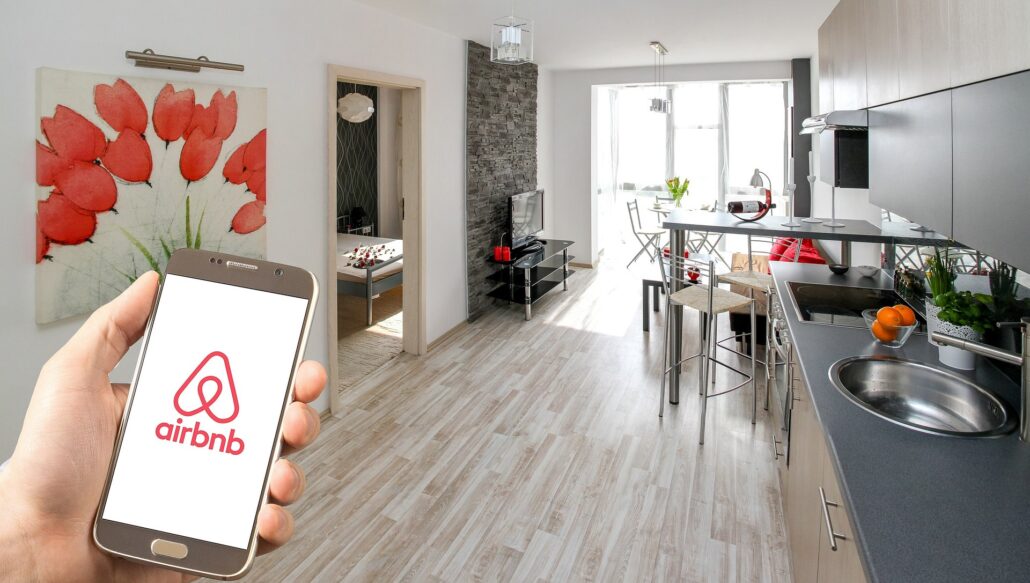
We have been booking Airbnb for years across four continents, dozens of countries, and every type of trip we take — city breaks, long stays, rural escapes, trips where we needed a kitchen, trips where we needed space, trips where a hotel room would have felt like a cage. At this point Airbnb is not something we occasionally reach for. It is the first thing we check for most trips, before we look at hotels, before we look at anything else. This review explains why, and it explains honestly where Airbnb falls short — because it does fall short in specific situations that are worth knowing about before you book.
Why We Keep Coming Back to Airbnb
The core reason is space and authenticity. A hotel room is a hotel room. It is a professionally managed, consistently predictable box that functions identically whether you are in Paris or Portland. That consistency is genuinely valuable in specific situations. But when we are spending five days somewhere, or traveling with luggage that needs to be unpacked, or wanting to cook a real meal rather than eat out every night, or simply wanting to feel like we are living in a place rather than visiting it — Airbnb is almost always the better answer.
The apartment in Lisbon where we watched the sun set over the Tagus from a terrace that no hotel in that price range could have provided. The farmhouse in Tuscany where we made pasta in a kitchen that had been making pasta for three generations. The flat in Edinburgh’s New Town where we walked to everything and felt like residents rather than tourists. These are not exceptional Airbnb experiences — they are the normal ones, the ones that accumulate into a very different kind of travel from what hotels provide.
What Airbnb Does Better Than Hotels
Space: The most immediate practical advantage. An Airbnb apartment at the same price as a mid-range hotel room gives you a living area, a kitchen, often multiple bedrooms, and more square footage than any comparable hotel tier. For longer stays, for couples who need a living space rather than just a sleeping space, and for anyone who finds hotel rooms claustrophobic after two days, this matters enormously.
Location: Airbnb opens up neighborhoods that hotels do not reach. Hotels cluster around transit hubs, tourist centers, and commercial districts. Airbnb properties exist in residential neighborhoods — the places where people actually live, where the cafés are for residents rather than tourists, where the morning market is around the corner and the evening is quieter. Some of our best neighborhood discoveries have come from where an Airbnb placed us rather than from any guidebook.
A kitchen: We underrated this for years. Having a kitchen on a trip changes the economics and the rhythm of travel significantly. A proper breakfast before a long day of sightseeing, made in your own kitchen, costs a fraction of a café breakfast and sets up the day differently. A simple dinner in after a long day costs a fraction of a restaurant and lets you wind down without having to go back out. Over a week, the kitchen savings alone can pay for the Airbnb premium over a comparable hotel.
Local knowledge: The best Airbnb hosts are genuinely invested in the experience of the people staying in their homes. The host guidebooks — when properly written — contain the kind of local knowledge that no travel guide publishes: which specific table at the neighborhood restaurant has the best view, which market day is worth the early wake-up, which route to the main sites avoids the tourist flow. We have followed host recommendations that changed the entire shape of a trip.
Value on longer stays: Airbnb’s weekly and monthly discount structure makes it substantially cheaper than hotels for stays of a week or more. A seven-night Airbnb stay with a weekly discount frequently undercuts a comparable hotel stay by 20 to 40 percent. For anyone planning more than five nights in a single destination, the comparison is almost always in Airbnb’s favor on price.
How We Choose an Airbnb: What Actually Matters
After dozens of bookings, we have developed a specific filter process that consistently produces good results and avoids the pitfalls that generate the negative Airbnb reviews you see online.
Superhost status first: We almost exclusively book Superhost properties. The Superhost designation requires a 4.8 or above rating, a high response rate, and consistent positive reviews over multiple stays. It does not guarantee a perfect experience but it filters out the significant proportion of Airbnb listings operated by hosts who are inattentive, dishonest about the property, or simply not experienced enough to manage guest expectations. Start with Superhost and only look outside it if the specific destination has limited Superhost options.
Read the most recent reviews specifically: Airbnb properties change. A listing that was excellent two years ago may have new furniture, new management, or new problems. The overall rating is less informative than the reviews from the last six months. Read those carefully and look for consistent themes rather than individual complaints — one person’s “noisy street” is another person’s “vibrant neighborhood.”
Look at the photos critically: Airbnb photos are taken to flatter. Look for what is not shown as much as what is — if there are no photos of the bathroom, the bathroom is probably not the selling point. If every photo uses a wide-angle lens, the rooms may be smaller than they appear. If photos are clearly taken in ideal light conditions, the natural light may be less impressive than shown.
Read the house rules carefully: Check-in and check-out times, noise restrictions, guest policies, and any unusual requirements. Some hosts have strict rules that are genuinely restrictive; others have reasonable rules that match how you travel. Understanding these before booking avoids friction on arrival.
Message the host before booking for longer stays: A quick message asking a specific question — about parking, about the neighborhood, about the nearest supermarket — tells you response time and communication quality before you are committed. A host who responds quickly and specifically is a host who will be easy to reach if something goes wrong during the stay.
Where Airbnb Falls Short: The Honest Limitations
We use Airbnb constantly, and we still choose hotels in specific situations. Being honest about when Airbnb is the wrong choice is the most useful thing this section can do.
Short stays in major cities: For one or two nights in a city where you need flexibility — late arrival, early departure, luggage storage — a hotel’s 24-hour front desk, immediate check-in, and professional luggage handling are worth the trade-off. Airbnb self-check-in is seamless when it works and a logistical headache when it does not. On a short trip where every hour counts, hotel reliability is genuinely valuable.
When something goes wrong: Airbnb’s customer service is the most consistent source of criticism in our experience and in traveler reviews broadly. When a property does not match its listing, when a host is unresponsive, when there is a problem on arrival — Airbnb’s resolution process is slower and less certain than a hotel front desk conversation. We have had one genuinely difficult Airbnb experience in years of bookings, and the resolution required persistence. Know that the customer service safety net is less robust than a hotel’s before you book.
Cleaning fees: Airbnb’s cleaning fee structure has become one of the most criticized aspects of the platform, and the criticism is fair. Cleaning fees that add $80 to $150 to a two-night stay fundamentally change the economics and make Airbnb less competitive with hotels for short stays. On longer stays the cleaning fee amortizes into a smaller proportion of the total cost. For short stays, always add the cleaning fee to the per-night comparison before making a booking decision.
Inconsistency: The best Airbnb experiences are extraordinary. The worst are genuinely disappointing. The range is wider than hotels at any given price point, and the Superhost filter narrows but does not eliminate that range. If you need certainty — if a trip cannot afford an accommodation disappointment — hotels provide a more predictable floor.
Privacy and security: Staying in someone’s home or investment property is different from a hotel in ways that matter to some travelers and not to others. Smart locks, security cameras in common areas, and the general knowledge that the property owner has access to the space are features of Airbnb that are worth being conscious of.
Airbnb Pricing: Getting the Best Deal
Airbnb pricing is more dynamic than most travelers realize. The same listing can vary significantly by day of the week, season, and how far in advance you book. A few practical approaches that consistently produce better pricing:
- Book midweek stays — Thursday to Monday is frequently cheaper than the Friday to Sunday peak
- Look at the total price including cleaning fees from the start — the nightly rate without fees is often misleading
- Longer stays trigger automatic weekly and monthly discounts that are often not advertised prominently — check the pricing for one week versus six nights if your dates are flexible
- Flexible date search shows the cheapest days in a given month — useful for trips where exact dates are not fixed
- Some hosts offer last-minute discounts for bookings within a few days of the stay — useful for spontaneous travel
Is Airbnb Still Worth It in 2025?
The platform has changed since its early years — cleaning fees are higher, some markets have become more expensive, and regulatory pressure in cities like Barcelona, Amsterdam, and New York has reduced inventory in specific destinations. But the fundamental value proposition — space, location, kitchen access, local knowledge, and value on longer stays — remains intact and remains compelling.
We book Airbnb for the majority of our trips and will continue to do so. The key is knowing when it is the right tool and when it is not — and the framework above gives you that.
Browse Airbnb’s listings for your next destination at airbnb.com.
The Verdict
Airbnb is one of the most genuinely useful tools in travel and one we rely on consistently. The space, the location access, the kitchen, the local knowledge, and the value on longer stays make it the right choice for the majority of trips we take. The cleaning fee structure, the customer service limitations, and the inconsistency at the lower end of the market are real limitations that are worth understanding before you book.
For trips of three nights or more, in destinations where residential neighborhoods are worth staying in, for travelers who want to feel like they are living somewhere rather than visiting it — Airbnb is almost always the answer. For one or two night stays in major cities where logistical flexibility matters, a hotel often wins. Use each tool for what it does best.
Overall rating: 4.5 out of 5
Space and value: 5/5 — Unmatched at comparable price points for longer stays
Location access: 5/5 — Opens neighborhoods hotels do not reach
Host quality (Superhosts): 4.5/5 — Filter to Superhost and the floor is high
Customer service: 3/5 — The most consistent limitation
Cleaning fees: 3/5 — A real problem for short stays
Find your next Airbnb at airbnb.com.