There is a moment that happens to most travelers in Italy — usually somewhere between Rome and Naples, often in a place that has no English menu and no photographs of the food on the wall — when you eat a plate of pasta with tomato sauce and realize you have never actually had tomato sauce before. The version you have been making at home, the one from the jar or the one with fifteen ingredients and an hour of simmering, tastes nothing like this. This tastes like tomatoes. Just tomatoes, coaxed into something so concentrated and alive that it seems impossible the recipe could be as simple as it is.
It is that simple. That is the point. Authentic Italian red sauce — what Italians call sugo al pomodoro — is one of the most instructive dishes in all of Italian cooking because it teaches you something that no amount of technique can replace: that ingredient quality is everything, and that restraint is a form of skill.
The Italian Relationship with Tomato Sauce
Italians did not always eat tomatoes. The tomato arrived in Italy from the Americas in the 16th century and spent roughly two centuries being regarded with suspicion — decorative, possibly poisonous, certainly not food. It was not until the 18th century in Naples and the surrounding Campania region that tomatoes began appearing in cooking, and not until the 19th century that tomato sauce became the foundational element of Italian cuisine that it is today.
Naples is the birthplace of Italian tomato sauce culture. The city sits at the center of Campania, the region that produces San Marzano tomatoes — the long, thin, low-acid plum tomatoes grown in the volcanic soil around Mount Vesuvius that are widely considered the finest sauce tomatoes in the world. Neapolitans will tell you, with complete sincerity and no trace of irony, that you cannot make a proper sugo al pomodoro without San Marzano tomatoes. They are not wrong.
The pizza marinara — Naples’s most elemental pizza, topped only with San Marzano tomatoes, garlic, oregano, and olive oil — is the purest expression of this philosophy. No cheese, no embellishment, just tomatoes good enough to carry the whole thing. When you eat a pizza marinara in Naples and understand why it works, you understand why Italian red sauce requires so few ingredients.
In Rome the sauce takes a slightly different form. Romans favor a rougher, more rustic sugo — less cooked, more acidic, made with local Lazio tomatoes rather than San Marzanos, finished with torn basil and a generous pour of olive oil. The Roman version is the sauce for cacio e pepe’s less famous sibling, amatriciana, where tomatoes meet guanciale and Pecorino Romano in one of the most satisfying combinations in Italian cooking.
Travel south through Calabria and the sauce gets hotter — dried peperoncino adding heat that the north would never tolerate. Travel north to Bologna and the tomato becomes one element in a complex meat ragù rather than the star. Each region has its own tomato sauce and each is completely correct within its own context. The version here is the Neapolitan baseline — the one that started everything.
The San Marzano Question
Authentic San Marzano tomatoes — DOP certified, grown in the Agro Sarnese-Nocerino area of Campania — are worth seeking out for this recipe. They are available in most good grocery stores and Italian specialty shops, usually in 28-ounce cans labeled with the DOP certification. They cost more than generic canned tomatoes and the difference in the finished sauce is real — less acidic, more complex, with a sweetness that doesn’t require added sugar to balance.
If you cannot find genuine San Marzanos, the best alternative is any whole peeled plum tomato from a brand you trust, crushed by hand before adding to the pan. Do not use crushed tomatoes — the texture is too fine and the sauce loses the rough, chunky character that makes it feel handmade. Do not use diced tomatoes — the added calcium chloride prevents them from breaking down properly.
Crush the tomatoes by hand directly into the pan — squeeze each one until it collapses, then add the juices from the can. This is not a technique detail. The hand-crushing produces uneven pieces of tomato in a range of sizes that cook down at different rates, creating a sauce with textural complexity that machine-crushed tomatoes cannot replicate.
The Recipe
Ingredients (serves 4, enough for 400g pasta)
- 1 28-oz can whole San Marzano tomatoes, DOP certified if possible
- 3 tablespoons extra virgin olive oil, plus more for finishing
- 3 cloves garlic, peeled and lightly smashed
- 1 small yellow onion, halved (optional — Neapolitan purists omit it)
- Small handful fresh basil leaves, torn
- 1 teaspoon kosher salt
- Pinch of sugar, only if needed
Instructions
Start with cold oil and garlic. Add the olive oil and smashed garlic cloves to a cold wide pan or Dutch oven. Turn the heat to medium-low. Allow the garlic to slowly warm in the oil, turning occasionally, until it is fragrant and just beginning to turn golden at the edges — about 5 to 6 minutes. This gentle infusion flavors the oil without burning the garlic. Remove the garlic if you want a cleaner sauce, or leave it in to break down. If using onion, add the halved onion now and cook until softened, about 8 minutes, then remove.
Add the tomatoes. Crush the San Marzanos by hand directly into the pan — squeeze each one until it collapses, add all the juices from the can. The pan will spit and hiss. Stir to combine with the garlic oil. Add the salt.
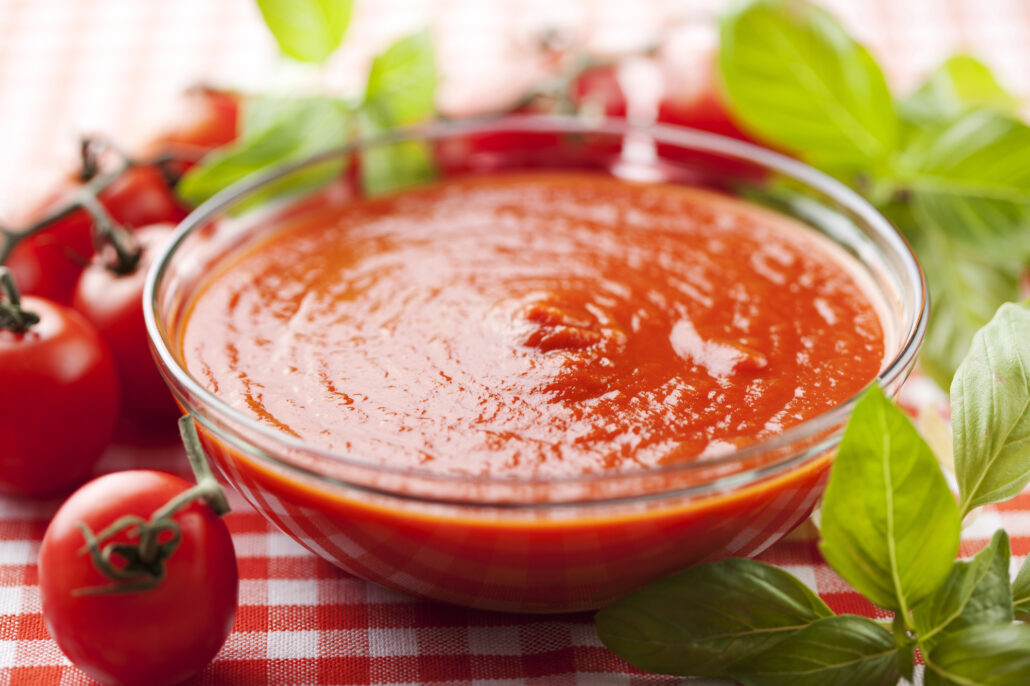
Simmer uncovered. Raise the heat to medium and bring to an active simmer. Cook uncovered, stirring occasionally, for 20 to 25 minutes until the sauce has reduced by roughly a third and the color has deepened from bright red to a darker, more concentrated crimson. The surface should be bubbling steadily throughout — not violently boiling, not barely simmering. Taste and adjust salt. If the tomatoes were particularly acidic, add a pinch of sugar.
Finish with basil and oil. Remove from heat. Tear the basil leaves directly into the sauce. Drizzle with a generous pour of good olive oil — do not stir this in completely, let it pool slightly on the surface. The raw olive oil finish is not optional. It adds brightness and a grassy richness that cooked olive oil cannot provide.
Toss with pasta. Cook your pasta until 1 minute before al dente in well-salted water. Reserve a cup of pasta cooking water before draining. Add the drained pasta to the sauce over medium heat, tossing to coat, adding splashes of pasta water to loosen if needed. The starchy pasta water is what emulsifies the sauce and makes it cling to the pasta rather than pooling at the bottom of the bowl. Serve immediately.
Which Pasta
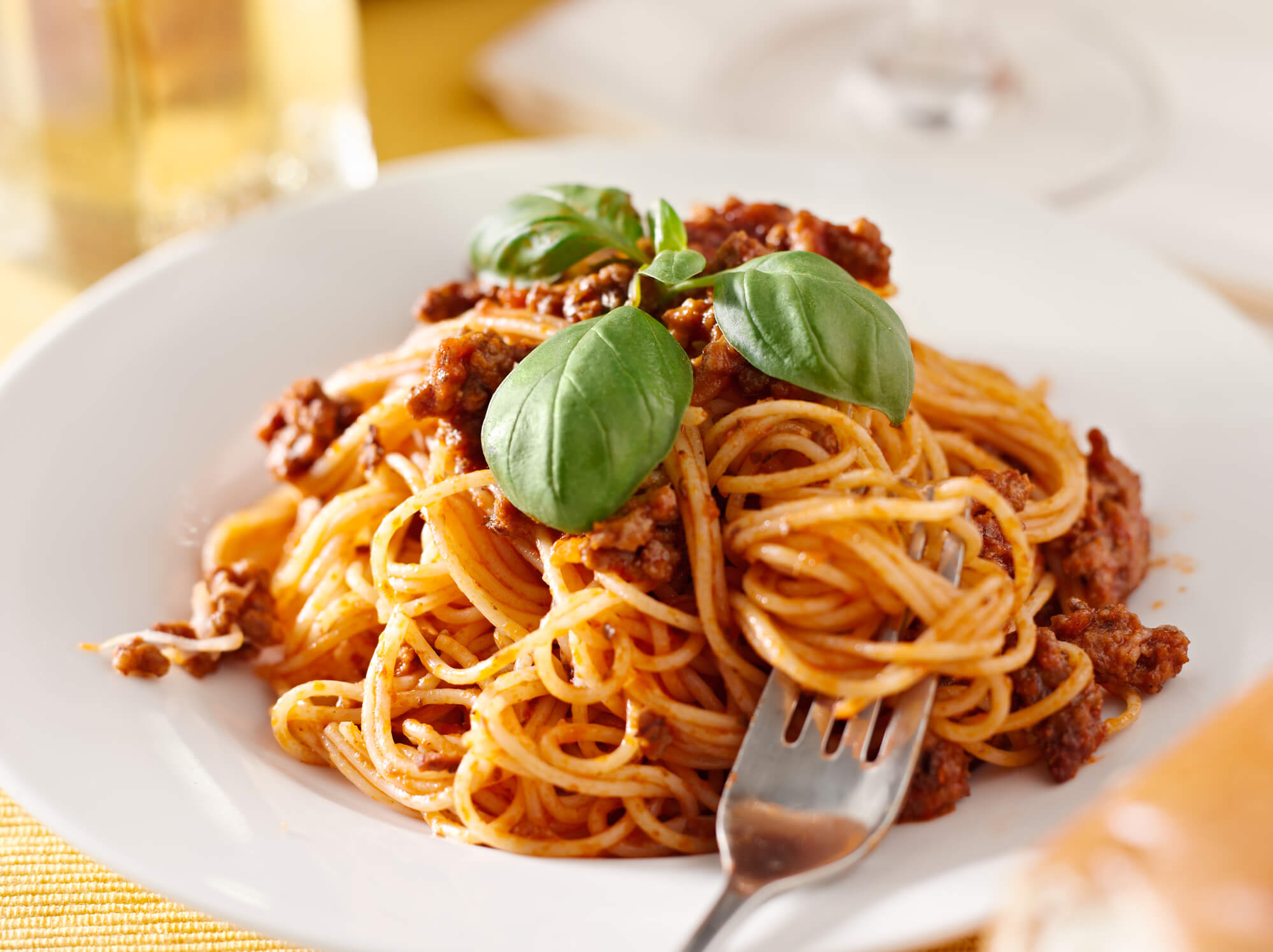
In Naples this sauce goes on spaghetti or vermicelli — long, thin pasta that coats evenly and slurps satisfyingly. In Rome it is the sauce for rigatoni all’amatriciana and penne all’arrabbiata. For a home version, spaghetti is the classic choice. Use a good quality dried pasta made from durum wheat semolina — De Cecco and Rummo are both widely available and significantly better than generic supermarket pasta. The sauce is simple enough that pasta quality is immediately noticeable.
What We Ate in Naples
We spent three days in Naples on a longer Italy trip and ate tomato sauce in some form at virtually every meal. The pizza at Sorbillo on Via dei Tribunali — a place that has been making pizza since 1935 — was the best we had anywhere in Italy, and the marinara was better than the margherita because there was nowhere for the tomatoes to hide. A lunch at a trattoria in the Spaccanapoli neighborhood produced a bowl of spaghetti al pomodoro that was so good we sat in silence for several minutes after finishing it, which is not our usual response to lunch.
The lesson Naples teaches about tomato sauce is that simplicity requires confidence. You have to trust that four ingredients — tomatoes, oil, garlic, basil — are enough, and that adding more will make it worse rather than better. It takes most home cooks a while to believe this. The first time you make it and it works, you will believe it permanently.
For everything you need to plan a trip to Naples and the Amalfi Coast see our complete Italy itinerary. For more Italian food culture from our travels see our Gordon Ramsay Lasagne al Forno and our Homemade Lasagna with Fresh Pasta. For the best places to eat in Italy’s cities see our Florence food guide and our Venice food guide.
Ingredients
Method
- Start with cold oil and garlic. Add the olive oil and smashed garlic cloves to a cold wide pan or Dutch oven. Turn the heat to medium-low. Allow the garlic to slowly warm in the oil, turning occasionally, until it is fragrant and just beginning to turn golden at the edges — about 5 to 6 minutes. This gentle infusion flavors the oil without burning the garlic. Remove the garlic if you want a cleaner sauce, or leave it in to break down. If using onion, add the halved onion now and cook until softened, about 8 minutes, then remove.
- Add the tomatoes. Crush the San Marzanos by hand directly into the pan — squeeze each one until it collapses, add all the juices from the can. The pan will spit and hiss. Stir to combine with the garlic oil. Add the salt.
- Simmer uncovered. Raise the heat to medium and bring to an active simmer. Cook uncovered, stirring occasionally, for 20 to 25 minutes until the sauce has reduced by roughly a third and the color has deepened from bright red to a darker, more concentrated crimson. The surface should be bubbling steadily throughout — not violently boiling, not barely simmering. Taste and adjust salt. If the tomatoes were particularly acidic, add a pinch of sugar.
- Finish with basil and oil. Remove from heat. Tear the basil leaves directly into the sauce. Drizzle with a generous pour of good olive oil — do not stir this in completely, let it pool slightly on the surface. The raw olive oil finish is not optional. It adds brightness and a grassy richness that cooked olive oil cannot provide.
- Toss with pasta. Cook your pasta until 1 minute before al dente in well-salted water. Reserve a cup of pasta cooking water before draining. Add the drained pasta to the sauce over medium heat, tossing to coat, adding splashes of pasta water to loosen if needed. The starchy pasta water is what emulsifies the sauce and makes it cling to the pasta rather than pooling at the bottom of the bowl. Serve immediately.