Bonaire is one of the most remarkable places we have ever been, and one of the most consistently underestimated islands in the Caribbean. Most travelers who have heard of the ABC islands — Aruba, Curaçao, and Bonaire — think of Aruba first, book Aruba, and never make it to the island that those of us who have been there know is the real gem of the three. Bonaire is quieter, wilder, less developed, and more genuinely itself than almost anywhere else in the region. The snorkeling is world-class. The flamingos are real and wild and sometimes hundreds of them at a time. The pace of life is unhurried in a way that actually feels restorative rather than just slow.
This guide covers everything you need to know before you go — where Bonaire is, how to get there, when to visit, what to do, where to stay, what things cost, and what makes this island worth the effort of getting to it.
Where Is Bonaire?
Bonaire is a small island in the southern Caribbean, located approximately 80 kilometers north of Venezuela and about 50 kilometers east of Curaçao. It is part of the ABC islands — Aruba, Bonaire, and Curaçao — which sit just above the Venezuelan coast and outside the main hurricane belt that affects most of the Caribbean. That geographic position is one of Bonaire’s most significant practical advantages: while the rest of the Caribbean braces for hurricane season between June and November, Bonaire sits in relatively protected waters and remains visitable year-round without meaningful hurricane risk.
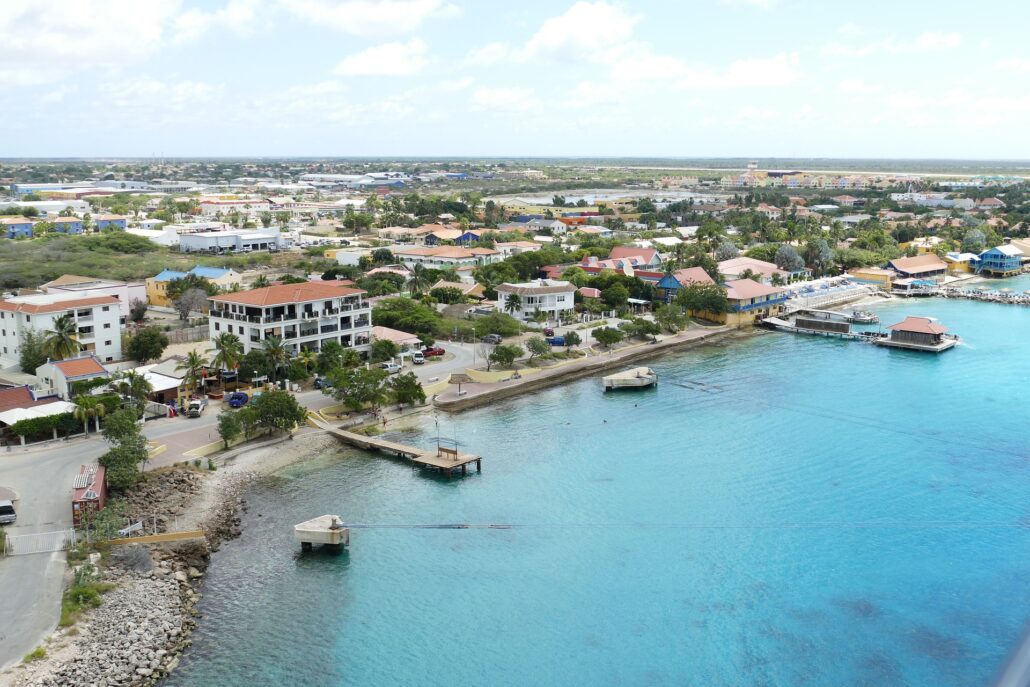
Bonaire is a special municipality of the Netherlands — one of the BES islands, alongside Sint Eustatius and Saba — which means it operates under Dutch governance, uses the US dollar as its currency, and maintains Dutch standards for infrastructure, healthcare, and environmental regulation. The Dutch influence is visible in the architecture of Kralendijk, the capital city, and in the serious approach to marine conservation that has made Bonaire’s reef one of the healthiest in the Western Hemisphere.
The island is small — about 40 kilometers long and 10 kilometers wide at its broadest point — with a population of roughly 22,000 people. Washington Slagbaai National Park occupies the entire northwestern tip of the island. The flat southern end is dominated by salt pans that are still commercially operated and that serve as the primary feeding ground for Bonaire’s famous flamingo population. The middle section of the island, including Kralendijk, is where most of the resorts, restaurants, and services are concentrated.
Why Bonaire Is Different From Other Caribbean Islands
We have traveled through a significant portion of the Caribbean and Bonaire stands apart in several specific ways that are worth understanding before you book.
The marine environment is genuinely exceptional. Bonaire established one of the world’s first marine parks in 1979 and has enforced its protections consistently since then. The entire coastline is a protected marine park. The reef health visible underwater is the direct result of decades of serious conservation — the coral is dense and colorful in a way that is increasingly rare across the Caribbean, where bleaching, pollution, and development have degraded reef systems that were once similarly extraordinary. When you snorkel off Bonaire’s west coast, you are experiencing a reef that has been actively protected for nearly half a century. The difference from less protected islands is immediately visible and genuinely moving.
Shore accessibility is extraordinary. Most Caribbean snorkel and dive experiences require a boat. On Bonaire, the reef begins close enough to shore that you can walk in off the beach or the rocks at dozens of sites along the west coast. You do not need to book a tour or rent a boat to experience world-class snorkeling. You drive to a site, park, gear up, and walk into the water. That accessibility changes the rhythm of how you spend your time on the island — snorkeling becomes something you do spontaneously rather than something you schedule.
The island is not overrun. Bonaire receives a fraction of the visitors that Aruba does. There are no casino strips, no all-inclusive mega-resorts dominating the coastline, no cruise ship days that flood the streets of Kralendijk with thousands of day-trippers. The tourism infrastructure exists and functions well, but it has not overwhelmed the island’s character. Bonaire still feels like a place people live rather than a place that exists primarily to service tourists.
The flamingos are wild. This sounds like a minor point but it is not. The flamingos at the southern salt pans are not captive animals in a sanctuary — they are wild birds feeding in their natural habitat. Driving the southern tip of the island at the right time of day and seeing hundreds of pink flamingos against the turquoise water and white salt flats is one of the genuinely surreal wildlife experiences the Caribbean offers. Washington Slagbaai National Park in the north also has flamingo populations. They are simply part of the island’s landscape in a way that feels improbable and extraordinary every time.
How to Get to Bonaire
Getting to Bonaire requires more planning than getting to Aruba or Curaçao, and that additional effort is part of what keeps the island from being overrun. There is no direct service from most US cities beyond a handful of gateway airports, and international connections typically route through Amsterdam or one of the main Caribbean hubs.
From the United States: The most common routing is through Miami or New York. American Airlines operates direct seasonal flights from Miami to Flamingo International Airport (BON) in Bonaire, and United Airlines has operated service from Newark. Flight time is approximately four hours from Miami and five to six hours from the Northeast. Check current schedules carefully — direct US service to Bonaire is seasonal and changes year to year. If direct flights are unavailable or expensive, connecting through Curaçao adds about an hour to the journey and opens up more flight options.
From Europe: KLM operates direct flights from Amsterdam’s Schiphol Airport to Bonaire several times per week. Given Bonaire’s status as a Dutch special municipality, there is strong historical and family-connection travel between the Netherlands and the island, and the KLM service is reliable and well-established. Flight time is approximately ten to eleven hours.
From other Caribbean islands: Inter-island connections are available through Curaçao, Aruba, and occasionally Sint Maarten, using regional carriers including InselAir and other local operators. These connections are useful for travelers combining Bonaire with other Caribbean destinations.
Flamingo International Airport is small, functional, and refreshingly uncomplicated. Arrivals clear customs and immigration quickly, rental car desks are immediately outside the terminal, and you are on the road within twenty to thirty minutes of landing. After the chaos of major international airports, arriving at Flamingo International feels like exhaling.
Getting around: A rental car is strongly recommended for getting the most out of Bonaire. While Kralendijk is walkable and some resorts are within cycling distance of nearby snorkel sites, reaching Washington Slagbaai National Park, the southern salt flats, the east coast beaches, and the more remote snorkel sites on the west coast requires a vehicle. Several operators rent jeeps and trucks specifically designed for the unpaved roads inside the national park. If you plan to explore beyond the main road, a 4WD vehicle is worth the upgrade.
When to Visit Bonaire
Bonaire’s position outside the hurricane belt means there is no truly bad time to visit — the main consideration is trade winds and rain rather than hurricane risk.
December through April is the peak dry season and the most popular time to visit. The trade winds are consistent, rainfall is minimal, and the visibility underwater is typically at its best. This is also the busiest and most expensive period — book accommodation well in advance if you are traveling over the holiday season or in February and March.
May through August is shoulder season. The trade winds ease slightly, temperatures are warmer, and rainfall begins to increase — though Bonaire receives relatively little rain year-round compared to the more verdant islands further north. Snorkeling conditions remain excellent and the island is less crowded. This is arguably the best combination of good conditions and manageable visitor numbers.
September through November is the wet season in relative terms — Bonaire still receives far less rainfall than most Caribbean islands during this period, but afternoon showers are more common and the trade winds are at their weakest. The island is at its quietest and prices are at their lowest. For travelers whose primary focus is snorkeling, conditions are still good. For travelers who want consistently sunny days, the dry season is the better choice.
Flamingo watching is possible year-round — the birds are resident on the island rather than migratory — but the largest concentrations at the southern salt flats tend to be during the flamingo breeding season, which runs roughly from January through August. The iconic sight of hundreds of flamingos in the salt flats is most likely during this period.
Temperature is remarkably consistent year-round — Bonaire sits in the tropics and the mercury rarely moves far from 28 to 30 degrees Celsius (82 to 86 degrees Fahrenheit). The trade winds make even the hottest days feel comfortable.
Where to Stay in Bonaire
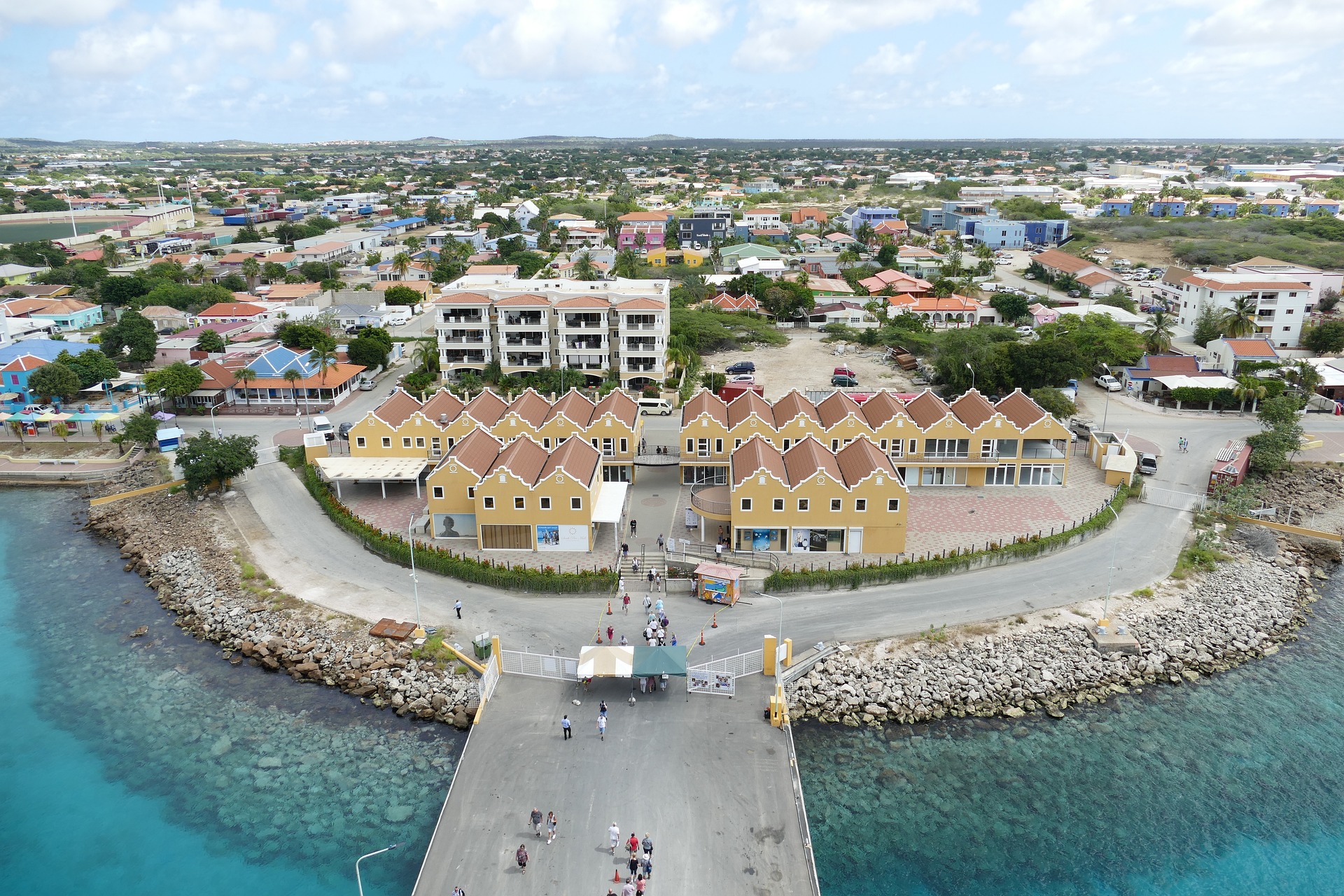
Bonaire’s accommodation is concentrated along the west coast between Kralendijk and the resorts to the north and south of the capital. The island does not have the mega-resort infrastructure of Aruba — properties here are smaller, more personal, and more directly oriented around the marine environment.
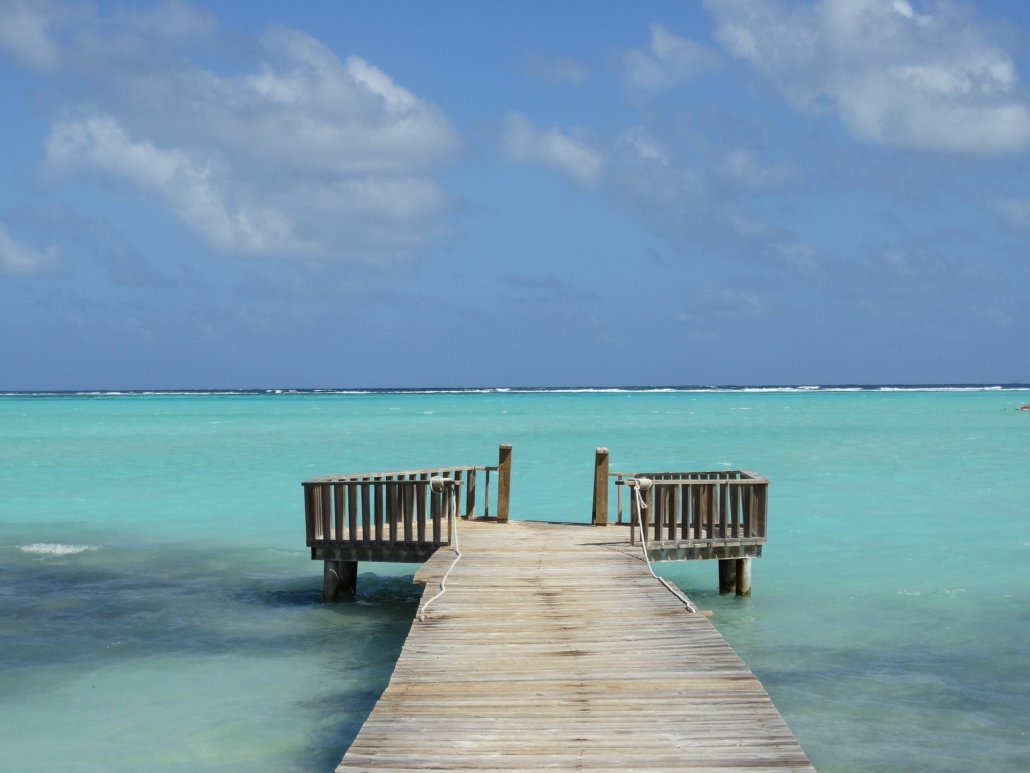
Buddy Dive Resort is one of Bonaire’s most established and well-regarded dive and snorkel resorts, located just north of Kralendijk. They have their own dive operation, a dedicated snorkel program, waterfront rooms and apartments, and an on-site restaurant. The resort has its own private pier with direct water access, making it genuinely convenient for guests who want to get in the water multiple times a day. Buddy Dive is a strong choice for travelers who want everything organized around the marine environment without having to go far.
Divi Flamingo Beach Resort sits right on the waterfront in Kralendijk and is one of the most centrally located properties on the island. The resort is walking distance from the town’s restaurants and shops, has a casino, and is directly adjacent to the water. It is a larger property by Bonaire standards and offers a more traditional resort experience than the smaller dive-focused lodges.
Captain Don’s Habitat has historical significance on the island — Captain Don Stewart was one of the pioneers of Bonaire’s marine conservation movement and the resort he founded carries that legacy. The property is north of Kralendijk, directly on the water, and has a strong community atmosphere among the divers and snorkelers who return year after year.
Den Laman Condominiums are a good option for travelers who want more space and self-catering flexibility — fully equipped apartments with kitchen facilities, located close to Kralendijk with direct water access. For families or travelers staying a week or more, the apartment format makes practical and financial sense.
Vacation rentals are increasingly available on Bonaire through Airbnb and direct booking platforms. Private villas and apartments offer more space and authenticity than resort properties, and Bonaire’s small size means that even a rental in a less central location is only minutes from the water and from Kralendijk’s restaurants.
Budget travelers will find Bonaire more limited than larger Caribbean islands — there are no true backpacker hostels and budget accommodation options are thinner than in more mainstream destinations. That said, apartment rentals and smaller guesthouses offer reasonable rates, particularly outside peak season.
What to Do in Bonaire
Snorkeling
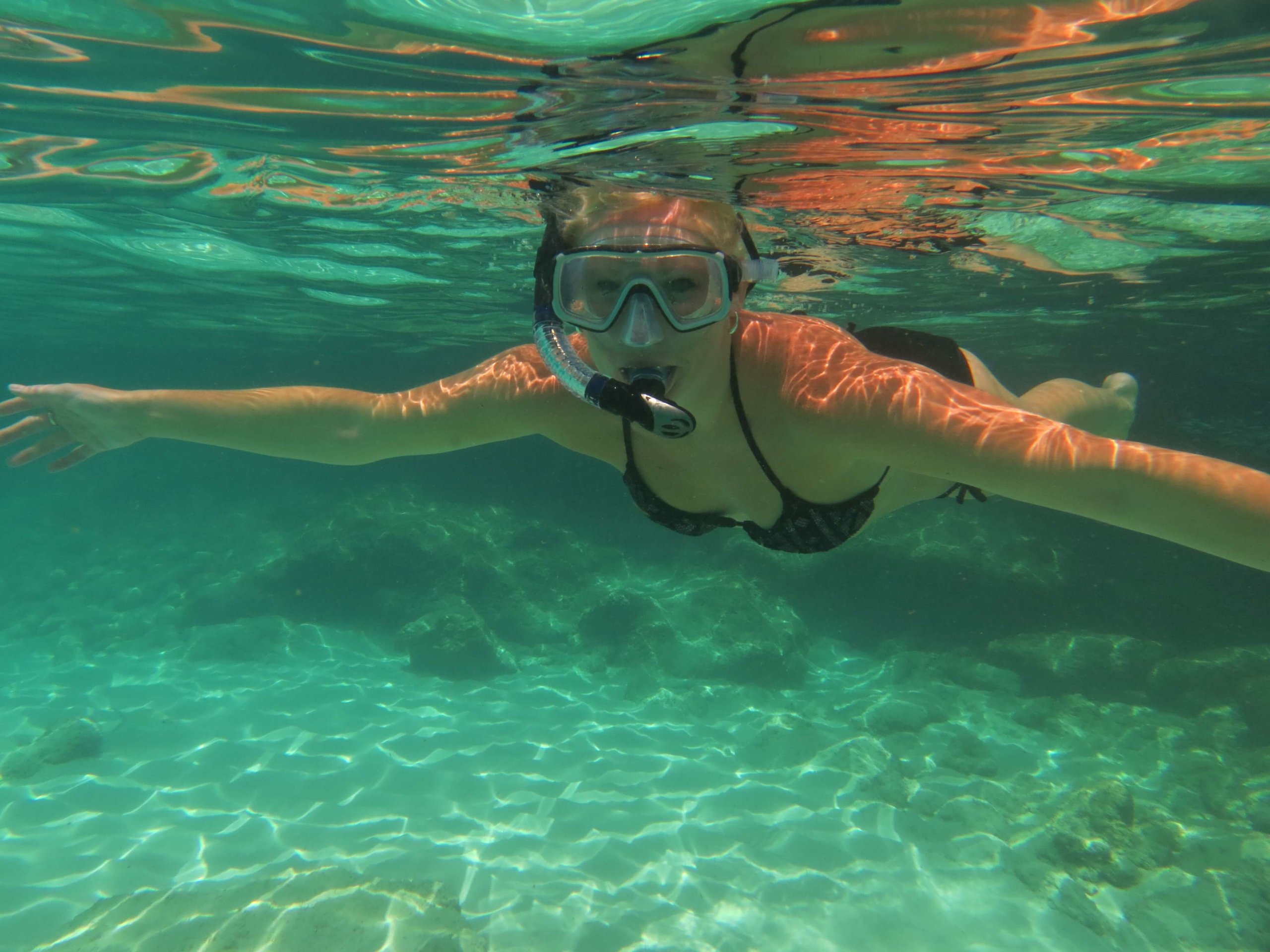
Snorkeling is the primary reason most people come to Bonaire and the single activity most worth building a trip around. The west coast has dozens of marked shore entry points accessible by car — yellow painted rocks mark the entry points along the main road north and south of Kralendijk. You park, gear up, walk to the water, and within minutes you are over a reef that would be the highlight of most Caribbean diving boat trips.
The sites vary in character and depth. Some are shallow and gentle, appropriate for beginners and families with children. Others drop quickly into deeper water where the coral wall extends into the blue and the marine life density increases dramatically. Sea turtles, parrotfish, angelfish, spotted eagle rays, moray eels, and dozens of other species are common sightings. The underwater visibility on a calm day can exceed 30 meters — clear enough that you can see the bottom of the reef wall from the surface and track a sea turtle moving through the water column far below you.
Klein Bonaire — the uninhabited island just offshore — deserves its own mention. The snorkeling off No Name Beach on Klein Bonaire is among the best we have experienced anywhere in the world. Getting there requires a water taxi from the main island, a trip of five to ten minutes, and the investment is worth every minute. Spend a full morning or afternoon there rather than treating it as a quick stop.
Snorkel gear is available for rent at dive shops throughout Kralendijk and at most resort properties. The Nature Fee — paid on arrival at the airport — covers access to all marine park sites for the duration of your stay. Use reef-safe sunscreen only. This is not a suggestion in Bonaire — it is a condition of the marine park and taken seriously by both locals and fellow travelers.
Washington Slagbaai National Park
The national park in Bonaire’s northwest occupies the most rugged and dramatic terrain on the island. Established in 1969 — one of the Caribbean’s first protected areas — it covers roughly 5,500 hectares of cactus scrub, salt flats, bird-rich coastal areas, and dramatic volcanic rocky coastline. Two driving routes through the park cover different areas, with the longer route taking three to four hours with stops.
The park is home to more than 190 bird species including flamingos, parakeets, owls, ospreys, herons, and the Caribbean’s largest population of yellow-shouldered Amazon parrots. For birdwatchers, Washington Slagbaai is one of the best sites in the entire Caribbean. Even for non-birders, the density and variety of wildlife visible from the marked routes is genuinely impressive.
Boka Slagbaai — the beach at the end of the main park route — is worth the drive on its own. Surrounded by cliffs, with clear water and excellent snorkeling off the rocks, it is one of the most dramatic settings on the island. The contrast between the rugged interior landscape of the park and the vivid water at the coast is striking in a way that photographs do not fully capture.
A 4WD vehicle is recommended for the park’s unpaved roads. Several rental operators in Kralendijk specifically offer jeeps and trucks for park access. Bring water, sunscreen, and food — there is a small restaurant at Boka Slagbaai but nothing else inside the park.
Flamingo Watching at the Salt Flats
The southern tip of Bonaire is dominated by the Cargill salt pans — large, shallow evaporation pools that have been used for salt production since the Dutch colonial era. The salt works are still operational and the pink and white geometric patterns of the evaporation pools are one of Bonaire’s most distinctive aerial views.
The salt flats are also the primary feeding ground for Bonaire’s flamingo population — sometimes numbering in the hundreds — which wade through the shallow saline water filtering for the algae and crustaceans that give them their distinctive pink color. The best viewing is from the road on the southern tip of the island, where you can pull over and watch at close range. Early morning and late afternoon produce the best light and the most active feeding behavior.
Also on the southern tip are the restored slave huts — small stone structures that were used to house enslaved workers who labored in the salt pans during the 18th and 19th centuries, walking the full length of the island each weekend to visit their families in Rincon, the oldest settlement on the island. The huts are a sobering and important part of Bonaire’s history and worth taking a few minutes to acknowledge on any trip to the south.
Kralendijk
Bonaire’s capital is small enough to walk entirely in an afternoon but has genuine character — a mix of Dutch colonial architecture painted in pastels, a waterfront boulevard lined with restaurants and bars, a few small museums, and a market scene that reflects the island’s mix of Dutch, African, and South American cultural influences.
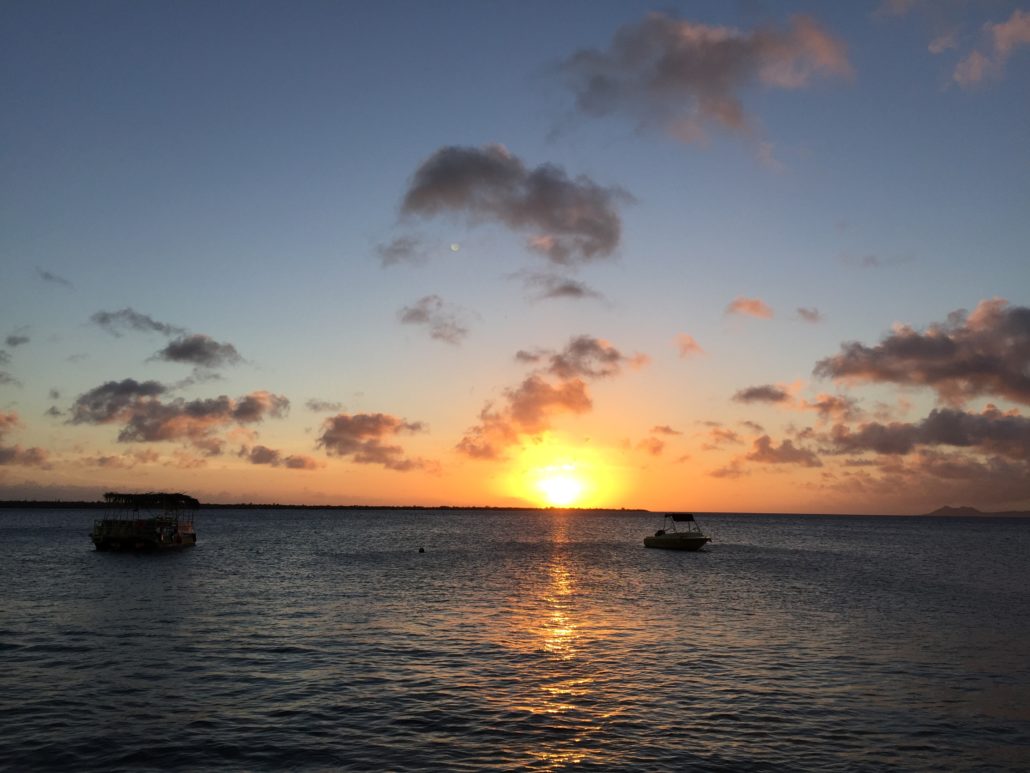
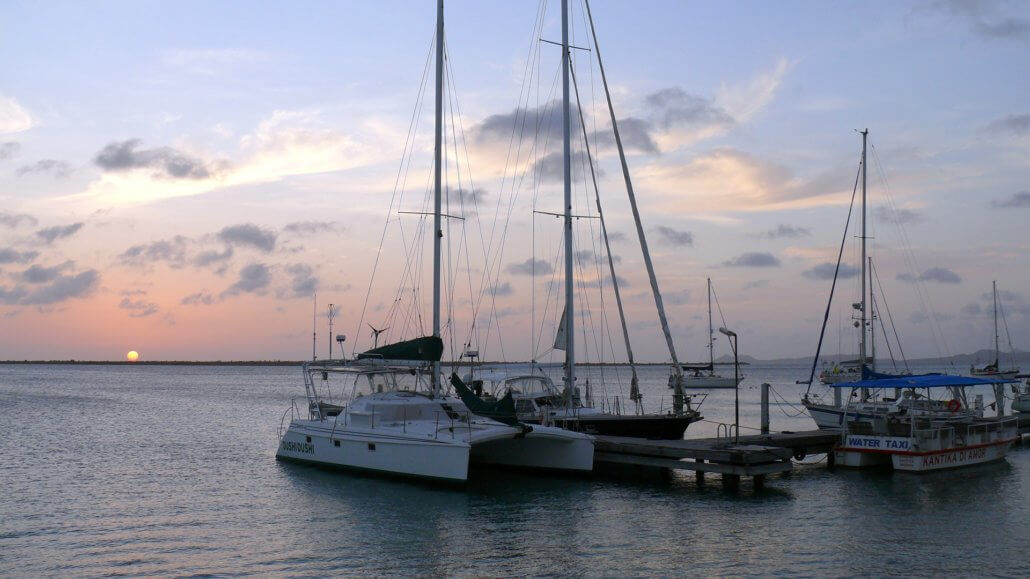
The waterfront boulevard is the social center of the island in the evenings. Karel’s Beach Bar is one of the most famous institutions in Bonaire — an open-air bar on a pier over the water where locals and visitors mix and where the sunset is reliably spectacular. It Rains Fishes is a well-regarded restaurant on the waterfront. Cappuccino is a reliable choice for casual lunches and Italian food. There are enough options along the boulevard for a week of varied eating without repeating yourself.
The Bonaire Museum on Kaya Simón Bolívar covers the island’s natural and cultural history and is worth an hour on a day when you want a break from the sun. The old fort — Fort Oranje — is one of the oldest structures on the island and sits on the waterfront.
The Donkey Sanctuary
Bonaire’s wild donkeys are descended from working animals released into the wild after mechanization rendered them unnecessary. The Donkey Sanctuary on the island cares for injured, sick, and orphaned donkeys and operates as a genuine rescue and rehabilitation facility rather than a tourist attraction that happens to have donkeys. Visiting is worth an hour of your time — the animals are docile and friendly and the sanctuary staff are knowledgeable about Bonairean history and the donkeys’ place in it. Wild donkeys roam freely across much of the island and are part of the landscape in a way that surprises first-time visitors.
Kayaking the Mangroves
The mangrove forest surrounding Lac Bay is one of the largest and healthiest in the southern Caribbean. Kayaking through the mangrove channels offers a completely different perspective on Bonaire’s marine environment — the roots of the mangroves serve as nurseries for juvenile fish and the waterways are home to herons, egrets, and occasionally sea turtles working their way through the shallower water. Several operators at Lac Bay offer kayak rentals and guided mangrove tours. It is a particularly good activity for the morning before the trade winds pick up and chop the water on the bay.
What Things Cost in Bonaire
Bonaire is not a budget destination by Caribbean standards. The relatively limited visitor numbers and the island’s Dutch administrative standards mean that prices are closer to European levels than to the budget Caribbean. That said, understanding what drives costs helps you manage them.
The Nature Fee is paid on arrival at Flamingo International Airport and covers access to the marine park for the duration of your stay. As of recent years the fee is approximately $40 USD per person for an annual pass valid for one calendar year — strong value for any visitor staying more than a day or two.
Accommodation ranges from approximately $100 per night for basic guesthouses and apartment rentals to $250 to $400 per night for the established dive resorts in peak season. The middle range of $150 to $200 per night covers comfortable, well-located properties with water access.
Snorkel gear rental runs approximately $10 to $15 per day from the dive shops in Kralendijk. If you are staying a week or more and plan to snorkel daily, purchasing a basic mask and fins before you leave home and bringing them with you is more economical and ensures gear that fits properly.
Car rental starts at approximately $50 to $70 per day for a standard vehicle and $70 to $100 per day for a 4WD jeep. Given how much of Bonaire’s best experiences require a car, this is a non-negotiable expense for most visitors.
Food and drink costs are moderate to high by Caribbean standards. Dining at the waterfront restaurants in Kralendijk runs $20 to $35 per person for a main course. Supermarkets in Kralendijk carry a reasonable range of groceries for self-catering — Cultimara is the main supermarket and is well-stocked by island standards.
Water taxi to Klein Bonaire runs approximately $15 to $20 per person round trip depending on the operator.
Washington Slagbaai National Park entrance is approximately $25 per vehicle.
Practical Information
Currency: The US dollar is the official currency of Bonaire. Credit cards are accepted at most hotels, restaurants, and dive shops. Cash is useful for smaller vendors, markets, and tips.
Language: The official languages are Dutch and Papiamentu — the local creole language that blends Dutch, Spanish, Portuguese, African, and indigenous Arawak elements into something entirely its own. English is widely spoken throughout the island, particularly in the tourism sector. Spanish is also common given Bonaire’s proximity to Venezuela.
Electricity: Bonaire uses 127V/50Hz with the same plug types as the Netherlands. US travelers will need a voltage converter for devices that do not support dual voltage, though most modern electronics (phones, laptops, camera chargers) handle both voltages automatically.
Healthcare: The Sint Franciscus Hospital in Kralendijk provides basic medical care. For serious medical emergencies, evacuation to Curaçao or Venezuela may be required. Travel insurance with medical evacuation coverage is strongly recommended.
Internet and phone: Cell coverage and data are available across most of the island through local carriers. Most hotels and resorts offer Wi-Fi. Coverage is thinner inside Washington Slagbaai National Park — download offline maps before heading in.
Time zone: Bonaire operates on Atlantic Standard Time (UTC-4) year-round — no daylight saving time adjustment.
Tipping: A 10 to 15 percent tip is standard at restaurants where service charge is not included. Dive guides and snorkel operators appreciate tips and depend on them as a meaningful part of their income.
Marine Park Rules Worth Knowing
Bonaire’s marine environment is protected by rules that are enforced and that matter. Understanding them before you arrive makes compliance effortless rather than a surprise.
Reef-safe sunscreen only — chemical sunscreens containing oxybenzone and octinoxate are harmful to coral and banned from the marine park. Mineral sunscreens based on zinc oxide or titanium dioxide are the correct choice. Most dive shops in Kralendijk sell reef-safe options if you forget to bring your own.
No touching the coral. Ever. Even momentary contact can damage coral polyps that have taken decades to grow. Maintain buoyancy control underwater and keep fins clear of the reef. This applies equally to snorkelers in the shallows.
Nothing is removed from the marine park — no shells, no coral fragments, no sea glass from the reef. Look at everything, take nothing.
Anchoring on coral is prohibited. Boat operators know this and use designated mooring buoys at all dive and snorkel sites.
These rules are not bureaucratic inconvenience — they are the reason the reef exists in the condition it does. Bonaire’s marine environment is what it is because of forty-five years of serious protection. Every visitor who follows the rules is part of that protection continuing.
The Honest Assessment: Is Bonaire Right for You?
Bonaire is not for everyone, and being honest about that serves travelers better than selling the island to people who would be better suited elsewhere.
Bonaire is right for you if the underwater world is a central motivation for your travel — if the quality of what you see snorkeling or diving is worth organizing a trip around. It is right for you if you value a quieter, less developed Caribbean experience over the entertainment infrastructure of Aruba or the beach club scene of other islands. It is right for you if wildlife — flamingos, sea turtles, wild donkeys, extraordinary birdlife — adds meaning to a trip rather than being a marginal bonus.
Bonaire is probably not right for you if you are primarily looking for nightlife, shopping, casino entertainment, or the kind of all-inclusive resort experience where the island outside the compound is largely irrelevant. Those experiences exist better elsewhere in the Caribbean and there is nothing wrong with wanting them — they are just not what Bonaire is.
For the traveler Bonaire is designed for, it is one of the best places in the Caribbean. We go back. We will go back again. The reef, the flamingos, the unhurried pace, the clarity of the water — there are places in the world that work on you in ways you do not fully understand until you have been and until you realize, somewhere in the middle of a snorkel session off the west coast, that you are looking at something genuinely extraordinary and relatively few people know it is there.
That is Bonaire.