The Uffizi Gallery is one of the most important art museums in the world — and one of the easiest to get wrong logistically. Walk-up tickets are essentially unavailable in peak season, same-day entry is unreliable even in shoulder season, and the queue without a reservation regularly runs two to three hours. Book in advance. Everything else is secondary.
This guide covers how to buy Uffizi tickets the right way, what the different ticket types include, how much time to allocate, what to prioritize inside, and the practical details that most people only learn after their first visit.
👉 Planning your full Florence trip? See our Florence city guide for everything beyond the Uffizi, and our how many days in Florence guide to build your itinerary around the museum visit.
Can You Just Show Up at the Uffizi?
Technically yes. In practice, almost never worth it. The Uffizi operates a timed-entry system with a fixed daily capacity. Walk-up tickets are sold at the box office when capacity allows, but during the main tourist season — roughly April through October — available slots are gone by mid-morning or earlier. In July and August, the museum is often fully booked days in advance.
Even outside peak season, showing up without a reservation is a gamble. November through March is the quietest period, and same-day tickets are sometimes available — but “sometimes” is not a planning strategy on a trip with limited days. The advance booking fee is €4 per person. That is a trivially small cost relative to the risk of spending two hours in a queue or being turned away entirely.
Book in advance. Every time.
Where to Buy Uffizi Tickets

There are three legitimate ways to buy Uffizi tickets: directly through the official museum website, through the Firenze Musei system, or through a third-party tour operator. One of these is better than the others for most visitors.
Option 1: Official Uffizi Website (Recommended)
The official Uffizi ticketing page is the simplest and cheapest way to book. You select your date, choose a time slot, pay online, and receive an e-ticket by email that you show on your phone at the entrance. No printing required. The booking fee is €4 per person on top of the standard admission price.
The official site sells tickets up to six months in advance. For peak season travel (April–October), opening that booking window early is worth doing — the most convenient morning slots fill first.
Option 2: Firenze Musei
Firenze Musei is the official booking platform for Florence’s major state museums, including the Uffizi, the Accademia (home of Michelangelo’s David), and Palazzo Pitti. Booking through Firenze Musei is useful if you want to coordinate entry times across multiple museums in a single transaction. Pricing and booking fees are the same as the official Uffizi site.
Option 3: Third-Party Tours and Skip-the-Line Packages
A significant number of tour operators sell “skip-the-line” Uffizi tickets bundled with a guided tour. These are legitimate — the tickets themselves grant the same museum access — but they typically cost significantly more than booking directly. A standalone advance ticket costs admission plus €4. A guided tour package runs €40–80 or more per person depending on the operator and group size.
The guided tour is worth considering if it’s your first time at the Uffizi and you want contextual depth on the major works — a good guide changes the experience considerably. But if you’re comfortable self-navigating with an audio guide or a good preparation read, the direct booking is the better value. Operators like GetYourGuide and Viator aggregate tour options if you want to compare guided experiences.
What to Avoid
Avoid buying tickets from scalpers outside the museum entrance. This happens — people approach visitors in the queue offering tickets at marked-up prices. The legitimacy of these tickets is unreliable and the markup is unjustifiable given how easy it is to book directly online.
Uffizi Ticket Prices
Admission prices as of 2024/2025:
- Adults (18–25, EU citizens) — €2
- Standard adult admission — €20 (low season) / €25 (high season, March–October)
- Under 18 — Free (EU and non-EU)
- Booking fee — €4 per person (applies to all advance bookings)
High season runs from March through October; low season is November through February. Prices are subject to change — verify current pricing on the official Uffizi tickets page before booking.
The Uffizi also participates in free museum days. The first Sunday of each month, entry to all Italian state museums — including the Uffizi — is free. This sounds appealing but comes with a significant catch: queues on free Sundays are among the longest of the entire year. The money saved is rarely worth the time lost unless you arrive before the museum opens and join the queue early.
How Far in Advance Should You Book?
The honest answer varies by season:
July and August — Book as soon as your travel dates are confirmed, ideally 2–3 months out. Morning slots and weekend slots disappear fastest.
April, May, June, September, October — Book 4–8 weeks in advance. Slots are available closer to the date but the best time windows (early morning on weekdays) go first.
November through March — 1–2 weeks is usually sufficient, sometimes less. That said, there’s no downside to booking earlier, and the €4 fee is non-refundable regardless of when you book.
If your travel dates are fixed, book the Uffizi the same day you book your flights. It’s that important to get right.
Choosing a Time Slot: Morning vs. Afternoon
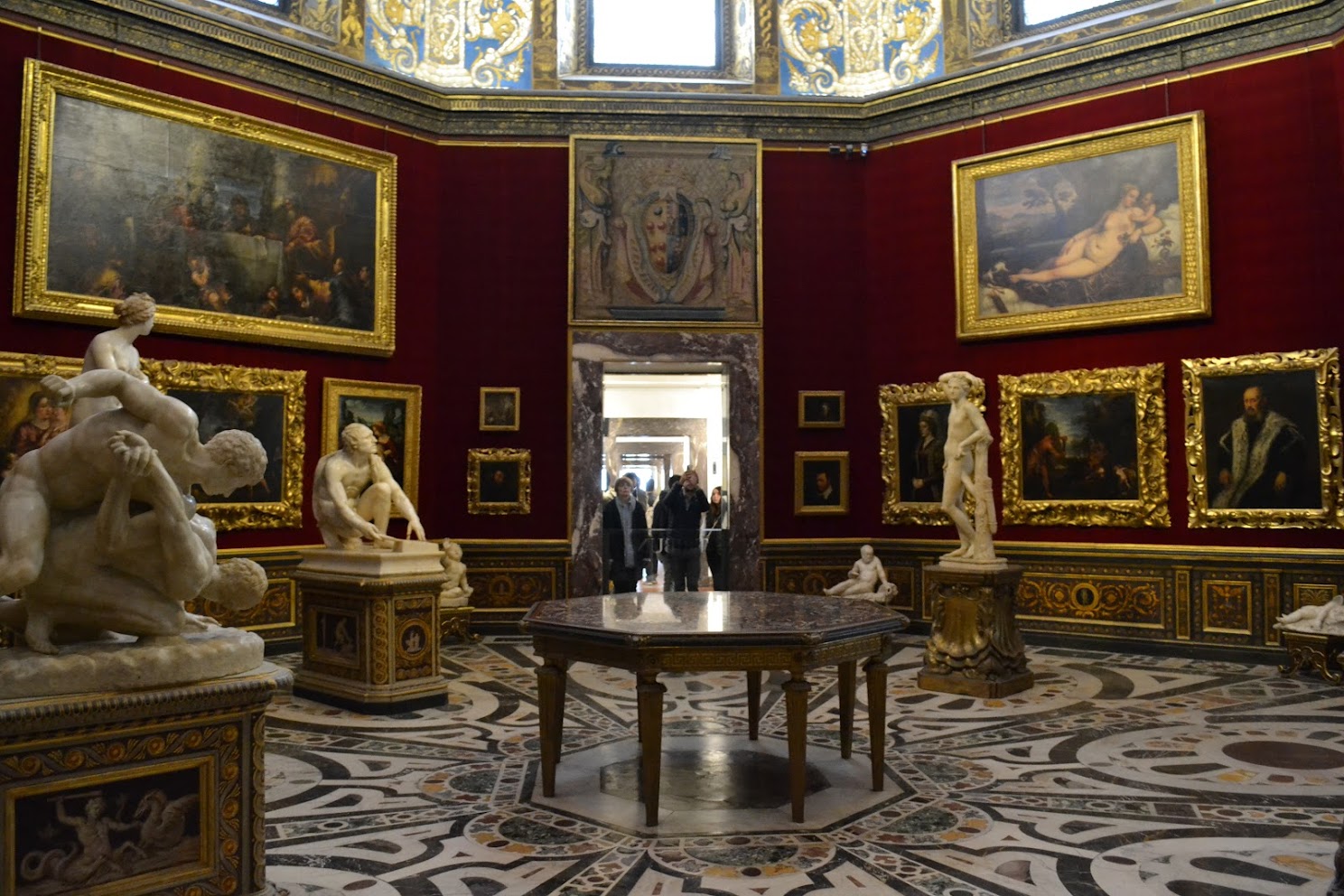
Morning slots — particularly the first entry of the day — are consistently better than afternoon visits for two reasons: crowds and energy. The Uffizi is a large museum with a lot to absorb, and doing it in the morning when you’re fresh and the galleries are less packed is a meaningfully better experience than arriving in the afternoon when tour groups are at their densest.
The first time slot (typically 8:15am or 9am depending on the day) is worth prioritizing. The rooms containing the Botticelli works — the most visited in the museum — are far more manageable early in the day than at midday.
Afternoon slots are fine if morning isn’t available, and the museum often has more light in certain galleries in the afternoon. But if you have a choice, go early.
How Much Time Do You Need at the Uffizi?
Two to three hours is the realistic minimum for a meaningful first visit. The Uffizi contains 45 rooms across two floors, and the temptation to move quickly through everything will leave you with a superficial experience of one of the world’s great collections.
Three hours is better. Four hours is comfortable for anyone with genuine interest in Renaissance art. The museum café and terrace (with views over the Piazza della Signoria) are worth a break in the middle of a longer visit.
If you’re visiting Florence for only two or three days, the Uffizi will likely be your longest single museum visit. Budget accordingly and don’t try to pair it with the Accademia on the same day — that’s too much, and both museums deserve proper attention.
👉 See our Florence city guide for how to structure the rest of your day around an Uffizi visit.
What’s Inside the Uffizi: What Not to Miss
The Uffizi’s collection spans roughly 700 years of Western art, from Byzantine and Gothic through the Renaissance and into the Baroque. The core draw for most visitors is the Renaissance collection — specifically the Botticelli rooms — but there is extraordinary work throughout the museum that most visitors rush past.
The Botticelli Rooms (Rooms 10–14)
The Birth of Venus and Primavera are both housed in this section of the museum, and they are the most photographed works in the Uffizi. Both are larger than most visitors expect and more complex on close inspection than they appear in reproduction. Primavera in particular — nearly three meters wide, with a dense allegorical program that art historians still debate — repays slow looking.
These rooms are the most crowded in the museum. If you’re there early, move through other galleries first and come back to Botticelli once the initial crowd from your time slot has dispersed.
Leonardo da Vinci (Room 35)
The Uffizi holds two early Leonardo works: The Annunciation and the unfinished Adoration of the Magi. Both are extraordinary and significantly less crowded than the Botticelli rooms. The Annunciation’s landscape detail and the atmospheric quality of light in the Adoration show Leonardo’s early mastery of techniques that would define his later career.
Michelangelo’s Doni Tondo (Room 35)
The only finished panel painting by Michelangelo — a circular composition (tondo) depicting the Holy Family. The figures have the sculptural intensity characteristic of his work, and the original frame, designed by Michelangelo himself, is one of the most remarkable picture frames in existence. Easy to miss; don’t miss it.
Raphael (Room 66)
Two exceptional Raphael portraits — Leo X with Two Cardinals and the Madonna of the Goldfinch — alongside other works from his Florentine period. The Leo X portrait is one of the most psychologically penetrating papal portraits in existence.
Caravaggio (Room 90)
The Uffizi’s Caravaggio holdings include Bacchus and Medusa — the latter painted on a convex wooden shield and one of the most viscerally striking works in the museum. These rooms are consistently less crowded than the Renaissance galleries, which makes no sense given the quality of the paintings.
Titian and the Venetian Renaissance (Rooms 83–84)
The Venus of Urbino — Titian’s reclining nude — is one of the most influential paintings in Western art, a direct precursor to Manet’s Olympia and Goya’s Naked Maja. It hangs here with other major Titian works and a strong representation of the Venetian Renaissance more broadly.
The Corridor Views
The Uffizi’s long corridor overlooking the Arno and the Ponte Vecchio is one of the most beautiful architectural spaces in any museum in the world. Don’t walk through it looking at your phone. The view from the windows along the corridor, particularly on the side facing the Arno, is genuinely special.
Audio Guides and Guided Tours
The Uffizi is significantly more rewarding with some interpretive support. Three options:
Official audio guide — Available for rent at the museum entrance (approximately €6–8). Covers the major works with solid contextual commentary. The quality is decent and it allows you to move at your own pace.
The official Uffizi app — Available for download before your visit and usable offline inside the museum. Contains multimedia guides, room-by-room content, and a map. Free to download with some content behind a small in-app purchase. A good alternative to the physical audio guide if you prefer using your phone.
Guided tour — A knowledgeable guide genuinely transforms the Uffizi experience, especially for visitors without a background in art history. Small-group tours (8–12 people) are far better than large group tours; the difference in experience is significant. If you’re booking a guided tour, look for groups of 12 or fewer. Expect to pay €35–60 per person for a quality small-group experience. GetYourGuide and Viator both list options with verified reviews.
Practical Information
Address: Piazzale degli Uffizi 6, Florence. The museum entrance is in the courtyard between the two long wings of the Uffizi building, facing the Arno. It’s immediately south of the Piazza della Signoria.
Opening hours: Tuesday through Sunday, 8:15am to 6:50pm (last entry 6:05pm). Closed Mondays. Closed January 1, May 1, and December 25. Hours may vary on other public holidays — check the official Uffizi website before your visit.
Getting there: The Uffizi is walkable from virtually anywhere in central Florence. From the Santa Maria Novella train station it’s approximately 15 minutes on foot. There is no practical reason to take transit to the Uffizi from the historic center.
Bag storage: Large bags and backpacks must be checked at the cloakroom (free). Small bags and camera bags are typically fine. There are no lockers for large luggage — don’t arrive at the Uffizi with rolling suitcases.
Photography: Permitted throughout the museum without flash. The Uffizi is one of the more photography-friendly major museums in Europe.
Accessibility: The museum is accessible by elevator. Wheelchairs are available to borrow at the entrance. The Uffizi accessibility page has full details on services available.
Museum shop and café: The bookshop near the exit has an excellent selection of art history publications, prints, and quality reproductions. The rooftop café has views over the Piazza della Signoria and is a good place to take a break mid-visit.
Combining the Uffizi With Other Florence Museums
The Uffizi and the Accademia (Michelangelo’s David) are the two non-negotiable museum visits in Florence. Both require advance booking and both deserve real time. The practical question is how to sequence them.
Do not visit both on the same day unless you are on a very compressed schedule and have no alternative. Museum fatigue is real, and both collections deserve your full attention. The better approach on a three-day Florence trip is Uffizi on Day 1, Accademia on Day 2. You can book Accademia tickets directly through the Firenze Musei website — the same platform as the Uffizi.
If you have a fourth day, the Museo dell’Opera del Duomo (included in the combined Duomo complex ticket) and the Bargello sculpture museum are both strong additions. Neither requires the same advance lead time as the Uffizi or Accademia.
👉 For help structuring a multi-day Florence itinerary around museum visits, see our how many days in Florence guide. If Florence is part of a broader Italy trip, our 7 days in Italy itinerary shows how to fit it all together.
Final Checklist Before You Go
Before you leave home: Book your timed-entry ticket at uffizi.it. Download your e-ticket. Download the Uffizi app if you plan to use it. Book a guided tour if that’s the route you’re taking.
On the day: Arrive 10–15 minutes before your time slot. Have your e-ticket ready on your phone. Check large bags at the cloakroom. If the Botticelli rooms are crowded when you arrive, move through other galleries and return — the crowds thin somewhat as the day progresses through multiple time slots.
Inside: Don’t rush. The instinct to see everything in a large museum often results in seeing nothing well. Pick the rooms and works that matter most to you and give them real time. The Uffizi rewards slow looking more than almost any museum in the world.