
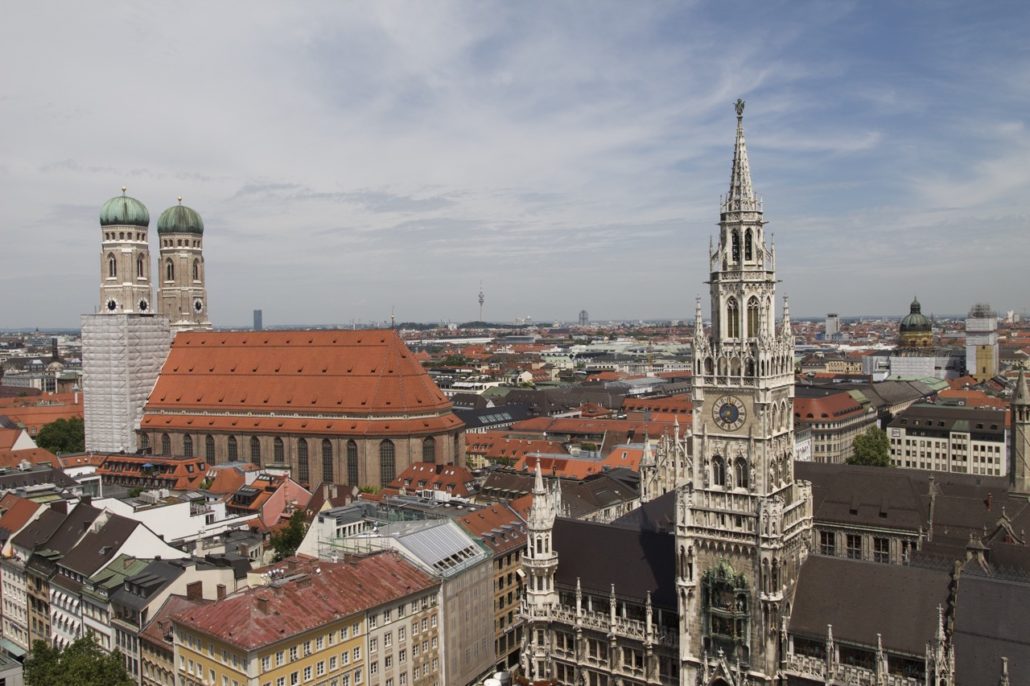
Munich is one of those cities that confounds easy description. It is simultaneously one of the most livable cities in Europe and one of its most misunderstood — reduced in the popular imagination to beer steins and lederhosen when the reality is a city of extraordinary museums, royal architecture, one of the great urban parks in the world, and a food culture that extends well beyond the beer hall. The Oktoberfest reputation is earned and the festival is genuinely worth experiencing, but it represents roughly two weeks of Munich’s year. The other fifty weeks are equally rewarding, and in many ways more so.
The city sits in the foothills of the Bavarian Alps, 90 minutes by train from the Austrian border and within easy reach of some of the finest alpine scenery in Central Europe. On clear days — particularly in autumn and winter — the Alps are visible from the city itself, a backdrop of snow-capped peaks rising above the low urban skyline that reminds you exactly where in Europe you are. Munich is a Bavarian city first and a German city second; the distinction matters, and the Bavarians will remind you of it.
This article is part of our broader Germany travel coverage. For a deeper look at Munich specifically, see our Munich City Guide, our Munich food guide, and our Munich accommodation guide.
👉 Munich City Guide: Neighborhoods, museums, palaces & everything to do in Munich →
👉 Germany Travel Guide: Cities, regions & everything you need to plan your Germany trip →
Munich at a Glance
- Population: 1.5 million (city); 2.9 million (greater Munich)
- Getting There: Munich Airport (MUC) is one of the busiest in Europe, with direct connections from North America, the UK, and across Europe. The S-Bahn (S1 and S8 lines) connects the airport to the city center in approximately 40 minutes. Taxis take approximately 45 minutes and cost €65–80
- Getting Around: Munich’s public transport network — U-Bahn (metro), S-Bahn (commuter rail), trams, and buses — is one of the finest in Europe. The MVV day ticket covers unlimited travel on all modes and is the correct approach for visitors. The city center is very walkable; a bicycle is excellent for the Englischer Garten and the riverside paths
- Currency: Euro (€). Cards accepted widely; cash still preferred at some traditional beer halls and smaller restaurants
- Language: German. English is widely spoken in hotels, restaurants, and tourist areas. Locals appreciate any attempt at basic German phrases
- Tipping: Round up to the nearest euro or add 10% at restaurants; hand the tip directly to the server rather than leaving it on the table
Munich’s Key Neighborhoods
Altstadt — The Historic Heart
Munich’s Altstadt (Old Town) is the compact historic center — the pedestrianized zone radiating out from Marienplatz, packed with Gothic churches, Baroque palaces, market halls, and the animated street life of a city that takes its public spaces seriously. The Altstadt was largely destroyed in World War II and meticulously rebuilt; what looks medieval is often a faithful postwar reconstruction, but the quality of the reconstruction is exceptional and the atmosphere is genuine.
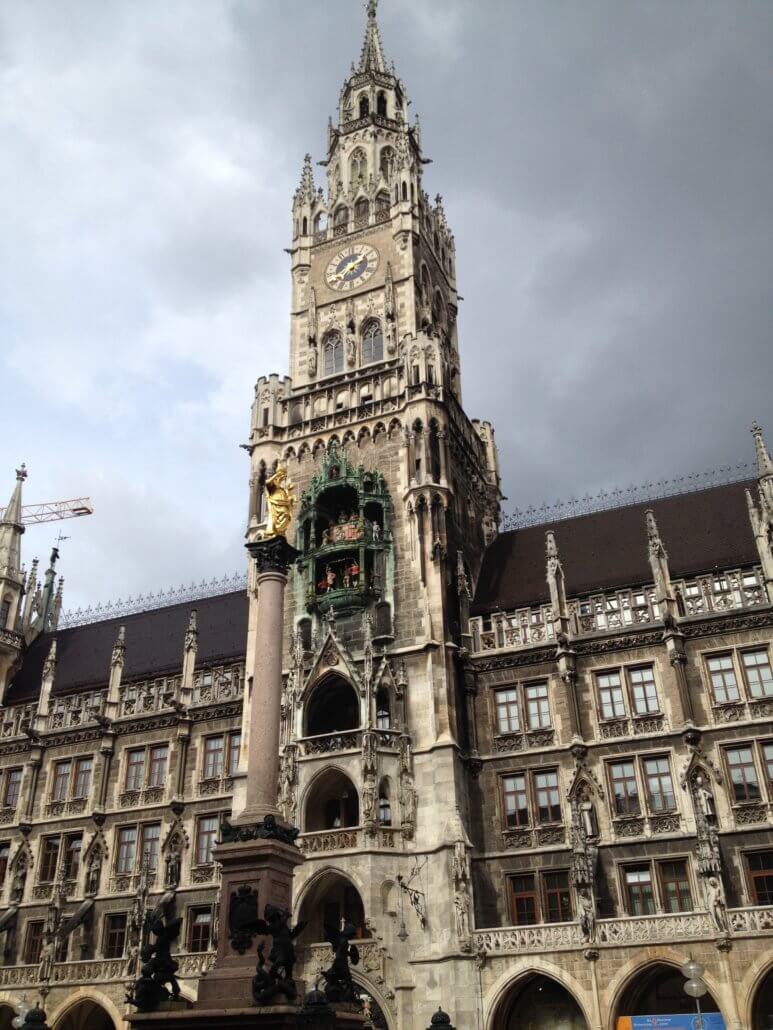
Marienplatz — the central square dominated by the neo-Gothic Neues Rathaus and its famous Glockenspiel — is the natural starting point for any Munich visit. The Glockenspiel performances at 11am, 12pm, and 5pm daily are tourist-facing but the square itself, ringed by beautiful buildings and alive with street life, is the social heart of the city. The Viktualienmarkt, two minutes south, is Munich’s finest daily food market — an outdoor market of Bavarian cheese, sausage, bread, and fresh produce operating on the same site since 1807.
Maxvorstadt — Museums and Universities
Maxvorstadt, immediately north of the Altstadt, is Munich’s museum and university quarter — the neighborhood where Ludwig I commissioned the extraordinary concentration of neoclassical museums that make Munich one of the finest art cities in Europe. The Pinakothek complex — three world-class art museums within a five-minute walk of each other — is the centerpiece of the neighborhood. The Ludwig Maximilians University gives the area an academic energy and a density of good cafés and bookshops that contrasts pleasantly with the more tourist-oriented Altstadt.
Schwabing — The Bohemian North
Schwabing is the bohemian neighborhood north of Maxvorstadt — historically the artists’ and writers’ quarter of Munich, where Wassily Kandinsky lived and where the Blue Rider art movement was founded. Today it is a prosperous residential neighborhood of elegant Wilhelmine apartment buildings and tree-lined boulevards. The concentration of restaurants and bars along Leopoldstrasse makes it one of the finest evening neighborhoods in the city. Schwabing borders the Englischer Garten to the east — the combination of the park and the neighborhood’s restaurant scene makes this the best area in Munich for a long afternoon that transitions naturally into evening.
Glockenbachviertel — Creative and Contemporary
The Glockenbachviertel, south of the Altstadt along the Isar River, is Munich’s most creative and most diverse neighborhood — the center of the city’s LGBTQ+ culture, its independent restaurant scene, and the most contemporary end of Munich’s food and cultural life. The streets around Gärtnerplatz square are among the most animated in the city on a summer evening, when restaurants and bars spill out onto the pavements and the square becomes a spontaneous outdoor gathering place.
Haidhausen — The Village Within the City
Haidhausen, east of the Isar across the river from the city center, retains the character of the working-class village it once was — cobbled streets, low 19th-century buildings, and a neighborhood life that feels genuinely local. The French Quarter (a cluster of streets named after French cities) and the Gasteig cultural center are the main landmarks. Haidhausen has some of the most interesting independent restaurants in Munich and rewards slow exploration on foot.
👉 Munich City Guide: The full guide to Munich’s neighborhoods, museums & experiences →
👉 Where to Stay in Munich: The best Munich neighborhoods and hotels for every budget →
Top Experiences in Munich
Marienplatz and the Viktualienmarkt
The combination of Marienplatz and the Viktualienmarkt constitutes the finest morning in Munich. Start at Marienplatz with coffee from one of the cafés facing the Neues Rathaus, then walk south to the Viktualienmarkt. The market sells the finest Bavarian produce: white asparagus in spring, mushrooms in autumn, year-round Bavarian cheeses, air-dried meats, and fresh bread. The beer garden at the center of the market is one of the most democratic in Munich — bring food from the stalls and buy a Mass (one-liter stein) of beer from the central kiosk. It is one of the most specifically Bavarian experiences available in the city.
The Englischer Garten
The Englischer Garten is one of the largest urban parks in the world — larger than Central Park in New York, stretching 3.7 kilometers along the Isar River from the city center to the northern suburbs. It contains beer gardens, a Japanese tea house, a Chinese Tower pagoda, and the Eisbach river channel where surfers ride a standing wave year-round — one of the most surreal urban sights in Europe. The Chinesischer Turm beer garden, with seating for 7,000, is the finest afternoon destination in the park. Arrive on a warm afternoon, find a table under the chestnut trees, order a Mass of Augustiner and a plate of Obatzda with pretzels, and spend two hours watching Munich at leisure.
The Pinakothek Museums
The three Pinakothek museums in Maxvorstadt form one of the finest museum complexes in Europe. The Alte Pinakothek holds one of the world’s great Old Master collections — Dürer’s Self-Portrait, Rubens’s monumental canvases, Raphael, Titian, and Rembrandt. The Neue Pinakothek covers 19th-century European painting from Caspar David Friedrich’s romantic landscapes to the French Impressionists. The Pinakothek der Moderne is the finest modern and contemporary art museum in Germany outside Berlin, with exceptional design and architecture collections alongside its fine art holdings. All three are discounted or free on Sundays — a Sunday museum visit is one of the best-value days in Munich.
The Deutsches Museum
The Deutsches Museum on the Isar island is the largest science and technology museum in the world — 73,000 square meters of exhibition space covering everything from mining and shipbuilding to aerospace, chemistry, and computing. It is genuinely overwhelming in scale and genuinely excellent in content. The reconstructed coal mine in the basement, the full-size aircraft collection, and the planetarium are the highlights for most visitors. Allow a full day; the museum rewards the time investment completely.
The Residenz and Nymphenburg Palace
The Munich Residenz — the former royal palace of the Bavarian Wittelsbachs — is the largest city palace in Germany and one of the finest royal interiors in Europe. The Residenzmuseum contains 130 rooms of extraordinary decoration, including the Antiquarium (the longest Renaissance hall north of the Alps) and the Cuvilliés Theatre, a jewel-box Rococo court theatre of remarkable beauty. Nymphenburg Palace, 8km west of the center, is the finest Baroque palace in Bavaria — its formal gardens, canals, and pleasure pavilions are worth two to three hours of exploration. The Gallery of Beauties inside, commissioned by Ludwig I, is one of the more unusual royal portrait collections in Europe.
The Hofbräuhaus
Touristy? Yes. Worth visiting? Also yes. The Hofbräuhaus — Munich’s most famous beer hall, founded in 1589 as the royal brewery of the Wittelsbachs — offers a genuinely historic setting that no amount of tourist footfall has entirely diminished. The ground floor beer hall, with its long communal tables, painted vaulted ceilings, and live brass band, is the quintessential Munich beer hall experience. Go for lunch on a weekday when it is significantly less crowded than weekend evenings. Order a Mass of Hofbräu Original and the Schweinshaxe (roasted pork knuckle) — the two things the kitchen does best.
Dachau Memorial Site
The Dachau Concentration Camp Memorial Site, 16km northwest of Munich, is one of the most important historical sites in Germany. Dachau was the first concentration camp established by the Nazi regime, opened in 1933, and served as the model for all subsequent camps. The memorial site — on the grounds of the original camp — is sobering, meticulously documented, and essential visiting for anyone who wants to understand the full history of the city and the country. The S-Bahn (S2 line to Dachau station, then bus 726) reaches the site in approximately one hour from the city center. Allow three to four hours; the experience requires and deserves time.
👉 What to Eat in Munich: Beer halls, Bavarian food, the Viktualienmarkt & Munich’s best restaurants →
👉 Where to Stay in Munich: The best Munich neighborhoods and hotels for every budget →
Munich Food and Beer Culture
Munich’s food culture is rooted in Bavarian tradition — hearty, seasonal, and built around the communal table. The beer hall and the beer garden are the defining social institutions of the city, but the food served alongside the beer is far more interesting than its reputation suggests. Bavarian cooking at its best is a cuisine of carefully sourced ingredients, slow cooking, and genuine regional specificity.
The must-eat dishes in Munich are the Weisswurst (white veal sausage, served with sweet mustard and a pretzel for breakfast — tradition dictates eating it before midday), the Schweinshaxe (slow-roasted pork knuckle with crackling and potato dumplings), the Obatzda (a creamy Bavarian cheese spread with butter, paprika, and onion, served with pretzels in every beer garden), and the Brezn (the large, soft Bavarian pretzel with a dark, salty crust that is categorically different from the small hard pretzels found elsewhere).
Munich’s six historic breweries — Augustiner, Paulaner, Hacker-Pschorr, Löwenbräu, Spaten, and Hofbräu — define the city’s beer identity. Each has its own character; Augustiner is generally considered the finest by Munich residents themselves, brewed in the city’s only remaining horse-drawn dray delivery operation. The beer garden culture — drinking outdoors under chestnut trees, with food brought from home or bought from the garden’s own kitchen — is one of the great civic traditions of Bavarian life and one of the most pleasant ways to spend an afternoon anywhere in Central Europe.
For a full guide to where and what to eat in Munich, see our Munich food guide.
Day Trips from Munich
Munich’s position in the Bavarian foothills makes it one of the finest bases in Europe for day trips into the Alps and surrounding region.
Neuschwanstein Castle (2 hours by train and bus) is the most visited castle in Germany — the 19th-century fantasy castle commissioned by Ludwig II of Bavaria that inspired Walt Disney’s Sleeping Beauty castle. The exterior is extraordinary; the interior is unfinished but fascinating as a document of Ludwig’s obsessive personality. Book tickets online well in advance; queues without pre-booked tickets are extremely long in summer.
Salzburg, Austria (1.5 hours by direct train) is one of the finest day trips in Central Europe — the birthplace of Mozart, the setting of The Sound of Music, and a Baroque city of extraordinary beauty in its own right. The Hohensalzburg fortress, the Getreidegasse, and the Altstadt are all within easy walking distance of the station.
The Bavarian Alps — Garmisch-Partenkirchen (1.5 hours by train) is the gateway to the Zugspitze, Germany’s highest peak, reachable by cog railway from the town. In winter, Garmisch is one of the finest ski resorts in Germany; in summer, the hiking and the alpine scenery are exceptional.
The Chiemsee (1 hour by train to Prien am Chiemsee) is Bavaria’s largest lake, with two islands — Herreninsel contains another Ludwig II palace, the Herrenchiemsee, modeled on Versailles and even more extravagant than Neuschwanstein in its interior decoration.
When to Visit Munich
Spring (April to June) — The Best Overall Season
Spring is the finest time to visit Munich — the beer gardens open in April (by tradition, on the first warm day of the year), the English Garden turns green, and the city operates without the summer crowds. May and June are particularly good: warm enough for outdoor dining, long evenings, and the full range of cultural events without the August tourist peak.
Summer (July to August) — Peak Season
Munich in summer is warm (25–30°C), the beer gardens and parks are at their most animated, and the city is at its most international. It is also the most crowded and most expensive period. The museums are busy; accommodation prices are at their annual high. Worth visiting but book well in advance.
Oktoberfest (Late September to Early October) — The Festival
Oktoberfest runs for approximately 16 days from late September to the first weekend of October. The festival — held on the Theresienwiese, a large fairground southwest of the city center — is genuinely extraordinary in scale: six million visitors, 14 large beer tents operated by the six Munich breweries, traditional Bavarian food, fairground rides, and an atmosphere unlike anything else in Europe. It is also extremely crowded and very expensive; accommodation must be booked months in advance. Visiting on a weekday rather than a weekend makes the experience significantly more manageable.
Winter (November to March) — Christmas and Quiet
Munich in winter is cold (often below freezing from December to February) but beautifully atmospheric. The Christmas markets — particularly the Christkindlmarkt on Marienplatz, one of the oldest and finest in Germany — make late November and December one of the most charming times to visit. January and February are the quietest and most affordable months; the ski resorts of the Bavarian Alps are at their best.
How Many Days in Munich
Two days covers the essential Munich — Marienplatz, the Viktualienmarkt, the Englischer Garten, the Hofbräuhaus, and one of the Pinakothek museums. Three days adds Nymphenburg Palace, the Residenz, the Deutsches Museum, and a half-day in Haidhausen or Schwabing. Four to five days allows a day trip to Neuschwanstein or Salzburg alongside thorough city exploration.
Day 1: Marienplatz and Viktualienmarkt morning, Residenz afternoon, Hofbräuhaus or Altstadt beer hall evening.
Day 2: Alte Pinakothek morning (free on Sunday), Englischer Garten afternoon with beer garden stop, Schwabing or Glockenbachviertel evening.
Day 3: Nymphenburg Palace morning, Deutsches Museum afternoon, Haidhausen evening.
Practical Tips for Munich
- The MVV day ticket — buy the day ticket rather than individual journey tickets; it covers all public transport and pays for itself after two or three journeys
- Beer garden etiquette — you can bring your own food to most Munich beer gardens (not the Hofbräuhaus) as long as you buy your beer from the garden. This is a Bavarian tradition, not a loophole
- Weisswurst before noon — the white sausage breakfast is a specifically Bavarian institution eaten before midday; ordering it at dinner is technically incorrect and will be noted by locals
- Book Neuschwanstein well in advance — the castle tickets sell out weeks ahead in summer; online booking is essential
- Pinakothek museums on Sunday — all three charge €1 entry on Sundays, making it one of the finest museum bargains in Europe
- Oktoberfest accommodation — if visiting during the festival, book accommodation at least six months in advance; prices triple and availability disappears entirely in the weeks before
- Cash at beer halls — many traditional beer halls and beer gardens still prefer or require cash; carry euros
👉 Munich City Guide: The complete Munich city guide — neighborhoods, museums & more →
👉 What to Eat in Munich: Beer halls, Bavarian classics & the best Munich restaurants →
👉 Where to Stay in Munich: The best neighborhoods and hotels in Munich →
For our full Germany coverage, see our Germany travel guide.
This is a beautiful post. Munich almost seems to have several different personas. With such a long and sometimes troublesome history, there is a lot to digest. I am a big history nerd so I especially enjoyed this
Thanks Siggi! You’re absolutely right, it is a difficult city to label. We kind of like that in a place, however 🙂