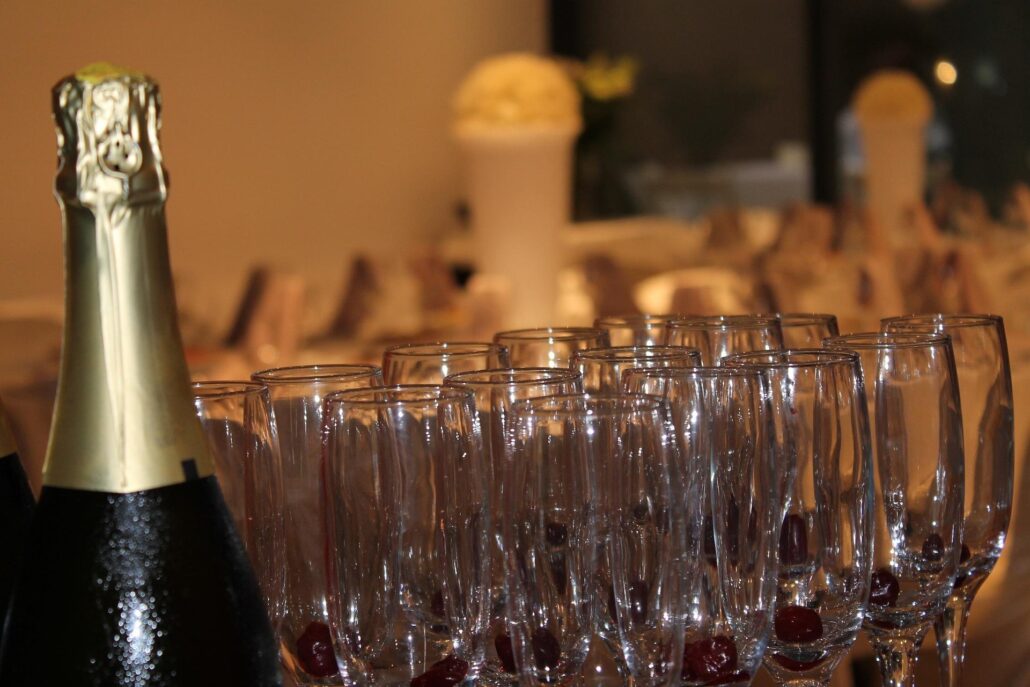
The most important thing to understand about Champagne before you open a bottle is that the word is not a style description. It is a place. Champagne is a region in northeastern France — a landscape of chalky hills, underground cellars carved from soft limestone, and approximately 34,000 hectares of vineyards producing the most celebrated sparkling wine in the world. When the label says Champagne, it means the wine inside was made from grapes grown in that specific geographic area, produced by a specific method, under rules that have been legally protected since 1891 and reinforced by European Union appellation law since 2009.
The legal protection of the Champagne name has been defended more aggressively than perhaps any other food or beverage designation in the world. The Comité Champagne — the regional trade organization — maintains a full-time legal team that pursues unauthorized use of the name across the globe. Spanish Cava is sparkling wine. Italian Prosecco is sparkling wine. California sparkling wine, regardless of how it is made, is sparkling wine. Only wine from Champagne is Champagne. The distinction matters because the region’s combination of chalky soil, cool climate, and accumulated centuries of winemaking knowledge produces something that the method alone — however carefully replicated — cannot fully reproduce anywhere else.
We have been to Champagne and drunk the wine in the cellars where it is made. The experience changes how you understand what is in the glass — not because the wine tastes different in Épernay than it does anywhere else, but because standing in a tunnel carved from chalk 30 meters underground, surrounded by millions of bottles in various stages of the méthode champenoise, makes the labor and precision involved in every glass impossible to ignore.
The History: Accidents, Monks, and English Bottles
The popular mythology attributes the invention of Champagne to Dom Pérignon, a Benedictine monk at the Abbey of Hautvillers who reportedly cried out to his fellow monks “Come quickly, I am drinking stars!” upon tasting his first sparkling wine. The reality is considerably more complicated and the exclamation is almost certainly invented — but Dom Pérignon’s contributions to Champagne production, including the development of blending techniques and cork closures, were genuinely significant and his name on a prestige cuvée bottle is not entirely without historical basis.
The development of sparkling Champagne was largely an accident of geography and climate. The Champagne region sits at the northern limit of reliable grape ripening — the cool temperatures slow fermentation and, crucially, cause it to stop when temperatures drop in autumn before all the residual sugars have been converted to alcohol. When the wine was bottled and the temperatures rose again in spring, fermentation restarted inside the sealed bottle, producing carbon dioxide that had nowhere to go. Early bottles frequently exploded — the Champagne cellars of the 17th century were places of genuine physical danger during the spring months.
It was English glass manufacturers who inadvertently enabled Champagne as we know it. English glass, produced using coal rather than wood fires, was significantly stronger than the French glass of the period and could withstand the pressure of secondary fermentation in the bottle without exploding. The English also adopted cork stoppers — imported from Spain and Portugal — ahead of the French, who were still using oil-soaked hemp as a bottle closure. The combination of strong glass and reliable cork containment made sparkling Champagne possible as a commercial product.
The grandes maisons — the major Champagne houses whose names are on the bottles most people recognize — developed primarily in the 18th and 19th centuries. Moët and Chandon was founded in 1743. Veuve Clicquot in 1772. Bollinger in 1829. Krug in 1843. These houses built their businesses on consistent non-vintage blends that maintained house style across variations in annual harvest quality — a technical and commercial innovation that democratized Champagne consumption and created the global brand recognition that the region benefits from today.
How Champagne Is Made: The Méthode Champenoise
The méthode champenoise — also called méthode traditionnelle in contexts where the Champagne name cannot be used — is the specific production process that creates the bubbles in Champagne through a second fermentation inside the individual bottle rather than through carbonation injection or secondary fermentation in a tank.
The process begins with the harvest — typically in late September — of the three primary Champagne grape varieties: Chardonnay, Pinot Noir, and Pinot Meunier. Chardonnay brings freshness, elegance, and aging potential. Pinot Noir brings structure, body, and red fruit character despite being a red grape — the juice of most red grapes is colorless and Champagne producers press gently and quickly to avoid extracting color from the skins. Pinot Meunier brings approachability and fruit-forward character, particularly useful in lighter, earlier-drinking styles.
After harvest, the grapes are pressed and the juice fermented into a base wine — still, dry, and frankly rather unpleasant to drink at this stage, with high acidity and relatively low alcohol. This base wine is the raw material from which the Champagne blender works.
The blending — assemblage — is the central creative act of Champagne production. For non-vintage Champagne, the cellar master blends wines from multiple vintages, multiple villages, and multiple grape varieties to create a blend that matches the established house style regardless of the variation in any individual component. A non-vintage Moët et Chandon Brut Impérial will taste essentially the same whether you open it in 2024 or 2026 because the assemblage process is designed to produce that consistency. The cellar master might be blending 30 to 50 different component wines to achieve it.
The blended wine is then bottled with a small addition of yeast and sugar — the liqueur de tirage — which triggers the second fermentation inside the bottle. This secondary fermentation produces the carbon dioxide that becomes the bubbles and raises the alcohol slightly. The bottles are then sealed with a temporary crown cap and stored horizontally in the chalk cellars — at a consistent 10 to 12 degrees Celsius — for a minimum aging period that ranges from 15 months for non-vintage to 3 years for vintage and longer for prestige cuvées.
During aging, the dead yeast cells — lees — remain in contact with the wine and break down through autolysis, releasing compounds that produce the characteristic bread, biscuit, and brioche notes that distinguish aged Champagne from other sparkling wines. This is the flavor dimension that makes Champagne taste like Champagne rather than any other sparkling wine made by the same method.
The final steps are remuage — the gradual turning and tilting of bottles to collect the lees sediment in the neck — and dégorgement, the freezing of the bottle neck, removal of the crown cap, and ejection of the frozen lees plug by the pressure inside the bottle. A small amount of wine is lost in this process and is replaced by the dosage — a mixture of wine and sugar that determines the final sweetness level of the Champagne. Brut Nature has no dosage. Extra Brut has minimal dosage. Brut — the most widely produced style — has up to 12 grams per liter of residual sugar. Demi-sec is noticeably sweet.
Grandes Maisons vs Grower Champagne: Understanding the Divide
The Champagne market has historically been dominated by the grandes maisons — the large houses that buy grapes from small growers, blend them at scale, and sell under recognizable brand names. Moët et Chandon, Veuve Clicquot, Laurent-Perrier, Taittinger, Billecart-Salmon, Pol Roger — these houses produce the bottles most people encounter and their consistency and quality are genuine.
The emergence of grower Champagne — wine made by the farmers who grow the grapes rather than by large blending houses — has been one of the most significant developments in the wine world over the past two decades. Grower producers, identified by the letters RM (récoltant manipulant) on the label rather than the NM (négociant manipulant) of the grandes maisons, make wine from their own vineyards and express the character of specific places rather than the consistency of a house style.
Grower Champagnes tend to be more individual, more expressive of their terroir, and — critically — often significantly less expensive than prestige grande maison bottles of equivalent quality. Producers like Egly-Ouriet, Ulysse Collin, Bereche et Fils, and Pierre Moncuit have developed serious reputations among wine enthusiasts who want something beyond the familiar brand names. Finding them requires more effort — specialty wine shops, direct imports, restaurant wine lists curated by sommeliers who know the category — but the effort is rewarded.
The Villages and What They Produce
The Champagne region is organized around three primary areas, each with its own soil type, microclimate, and predominant grape variety.
La Montagne de Reims — the hillside south of Reims — produces primarily Pinot Noir and is known for structured, powerful Champagnes with good aging potential. The grand cru villages of Verzenay, Mailly, and Ambonnay are among the most prized sources of Pinot Noir in the region.
La Vallée de la Marne — the river valley between Épernay and the western edge of the appellation — is Pinot Meunier country, producing the fruitier, more accessible base wines that contribute to many non-vintage blends. The valley floor’s frost susceptibility makes Pinot Meunier, which buds later than Chardonnay or Pinot Noir, the practical choice for many growers.
La Côte des Blancs — the hillside south of Épernay — is Chardonnay country and produces the raw material for Blanc de Blancs Champagnes — wines made entirely from Chardonnay with the elegance, minerality, and aging potential that the grape delivers in this environment. The grand cru villages of Cramant, Avize, Oger, and Le Mesnil-sur-Oger are the most celebrated in this area. Krug’s Clos du Mesnil, a single-vineyard Blanc de Blancs from a walled plot in Le Mesnil, is one of the most expensive and celebrated wines in the world.
What to Eat with Champagne
Champagne’s combination of high acidity, effervescence, and relatively low alcohol makes it one of the most food-versatile wines available — genuinely more versatile than most still wines at equivalent price points.
Oysters. The pairing that appears on virtually every Champagne food pairing list and appears there because it is correct. The briny, mineral freshness of Atlantic oysters and the chalky minerality and high acidity of Champagne create a synergy that neither achieves alone. At the champagne houses in Épernay, tasting rooms serve fresh oysters from the Normandy coast alongside whatever they are pouring. This is not an affectation — it is the honest expression of what Champagne is best at.
Caviar. The most extravagant pairing and the most justified. The fat and salt of caviar and the acidity and bubbles of Champagne interact in a way that is genuinely transformative — the effervescence cleanses the palate between bites, the acidity cuts through the fat, and both components become more expressive in each other’s company. If you are opening a bottle of prestige cuvée for a special occasion, this is the pairing that does justice to it.
Fried food. This sounds wrong and works perfectly. The acidity and bubbles of Champagne cut through fried food with extraordinary efficiency — tempura, fish and chips, fried chicken, beignets. The English aristocracy’s tradition of serving Champagne with fish and chips is one of the most honest expressions of this principle. The contrast between the delicacy of the wine and the indulgence of the food is part of the appeal.
Sushi and sashimi. The same principle as oysters extended to Japanese raw fish. The high acidity and minerality of Brut Champagne works with sushi in a way that most white wines — which can clash with the vinegared rice — do not. The combination has become standard in high-end Japanese restaurants internationally and in Tokyo specifically where French wine culture and Japanese food culture have been in productive dialogue for decades.
Aged Comté and Gruyère. For vintage or aged Champagne with the autolytic brioche and biscuit notes that come from extended lees contact, aged hard cheese is the natural partner. The nutty, crystalline character of well-aged Comté mirrors and amplifies the similar notes in the wine. This is the pairing for drinking aged prestige cuvées — a glass of late-disgorged Krug or a vintage Billecart-Salmon with a piece of 24-month Comté is one of the great simple pleasures in wine.
Strawberries. The classic celebration pairing — Wimbledon strawberries and Champagne — works because the sweetness and acidity of ripe strawberries balance the dry, high-acid Brut style. Use ripe, good-quality strawberries rather than out-of-season supermarket ones. The season and the quality of the fruit matter more than the vintage of the wine.
Champagne Cocktails Worth Knowing
Kir Royale. Crème de cassis — blackcurrant liqueur — topped with Champagne. The original Kir used still white Burgundy; the Royale version substitutes Champagne for a more celebratory result. The sweetness of the cassis softens the high acidity of the Champagne and the combination is one of the great aperitif drinks. Use a non-vintage Brut rather than wasting a good vintage on a cocktail.
Champagne cocktail. A sugar cube soaked in Angostura bitters, dropped into a flute and topped with Champagne. The slow dissolution of the sugar cube creates a stream of bubbles from the bottom of the glass and a gradual shift from dry to slightly sweet as the drink progresses. A drink that rewards patience and rewards drinking slowly.
French 75. Gin, lemon juice, simple syrup, and Champagne — named after the French 75mm field gun of World War I on the grounds that it hits with similar force. One of the great classic cocktails and genuinely appropriate for Champagne rather than being an excuse to use cheap sparkling wine. The lemon and gin complement the wine’s acidity and the result is more than the sum of its parts.
Mimosa. Half Champagne, half orange juice. At its best with freshly squeezed juice and a non-vintage Brut. The universal brunch cocktail has become something of a cliché but the combination works because it was designed to work — the acidity of both components align and the sweetness of the juice balances the dryness of the wine.
Where to Experience Champagne in the Region
Épernay is the commercial heart of the Champagne region — the Avenue de Champagne running through the town is lined with the grand buildings of the major houses, their cellars extending beneath the street for kilometers. Moët et Chandon, Pol Roger, Mercier, and Perrier-Jouët all have their maisons on this avenue and offer cellar tours and tastings by appointment or walk-in depending on season.
Reims, the regional capital 30 kilometers north of Épernay, is the historical and cultural center — the cathedral where French kings were crowned for centuries, the Art Deco architecture of the city center rebuilt after World War I devastation, and the presence of several major Champagne houses including Taittinger, Veuve Clicquot, and Louis Roederer. Taittinger’s cellars, carved from Roman chalk quarries beneath the city, are among the most spectacular in the region and worth the visit specifically.
The Union des Maisons de Champagne maintains a directory of houses open to visitors and is the best starting point for planning cellar visits in the region.
For building a broader France trip that includes the Champagne region alongside Paris and the rest of the country, see our complete France itinerary and our month-by-month France timing guide.
The Honest Assessment
Champagne is the most successfully marketed luxury product in the world and it is also, at its best, genuinely deserving of the devotion it receives. The legal protection of the name exists because the region produces something that cannot be fully replicated elsewhere — not because of the method, which can be copied, but because of the chalk, the cool climate, and the accumulated century of winemaking knowledge that is embedded in the land and the people who work it.
Drink it on occasions worth celebrating but also drink it for no reason at all — the French do not reserve Champagne for celebrations in the way that other cultures do and they are right not to. Drink it with oysters on a Tuesday. Drink it with fried chicken on a Thursday. Drink it because it is Wednesday and you have a good bottle and that is reason enough.
The bubbles are not the point. They are the vehicle. What they carry — the chalk, the yeast, the cold cellar air, the years of patient aging — is the point.