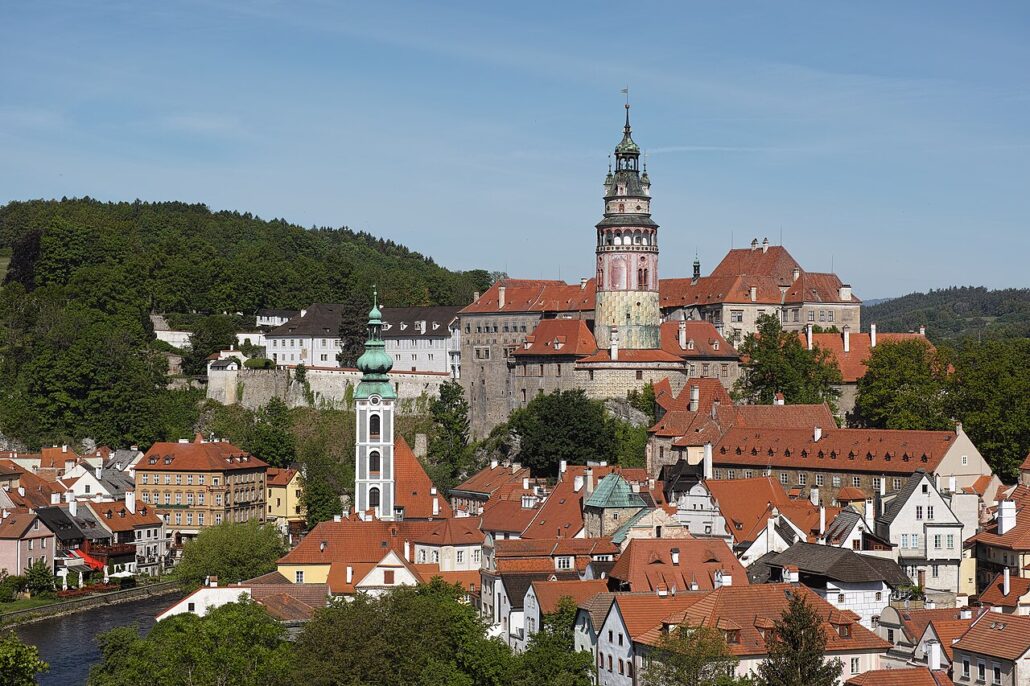
Český Krumlov is the most completely preserved medieval town in Central Europe and one of the most visually extraordinary places in the Czech Republic. A UNESCO World Heritage Site since 1992, the town occupies a tight loop of the Vltava River in southern Bohemia — the same river that flows through Prague 180 kilometers to the north — with its 13th-century castle rising from a rocky promontory above red-roofed Renaissance and Baroque buildings that have barely changed since the 17th century. The effect, arriving at the viewpoint above the town for the first time, is of stepping into a painting rather than a place.
The town has a population of approximately 13,000 people and receives around a million visitors per year — a ratio that produces the overtourism problem familiar from similarly picturesque small European towns in peak season. The solution, as always, is timing: visit in the shoulder season, stay overnight to experience the town after day-trippers leave, and explore beyond the castle and the main square to find the Český Krumlov that residents actually inhabit.
The Castle
Český Krumlov Castle is the second largest castle complex in the Czech Republic after Prague Castle and the one with the most coherent and best-preserved interior. The 40 buildings and 5 castle courtyards contain a Baroque theater — one of the best preserved in the world, with original sets, machinery, and costumes from the 17th and 18th centuries — alongside the ceremonial apartments, the castle gardens, and the revolving auditorium built by the ruling Schwarzenberg family in the 19th century.
The Baroque theater is the castle’s most extraordinary element and the one most worth booking specifically. Access is by guided tour only and the number of tours per day is limited — book well in advance for summer visits. Standing in the theater, surrounded by the original painted sets and the mechanisms that allowed 17th-century stage designers to create storms, floods, and flying angels, produces a specific historical vertigo that few other sites in Europe match.
The castle gardens — a formal Baroque garden on the terrace above the town, connected to the castle by a covered bridge — are open freely and provide the best elevated views of the town below. The garden’s revolving auditorium, built on a rotating platform that allowed the audience to face different theatrical sets, is unique in European theater history.
The Old Town
The historic center of Český Krumlov is small enough to walk completely in two hours — the loop of the Vltava creates a natural boundary that contains the medieval street plan and the Renaissance and Baroque buildings that replaced earlier structures after a series of fires. The Main Square — Náměstí Svornosti — is surrounded by painted facade buildings of the specific Southern Bohemian Renaissance style that distinguishes the architecture of this region from Prague’s more familiar Baroque.
The Church of St. Vitus, built in the 14th century and Gothic in its bones despite later Baroque additions, has the most significant interior in town — the stone choir screen, the carved pulpit, and the specific quality of light through the Gothic windows produce an atmosphere that the castle’s secular spaces, for all their magnificence, do not match.
The street of Horní — the main artery through the old town — contains the best concentration of independent shops, galleries, and restaurants. The puppet and glass shops reflect the specifically Bohemian craft traditions. The restaurants along Horní and in the side streets leading to the river are the best options for eating in Český Krumlov — choose away from the Main Square where the prices reflect the tourist concentration rather than the food quality.
The Vltava and Water Activities
The Vltava River loop that defines Český Krumlov’s geography is also the town’s best outdoor activity. Renting an inflatable raft or canoe from any of the rental operators on the river and floating through the loop takes approximately two hours and provides the best views of the castle from below, looking up at the promontory from the river level. The river is calm within the town loop — suitable for all ability levels. The experience of drifting beneath the castle walls on a summer afternoon is one of the specific pleasures of visiting Český Krumlov that no photograph fully captures.
The longer Vltava float from the village of Rožmberk nad Vltavou — 20 kilometers upstream — to Český Krumlov takes a full day and passes through some of the most beautiful Southern Bohemian countryside available. Several outfitters in Český Krumlov organize this as a day trip with shuttle transport to the starting point.
Getting There and When to Go
Český Krumlov is 3 hours from Prague by direct bus — Student Agency operates a frequent service from Florence Bus Terminal in Prague that is comfortable and reliable. No direct train exists — the rail connection requires a change and takes considerably longer. The bus is the correct transport.
From Vienna, Český Krumlov is accessible in approximately 3 hours by bus or car through the Austrian-Czech border crossing. This makes it a natural stop on a Vienna to Prague or Prague to Vienna route.
The optimal visiting period is May, June, and September — good weather, long days, and manageable crowds relative to the July and August peak. October produces extraordinary autumn color in the surrounding forests and a town atmosphere that is genuinely peaceful once the summer season ends. Winter visits — the Christmas market in December is charming — are possible but some attractions have reduced hours.
Staying overnight is strongly recommended over day-tripping from Prague. The town at seven in the evening, after the last tour buses have departed and the day visitors have returned to their hotels, reveals a medieval quietness that the daytime experience does not suggest. Walking the stone streets in the evening light, with the castle illuminated above, is the experience worth staying for.
Where to Eat and Drink
Krčma v Šatlavské Ulici — a medieval tavern in a Gothic cellar on Šatlavská Street — serves traditional Bohemian food in a setting that is theatrical without being kitsch: open fire, communal wooden tables, whole roasted meats, and the dark Czech lager that suits the environment. It is one of the genuinely good touristy restaurants in the Czech Republic — the atmosphere is created by the actual medieval building rather than designed to simulate one.
Nonna Gina on Klášterní Street serves Italian food — which sounds wrong in a medieval Czech town until you consider that the Schwarzenberg family who owned the castle had Italian architects, Italian artists, and eventually Italian food culture embedded in their court. The pizza at Nonna Gina is genuinely good and represents a specific historical connection rather than a random culinary choice.
For everything you need to plan a Czech Republic trip see our Czech Republic destination guide. For Prague see our Prague itinerary. For Central European travel planning see our Poland guide.