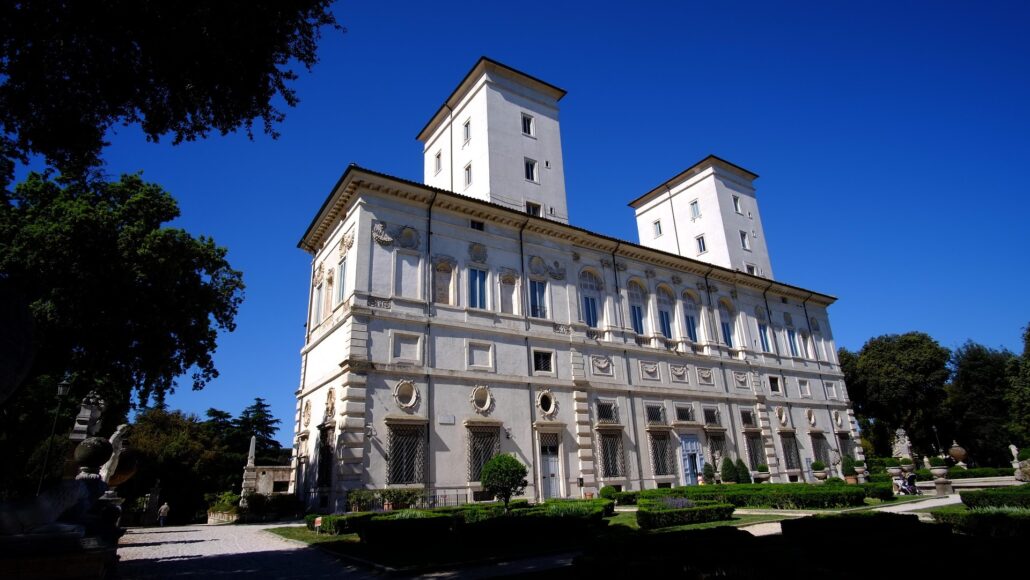
The Borghese Gallery is the most strictly capacity-controlled museum in Rome. Entry is limited to 360 visitors at a time in two-hour slots, reservations are mandatory, and the gallery regularly sells out weeks in advance. No other museum in Italy requires this level of advance planning relative to its size — and no other museum of this size rewards the effort quite as much. The Borghese holds what is arguably the greatest collection of Baroque sculpture in existence, and it does so in a villa setting that makes the art feel genuinely alive.
If you’re researching how to book Borghese Gallery tickets, you’re already ahead of most visitors who discover the sold-out reality only after arriving in Rome. This guide covers everything: where to buy tickets, how far in advance to book, what the two-hour limit means in practice, and what to look for once you’re inside.
👉 Planning your Rome trip? See our full 3 days in Rome itinerary for how the Borghese fits into a broader visit, and our Rome city guide for everything else the city has to offer.
The Two-Hour Rule: What It Means and Why It Exists
The Borghese Gallery enforces a strict two-hour visit limit. When your time slot ends, you are asked to leave. This is not flexible and is not negotiable. The policy exists because the villa’s rooms are small and the simultaneous visitor count is limited to 360 people — about 180 per floor — to protect both the collection and the visitor experience.
The two-hour limit sounds restrictive and occasionally frustrates visitors who feel they’re being rushed. In practice, two hours is enough time to see the entire collection properly if you arrive with a clear sense of what’s in the museum and what matters most to you. The Borghese is not a sprawling encyclopedic collection — it is a focused, curated assembly of extraordinary objects in 20 rooms. Two hours is tight but workable for an engaged, prepared visitor.
Preparation matters more here than at any other museum in Rome. Read about the key works before you arrive. Know where Bernini’s Apollo and Daphne is. Know what Canova’s Pauline Bonaparte Borghese looks like. Know which Caravaggio paintings are in which rooms. This background knowledge means you spend your two hours looking rather than orienting, and the difference is significant.
Where to Buy Borghese Gallery Tickets
Option 1: Official Borghese Gallery Reservation System (Recommended)
The official booking channel is through the Borghese Gallery’s official ticketing system. This is managed by a third-party operator on behalf of the gallery. Select your date, choose a time slot (slots run every two hours: 9am, 11am, 1pm, 3pm, 5pm), pay online, and receive your confirmation by email.
You can also book by phone — the reservation number is listed on the official Borghese Gallery website — which is occasionally useful when the online system shows no availability but phone reservations have space. This happens because some slots are held back from the online system. If your preferred dates show as sold out online, try calling.
Option 2: Guided Tours With Entry Included
Tour operators including those listed on GetYourGuide and Viator sell Borghese Gallery tours that include admission. These typically cost €45–80 per person for a small-group guided experience. The guided tour option has a specific advantage at the Borghese: operators sometimes hold allocations even when standard public tickets appear sold out.
If you’re visiting Rome and the Borghese is sold out on the official channel for your dates, checking guided tour availability is a legitimate workaround. You’ll pay more, but the guided tour itself adds real value — the Borghese’s collection of Bernini sculptures particularly benefits from expert explanation of the mythological narratives and technical virtuosity involved.
What to Avoid
The Borghese Gallery does not have the same street-level tout presence as the Colosseum or Vatican, largely because it’s located inside a park and less accessible to casual foot traffic. Even so, the same principles apply: book through the official channel or a reputable operator. Do not buy tickets through unofficial third parties or scalpers.
Borghese Gallery Ticket Prices
- Standard adult admission — €15
- EU citizens aged 18–25 — €2
- Under 18 — Free
- Booking/reservation fee — €2 per person on advance reservations
- Audio guide — €5 (recommended, available at entry)
The Borghese Gallery is one of the more affordable major museums in Rome at €15 standard admission, which makes the guided tour premium (€45–80 for a small-group experience) feel more significant. That said, the audio guide at €5 is excellent and covers all the major works thoroughly — it’s a reasonable middle ground between self-guided and fully guided.
Verify current pricing on the official Borghese Gallery website before booking.
How Far in Advance Should You Book?
The Borghese Gallery requires more advance planning than any other museum in Rome. The combination of hard capacity limits and high demand means popular dates sell out quickly.
July and August — Book 6–8 weeks in advance. Summer weekends can sell out further ahead than that. If your Rome dates are confirmed, this is the first booking you should make.
April, May, June, September, October — Book 3–5 weeks in advance. Weekday morning slots typically have more availability than weekend slots, but don’t count on it.
November through March — 2–3 weeks is generally sufficient, though January and February remain the most flexible months. The Borghese has less seasonal variation in demand than outdoor Rome attractions, partly because it’s a year-round destination for art travelers who plan specifically around it.
The key difference between the Borghese and other Rome museums: the daily capacity is so low that even a modest surge in demand creates genuine scarcity. The Colosseum and Vatican both have enough capacity that most advance-booking visitors find something available with a few weeks’ notice. The Borghese does not have that buffer. Book it first, book it early, and treat the slot as fixed in your itinerary.
Choosing a Time Slot
The Borghese runs five daily time slots: 9am, 11am, 1pm, 3pm, and 5pm (last entry). Each slot admits a maximum of 360 visitors who all enter together and are asked to leave when the two hours elapse.
9am — The best slot. The light in the villa in the morning is excellent, you’re fresh, and the experience of entering the gallery when it first opens has a quality that later slots can’t replicate. Book this if available.
11am — The second most popular slot. By 11am the villa has some warmth from the morning visitors, but it’s still manageable.
1pm — Midday. If this is the only option available, take it — the collection is worth seeing at any hour.
3pm and 5pm — Afternoon light in the Borghese is good in certain rooms, particularly the Canova room which faces west. The 5pm slot has the added benefit of being the last of the day, which means the gallery clears out and you can sometimes linger slightly past the official end time if the transition to closing is relaxed.
How Much Time Do You Need — Beyond the Two Hours?
The two hours inside the museum is fixed. But the Borghese visit as a whole rewards more time in the surrounding area. The Villa Borghese park is one of Rome’s best green spaces — 80 hectares of gardens, fountains, and tree-lined paths that make an excellent extension of the morning or afternoon around your gallery visit.
Arriving early and walking through the park before your slot is a good way to begin the day. The gallery is accessed from the Piazzale del Museo Borghese inside the park — allow 15–20 minutes to walk from the main park entrances. After your visit, the park path leading down to the Pincian Hill terrace has one of the best panoramic views over Rome, including St. Peter’s and the historic center skyline. It’s a 10-minute walk from the gallery and one of the better vantage points in the city.
The park’s proximity to the Spanish Steps (accessible via the Pincian Hill and a short walk down) makes the Borghese a natural fit for an afternoon that continues with the Spanish Steps and Trevi Fountain — the route described in Day 3 of our 3 days in Rome itinerary.
What’s Inside the Borghese Gallery: What Not to Miss
The Borghese collection was assembled primarily by Cardinal Scipione Borghese in the early 17th century. Scipione was Raphael’s patron, Caravaggio’s most important collector, and the man who recognized Bernini’s talent before anyone else and gave him the commissions that defined Baroque sculpture. The collection reflects the taste of a man at the center of the most creatively fertile period in Roman art history.
Bernini’s Sculptures (Rooms 2–4)
These four rooms contain the reason most people come to the Borghese, and they deliver completely. Gian Lorenzo Bernini created these works in his twenties and early thirties, and they represent an achievement in marble carving that has never been equaled.
Apollo and Daphne (Room 3) — The defining work of the collection for most visitors. Bernini depicts the precise moment of metamorphosis: Daphne, fleeing Apollo’s pursuit, begins to transform into a laurel tree. Her fingers extend into branches, bark crawls up her legs, leaves sprout from her outstretched hands — all rendered in marble with a precision and lightness that defies the medium. Walk around the sculpture completely. The work changes entirely depending on your angle of view.
The Rape of Proserpina (Room 4) — Pluto’s hand gripping Persephone’s thigh. The indentation of marble fingers into marble flesh is the most frequently cited demonstration of Bernini’s technical mastery — the stone appears to yield under pressure like skin. The work was completed when Bernini was 23 years old.
David (Room 2) — Bernini’s David is often compared to Michelangelo’s, and the contrast is instructive. Where Michelangelo depicts the moment before the battle — stillness, decision, coiled potential — Bernini shows the act itself: David mid-throw, body torqued with effort, face contorted with concentration. The David’s face is reportedly a self-portrait; Bernini had Cardinal Scipione hold a mirror while he carved it.
Aeneas, Anchises, and Ascanius (Room 1) — Bernini’s earliest work in the collection, carved when he was approximately 19 with assistance from his father Pietro. Already remarkable, and fascinating as a point of comparison against the works that follow just a few years later.
Canova’s Pauline Bonaparte Borghese (Room 1, Ground Floor)
Antonio Canova’s reclining portrait of Napoleon’s sister — posed as Venus Victrix on a marble chaise longue — is one of the defining works of Neoclassical sculpture. The surface treatment of the marble, particularly in the rendering of the drapery and the flesh of the figure, is extraordinary. Pauline reportedly said, when asked how she could have posed partially nude, that the studio was comfortably heated.
The sculpture was originally fitted with a mechanism that allowed it to rotate slowly, so viewers could see it from all angles. The mechanism no longer operates but the principle still applies — walk around it.
The Caravaggio Rooms (Room 8)
Six Caravaggio paintings, representing one of the most important single-room Caravaggio holdings in the world. The Boy with a Basket of Fruit and the Young Sick Bacchus were early works, possibly self-portraits. The Madonna of the Palafrenieri and the David with the Head of Goliath (in which Goliath’s severed head is another Caravaggio self-portrait) are from his mature period. Saint Jerome Writing shows his characteristic chiaroscuro at its most controlled.
Room 8 is the most crowded room in the Borghese. If you’re on the 9am slot, go here first before the room fills.
The Painting Collection (Upper Floor)
The upper floor holds the Borghese’s painting collection, which includes significant works by Raphael (the Deposition, one of his most emotionally intense altarpieces), Titian (Sacred and Profane Love, a work whose meaning has been debated for five centuries), Rubens, and Domenichino. These rooms are consistently less crowded than the sculpture galleries on the ground floor, and the quality of the collection is extraordinary. Don’t skip the upper floor in a rush to spend all your time with the Berninis.
Audio Guides and Guided Tours
Audio guide — Available at entry for approximately €5. The Borghese’s audio guide is genuinely good — better than many major European museums — and covers every significant work in the collection with clear, substantive commentary. Essential for self-guided visitors given the two-hour time constraint. You want to know what you’re looking at before you’re standing in front of it.
Guided tours — Worth serious consideration at the Borghese. The mythology behind the Bernini sculptures — Apollo and Daphne, Proserpina, the Aeneas group — is not universally familiar, and knowing the stories transforms the experience of looking at the works. The Caravaggio paintings reward contextual knowledge of his biography and the Counter-Reformation environment in which he worked. Small-group guided tours through GetYourGuide and Viator run 2 hours exactly — timed to the slot — and represent some of the best value-per-hour guided experiences in Rome.
Practical Information
Address: Piazzale Scipione Borghese 5, inside the Villa Borghese park. The gallery is not visible from outside the park — you enter through the park and follow signs to the Piazzale del Museo Borghese.
Getting there: The most direct approach is via the Spanish Steps — walk up the steps to the Trinità dei Monti church, then continue up the path to the Pincian Hill and into the park. Allow 20–25 minutes from the bottom of the Spanish Steps. Alternatively, the Flaminio Metro stop (Line A) deposits you at the northern entrance of Villa Borghese — a 15-minute walk through the park to the gallery. Taxis can drop you at the Viale del Museo Borghese entrance, a short walk from the gallery.
Opening hours: Tuesday through Sunday, 9am to 7pm (last entry 5pm for the final two-hour slot). Closed Mondays. Closed January 1 and December 25. Check the official Borghese Gallery website for holiday closures and any temporary changes.
Bag storage: Bags larger than a small daypack must be checked. The cloakroom is free. Arrive ready to check your bags immediately.
Photography: Permitted without flash throughout the gallery.
Accessibility: The ground floor is wheelchair accessible. Elevator access is available to the upper floor. Contact the gallery directly for specific accessibility requirements — details are on the official website.
The park surrounding the gallery: Villa Borghese park is free and open daily. Rowboat hire on the lake, bicycle rental, and a children’s cinema are among the facilities inside the park. The terrace at the Pincian Hill (Terrazza del Pincio) is worth visiting for the view over the Piazza del Popolo and Rome’s skyline, particularly at sunset.
Combining the Borghese With Other Rome Visits
The Borghese fits naturally into a day that also covers the Spanish Steps, Trevi Fountain, and Piazza Navona — all accessible on foot from the park. A morning Borghese slot (9am or 11am) followed by a walk down through the Pincian Hill to the Spanish Steps, then south through the historic center to the Trevi and Pantheon, is one of the most satisfying day structures in Rome.
The Borghese and the Vatican are both significant art experiences that deserve separate days. Don’t try to combine them.
For visitors specifically interested in Baroque art, pairing the Borghese with the church of Sant’Ignazio (Jesuit trompe-l’oeil ceiling by Andrea Pozzo), the Cornaro Chapel in Santa Maria della Vittoria (Bernini’s Ecstasy of Saint Teresa), and Sant’Andrea al Quirinale (also Bernini) creates an itinerary that shows Baroque Rome comprehensively. None of these churches charge admission.
👉 For help planning how the Borghese fits into your overall Rome schedule, see our 3 days in Rome itinerary. If you’re comparing Rome and Florence as destinations, our Rome vs. Florence guide breaks down the two cities in detail.
Final Checklist Before You Go
Before you leave home: Book your slot at the official Borghese ticketing system or call the gallery directly if online slots are unavailable. If sold out, check guided tour availability on GetYourGuide — operators sometimes hold allocations. Read about the key works before you arrive: Bernini’s Apollo and Daphne, Rape of Proserpina, David; Canova’s Pauline Bonaparte; Caravaggio’s room. Two hours goes quickly when you know what you’re looking for.
On the day: Arrive 10 minutes before your slot. Walk through Villa Borghese park to reach the gallery — allow 15–20 minutes from main park entrances. Have your reservation confirmation ready. Rent the audio guide at entry if you haven’t booked a guided tour.
Inside: Move efficiently but don’t rush. The two-hour limit is real. Ground floor first — Bernini and Canova — then upper floor for paintings. Room 8 (Caravaggios) is the most crowded; visit it first if you’re on an early slot. Walk fully around every Bernini sculpture — they are designed to be seen from multiple angles and the experience changes completely as you move.
The Borghese Gallery is small enough that two hours feels adequate only if you use them well. Go prepared, go early, and give the sculptures the slow attention they were made to receive.