Yes — Pompeii is one of the most extraordinary archaeological sites in the world, and a day trip from Rome is a completely viable way to see it. The travel time is manageable (about 70 minutes each way on the high-speed train to Naples, then a short connection), the site is vast and absorbing, and the experience of walking through a Roman city that was buried mid-life and preserved for nearly 2,000 years is genuinely unlike anything else. The conditions: it requires an early start, advance ticket booking, and realistic expectations about what a day trip covers versus what a longer stay allows.
Pompeii was a mid-sized Roman city of approximately 11,000 people when Vesuvius erupted on the 24th of August, 79 CE (or possibly October — the dating is still debated). The eruption killed most of those who remained in the city and buried it under 4–6 meters of volcanic ash and pumice, preserving it with an accuracy and completeness that no other ancient site can match. What archaeologists have uncovered since serious excavation began in the 18th century — and what continues to be uncovered today — is a complete Roman city: streets, houses, shops, bakeries, brothels, baths, temples, theaters, and the people who lived there, preserved in the positions they held when the ash overwhelmed them.
👉 Building your Rome itinerary? See our 3 days in Rome itinerary for structure, and our Rome city guide for full coverage of the city.
The Honest Case for a Day Trip
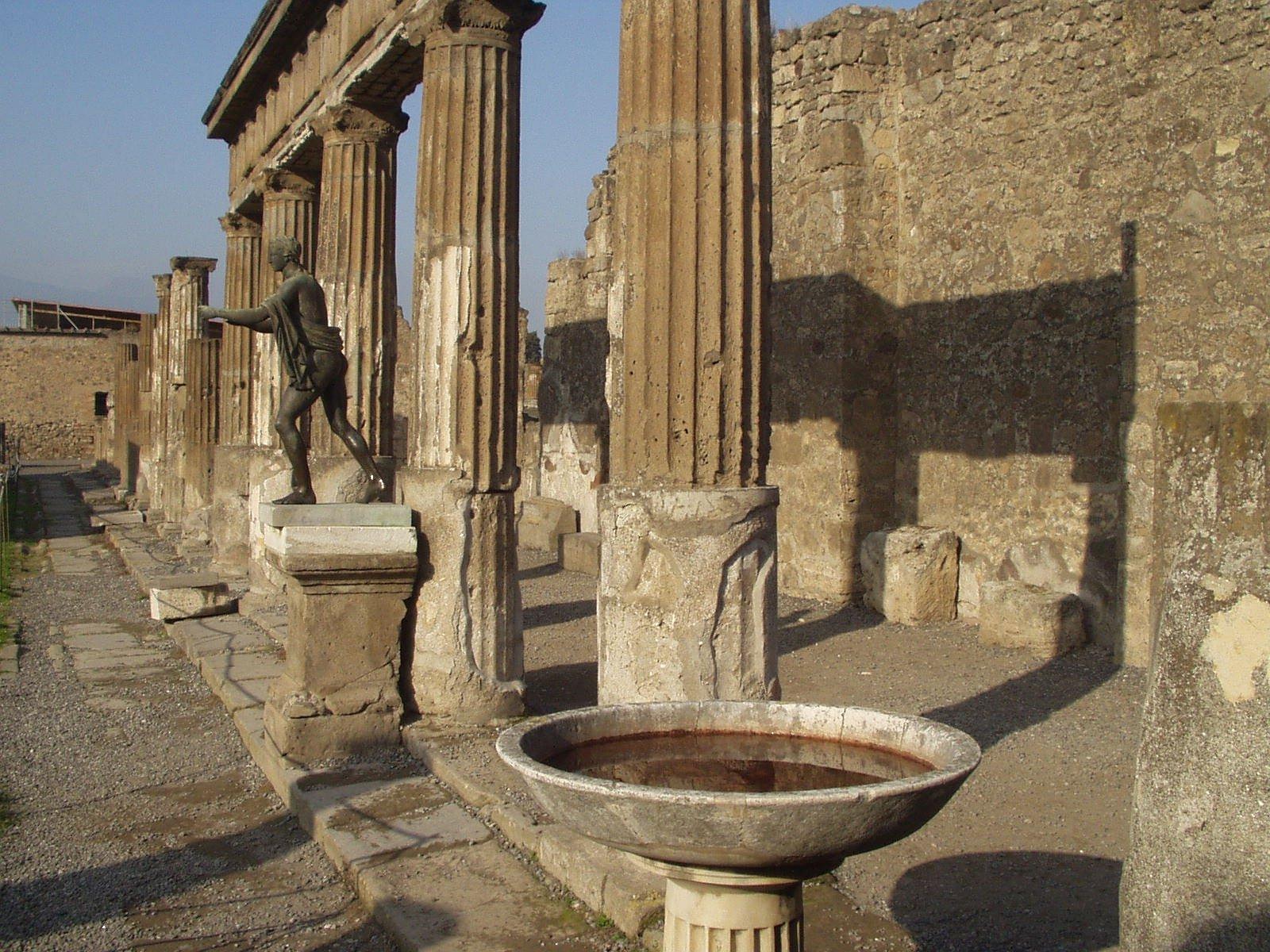
A day trip from Rome to Pompeii is worth doing for most visitors to Rome who have any interest in Roman history and have at least five days in the country overall. The site’s proximity to Rome — closer by high-speed train than many domestic destinations in other countries — and its status as one of the world’s great archaeological sites makes it a natural addition to an Italy itinerary.
What a well-executed day trip gives you: 4–5 hours inside the site (the realistic amount of time before exhaustion sets in), coverage of the main street grid, the Forum, the Lupanar (brothel), the baths, several private houses including the House of the Faun and the House of the Vettii, the Street of Abundance, the theater complex, and the casts of the victims in the Garden of the Fugitives. That is not comprehensive — Pompeii is enormous — but it is a complete and meaningful visit that communicates what the city was and what the eruption preserved.
What a day trip does not give you: time to see the Herculaneum (a smaller, better-preserved neighboring site that rewards a full separate visit), the Archaeological Museum of Naples (which holds Pompeii’s most significant portable finds including the mosaics from the House of the Faun and the erotic art from the Lupanar), or a more exploratory, unhurried experience of the site’s residential areas.
For most visitors, the day trip is the right call. For serious Roman history travelers or those on a longer Italy itinerary, basing yourself in Naples for two nights — covering Pompeii, Herculaneum, and the Archaeological Museum across two or three days — is the fuller version.
How to Get From Rome to Pompeii
The logistics of the day trip are straightforward but require a bit of sequencing.
By High-Speed Train to Naples, Then Circumvesuviana
The most efficient route: take the Frecciarossa or Italo high-speed train from Roma Termini to Napoli Centrale (approximately 70 minutes, fares from €19–40 depending on how far in advance you book — check trenitalia.com and italotreno.it for current prices). From Napoli Centrale, take the Circumvesuviana commuter train toward Sorrento and exit at the Pompei Scavi – Villa dei Misteri stop (approximately 40 minutes, €2.80 each way). The station exits directly opposite the main Porta Marina entrance to the archaeological site.
Total travel time each way: approximately 110–120 minutes, including the connection in Naples. Leave Rome no later than 7:30am — ideally earlier — to maximize time at the site. The first Circumvesuviana trains to Pompeii from Naples run from around 6:30am.
By Organized Day Tour
Numerous operators run organized day tours from Rome to Pompeii, typically by coach with a guide and transfers included. These tours generally leave Rome around 7–8am, arrive at Pompeii midmorning, provide a guided tour of 2–3 hours, and return to Rome by early evening. Prices range from approximately €60–120 per person depending on group size and inclusions.
The guided tour option makes particular sense at Pompeii because the site is genuinely difficult to interpret without context. The layout is confusing, many houses are closed or partially accessible depending on restoration work, and the significance of what you’re looking at — the electoral notices painted on walls, the evidence of the city’s commercial life, the architectural adaptations to Vesuvius’s earlier earthquakes — is not immediately apparent without explanation.
Options are available through GetYourGuide and Viator. For a day trip specifically, small-group tours (under 15 people) are significantly better than coach tours of 40+ people at a site where crowd management matters.
How to Book Pompeii Tickets
Pompeii tickets must be booked in advance. The site uses a timed-entry system and walk-up availability in peak season is limited. Book through the official Pompeii ticketing system or through pompeiisites.org.
Standard adult admission is approximately €18. A combined ticket covering Pompeii and Herculaneum (useful if you’re staying overnight and visiting both) is also available.
How far in advance:
- June through August — Book 4–6 weeks ahead. Summer is extremely busy, particularly on weekends.
- April, May, September, October — 2–4 weeks is generally sufficient.
- November through March — 1–2 weeks. The site is significantly less crowded in winter, though some areas may have reduced access due to ongoing restoration.
Arrive for your timed-entry slot on time. The main entrance is at Porta Marina (the most common entry point) on the western edge of the site. There are secondary entrances at Porta Anfiteatro (eastern end, useful if you want to start near the theater and amphitheater) and Piazza Esedra.
What to See: A Practical Guide to the Site
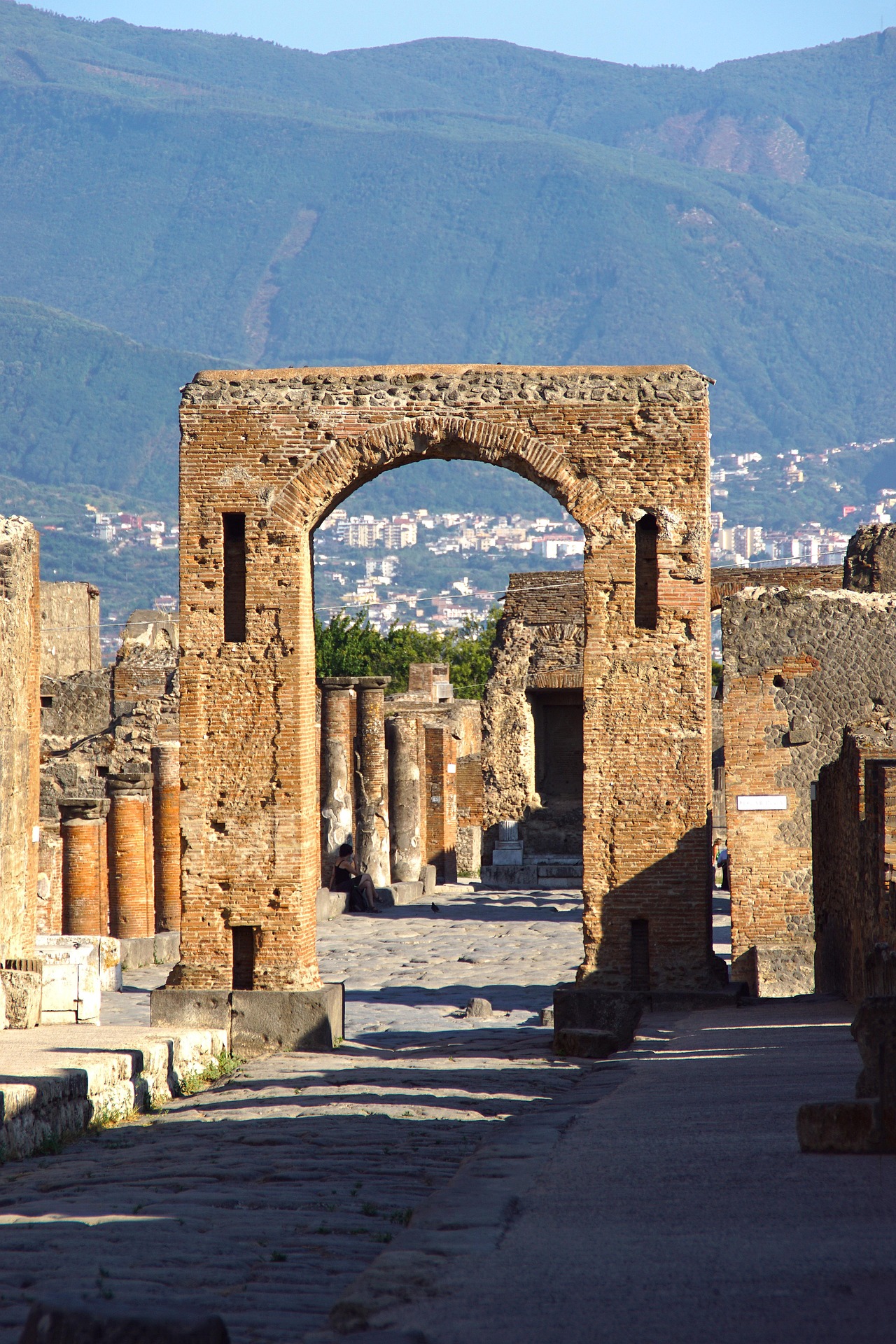
Pompeii covers 44 hectares. Excavations have uncovered approximately two-thirds of the city; the remaining third is still buried and currently being excavated under the Great Pompeii Project. A full exploration of what is open would take multiple days. On a day trip, prioritization is essential.
The Forum
The civic and religious center of Pompeii — the starting point for any visit. The Forum is surrounded by the remains of the Basilica (the law court), the Temple of Jupiter, the Temple of Apollo, the Macellum (food market), and several other public buildings. The open space of the Forum gives the clearest sense of Pompeii as an urban environment — the scale of the public buildings relative to the street grid, the relationship between civic and religious architecture, the volcano looming visibly above the northern edge of the site.
The House of the Faun
Pompeii’s largest private house, named for the bronze dancing faun found in its impluvium (the open pool in the central atrium). The house covers an entire city block and represents the height of Pompeian private domestic wealth. The original mosaic of the Battle of Issus — showing Alexander the Great defeating the Persian king Darius — was found here; the original is in the National Archaeological Museum of Naples, and a copy is in place. The sheer scale of the house, and the organization of space around multiple atria and a large garden, communicates what elite Pompeian domestic life looked like.
The House of the Vettii
One of the best-preserved houses in Pompeii and the one that most directly shows the quality of domestic decoration available to wealthy freedmen (the Vettii brothers were former slaves who became successful merchants). The garden is surrounded by elaborate fresco cycles — scenes of cupids engaged in various adult occupations, mythological panels, and the famous image of Priapus weighing his oversized phallus at the entrance (a fertility and protection symbol, not an erotic decoration in its Roman context). The house has been under intermittent restoration; check current access status before planning your route around it.
The Lupanar
The city’s main brothel — a two-story building on the Via dell’Abbondanza with individual rooms on both floors, each with a stone bed. The walls retain erotic frescoes above each doorway, understood to indicate the services available within or to assist a non-literate clientele in communicating preferences. The Lupanar is one of the most visited buildings in Pompeii and usually has a queue to enter. It is small; the wait moves quickly. Worth seeing for the directness with which it communicates Roman attitudes toward commerce and sexuality.
The Baths
Pompeii has three major bath complexes. The Stabian Baths (Terme Stabiane) are the oldest and best preserved, with intact rooms showing the full sequence of the Roman bathing experience — changing rooms, cold room (frigidarium), warm room (tepidarium), and hot room (caldarium) — along with original stucco decoration and the hypocaust (underfloor heating) infrastructure visible where the floors have been removed. The Forum Baths are also worth visiting for their well-preserved stucco ceiling decoration.
The Theater District
In the southern section of the site, the Large Theater (capacity approximately 5,000), the Small Theater (Odeon, for music and mime performances), and the gladiators’ barracks are grouped together. The Large Theater is one of the better-preserved ancient theaters in Italy and retains enough of its seating structure to convey the spatial experience of ancient theatrical performance. The gladiators’ barracks adjacent to the theater complex — where weapons and armor were found and where the casts of several individuals were made — is one of the most unsettling parts of the site.
The Garden of the Fugitives
In the eastern section of the site near the Porta Nocera, a garden area contains the largest group of plaster casts in Pompeii — 13 bodies preserved in their final positions, caught by the pyroclastic surge in a garden where they had apparently sheltered. The casts were made by pouring plaster into the voids left in the ash by decomposed organic material. The result is an immediate, visceral record of individual human deaths that no other archaeological process has ever replicated. It is one of the most affecting things you will encounter at any archaeological site anywhere.
The Amphitheater
At the eastern end of the site, the Pompeian amphitheater (built around 70 BCE, one of the oldest surviving in the Roman world) is in excellent condition and still used for occasional concerts. The grassy oval of the arena, the intact seating tiers, and the complete exterior wall give the clearest sense of any building in Pompeii of what the structure originally looked like. Worth the walk to the far end of the site.
What the Naples Archaeological Museum Adds
Many of Pompeii’s most significant portable finds are not in Pompeii — they are in the National Archaeological Museum of Naples (Museo Archeologico Nazionale di Napoli). The Alexander Mosaic from the House of the Faun, the erotic art from the Lupanar (in the museum’s Gabinetto Segreto, or Secret Cabinet, now generally open), the bronze sculptures from the Villa of the Papyri in Herculaneum, the surgical instruments, the household objects, and a vast collection of painted frescoes removed during early excavation are all here.
Visiting the Archaeological Museum — ideally the day after Pompeii, if you’re staying overnight — transforms the site visit retrospectively. The objects you saw in context at Pompeii acquire additional meaning when you see what was found alongside them. If your schedule allows even a two-hour visit to the museum, either before or after Pompeii, it is strongly recommended. Book at mann-napoli.it.
Herculaneum: The Better-Preserved Alternative
Herculaneum (Ercolano) was a smaller, wealthier Roman town also buried by the 79 CE eruption, located closer to Vesuvius and covered by a deeper layer of volcanic material that preserved organic material — wood, cloth, food, papyrus — in ways that Pompeii’s ash burial did not. The site is smaller and more manageable than Pompeii, the preservation is extraordinary, and the crowd levels are significantly lower.
Herculaneum is accessible from Naples on the same Circumvesuviana line as Pompeii (exit at Ercolano Scavi, one stop before Pompei Scavi). It is not typically visited on a day trip from Rome alongside Pompeii — the travel time from Rome is the same and visiting both properly requires staying overnight. But if you have the option of choosing between Pompeii and Herculaneum for a single day visit, Herculaneum’s smaller scale and superior preservation make it a strong alternative for first-time visitors.
Practical Notes for the Day Trip
What to bring — Comfortable walking shoes are essential (the site’s basalt paving stones are uneven and hard on feet). Sun protection (hat, sunscreen) is critical in summer when the open site offers minimal shade. Water — the site has water fountains and a café, but bringing water is advisable in summer heat. A small daypack covers everything you need.
Food at the site — There is a café inside the site near the Forum that is useful for a midday break. The food is functional rather than exceptional. Most visitors eat lunch inside the site or at one of the restaurants immediately outside the main entrance before returning to Naples.
Guided audio tours — An audio guide is available for rent at the entrance (approximately €8) and covers the major houses and public buildings. The official Pompeii app (available on the Pompeii sites website) provides maps and basic information and is useful for navigation even without the full audio guide.
Current closures — Pompeii is an active archaeological site and individual houses and areas are regularly closed for restoration. What is open changes frequently. The Great Pompeii Project has reopened many previously inaccessible areas in recent years — check the official Pompeii website for current access information before your visit.
Summer heat — July and August at Pompeii are genuinely hot. The site has minimal shade, the stone radiates heat, and the crowds are at their maximum. An early arrival (when the gates open) followed by a departure by early afternoon before the heat peaks is strongly recommended in summer. Spring and autumn visits are considerably more comfortable.
The Verdict
Pompeii is worth a day trip from Rome — emphatically so. The travel logistics are manageable, the site is extraordinary, and the experience of walking through a preserved Roman city has no equivalent at any other site in the world. Plan for an early departure, book your Pompeii entry ticket in advance, allocate 4–5 hours at the site, and consider spending an extra hour at the Naples Archaeological Museum if your return schedule allows.
If your Italy trip is five days or fewer and Rome is your primary destination, the Pompeii day trip is the best single addition you can make to a Rome-centric itinerary. If you have two weeks and are willing to stay overnight in Naples, the combination of Pompeii, Herculaneum, the Archaeological Museum, and Naples itself — one of Italy’s most compelling cities — is better still.
Either way: go. There is nothing like it.
👉 See how a Pompeii day trip fits into a broader Rome schedule in our 3 days in Rome itinerary and our how many days in Rome guide. For the full Italy picture, our Italy travel guide covers everything.