Bonaire has one of the healthiest coral reef systems in the entire Caribbean, and the most extraordinary thing about it is how accessible it is. On most Caribbean islands, reaching the reef requires booking a boat tour, waiting for a departure time, and sharing the experience with however many other people signed up that day. On Bonaire, you drive to a marked entry point on the west coast road, park, walk twenty meters to the water, and you are over a reef that would be the headline attraction of most Caribbean dive resorts. No boat. No tour. No schedule. Just the water and what is in it.
We have snorkeled in Bonaire and it remains one of the most remarkable underwater experiences we have had anywhere in the world. The coral density, the fish diversity, the visibility, and the sheer accessibility of it all combine to produce something genuinely different from what most Caribbean snorkeling delivers. This guide covers the snorkeling in detail from our own experience, and gives divers the context they need to understand why Bonaire is consistently ranked among the top five dive destinations on earth.
Why Bonaire’s Reef Is Exceptional
The quality of Bonaire’s reef is not accidental. It is the direct result of nearly five decades of serious, enforced marine protection. Bonaire established one of the world’s first marine parks in 1979 — the Bonaire National Marine Park now protects the entire coastline from the high water mark to 60 meters depth. The rules are specific, the enforcement is real, and the local community’s commitment to protecting the reef goes beyond legal compliance into genuine cultural pride.
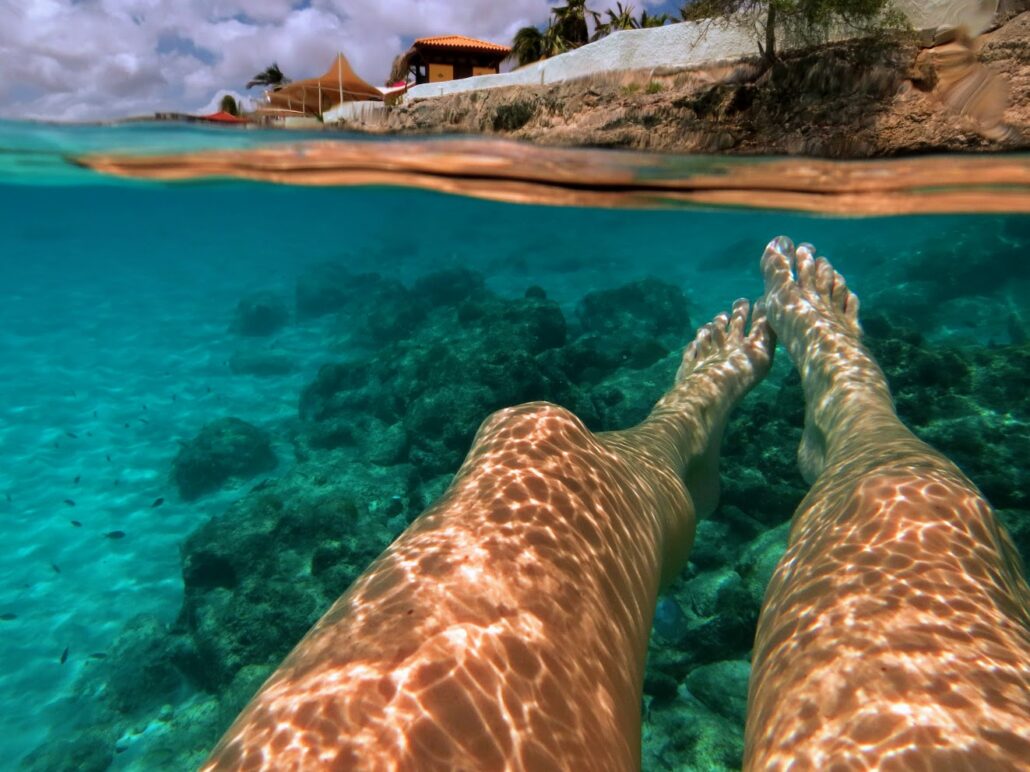
The practical result is visible the moment you put your face in the water. The coral coverage on Bonaire’s west coast reef is among the highest in the Caribbean — hard corals, soft corals, sea fans, and sponges covering the substrate in a density that reflects a reef system that has not been chronically stressed by overfishing, pollution, and bleaching in the way that reefs on more heavily trafficked islands have. The fish populations are healthy and diverse in ways that reflect the absence of significant fishing pressure within the park. Sea turtles are so common that encountering one on a snorkel session is the norm rather an exception worth mentioning.
For context: the Caribbean has lost an estimated 50 to 60 percent of its coral cover since the 1970s. Bonaire has maintained far higher coverage than the regional average — a direct reflection of what consistent protection produces over decades. When you snorkel here, you are experiencing what Caribbean reefs can be when they are allowed to be.
The Nature Fee: What You Need to Know Before You Get in the Water
Every visitor to Bonaire’s marine park is required to pay the Nature Fee — currently approximately $40 USD per person for an annual pass valid for one calendar year. The fee is collected at Flamingo International Airport on arrival and covers unlimited access to all marine park sites, including all shore snorkel and dive sites on the west coast, Klein Bonaire, and Washington Slagbaai National Park’s coastal areas.
The fee is not optional and it is not a formality. It funds the ranger program that patrols the marine park, the mooring buoy maintenance that protects the reef from anchor damage, and the ongoing scientific monitoring that tracks reef health over time. Pay it willingly — it is among the best-value conservation investments available anywhere in travel.
Your Nature Fee tag needs to be on your snorkel or dive equipment when you are in the water. Rangers patrol the sites and check. This is genuinely enforced.
Reef-Safe Sunscreen: Non-Negotiable
Bonaire’s marine park rules prohibit chemical sunscreens containing oxybenzone, octinoxate, and several other compounds that have been shown to damage coral and disrupt marine ecosystems. These are not obscure ingredients — they are in the majority of mainstream sunscreen brands. Using a chemical sunscreen in Bonaire’s waters is both harmful to the reef and technically in violation of marine park rules.
The solution is mineral sunscreen based on zinc oxide or titanium dioxide. These provide effective UV protection without the reef-damaging compounds. Brands like Raw Elements, Stream2Sea, and All Good make reef-safe mineral sunscreens that are available online and at outdoor retailers before you travel. The dive shops in Kralendijk sell reef-safe options but at prices higher than you will pay at home — bring your own.
A rash guard or UV shirt is a practical alternative for snorkelers who prefer not to deal with sunscreen reapplication on their back and shoulders. For extended sessions — particularly on Klein Bonaire where you may be in the water for two to three hours — a rash guard is worth wearing regardless.
Shore Snorkeling: How It Works on Bonaire
The majority of Bonaire’s snorkel and dive sites are accessible directly from shore — no boat required. Yellow-painted rocks or painted yellow stones mark the entry points along the main coastal road north and south of Kralendijk. Each marked site has a name, and most are documented in the Bonaire National Marine Park’s official site guide, which is worth downloading before your trip.
The standard approach: drive to a site, park on the roadside, gear up at the car, walk to the water’s edge, and enter. Many sites have rocky entry points rather than sandy beaches — water shoes or dive booties make the entry more comfortable and protect your feet on the coral rubble. Once you are past the entry zone, the reef begins quickly. At some sites the coral wall starts within ten meters of the shore. At others there is a short swim across sandy bottom before the reef begins in earnest.
The best snorkeling is typically in the morning before the trade winds build and chop the surface. Calm surface conditions make mask clearing easier and the underwater visibility feels better when there is no surface disturbance. Many experienced snorkelers on Bonaire are in the water by 7:30 or 8:00 am and done before the midday wind and heat.
The Best Snorkel Sites on Bonaire
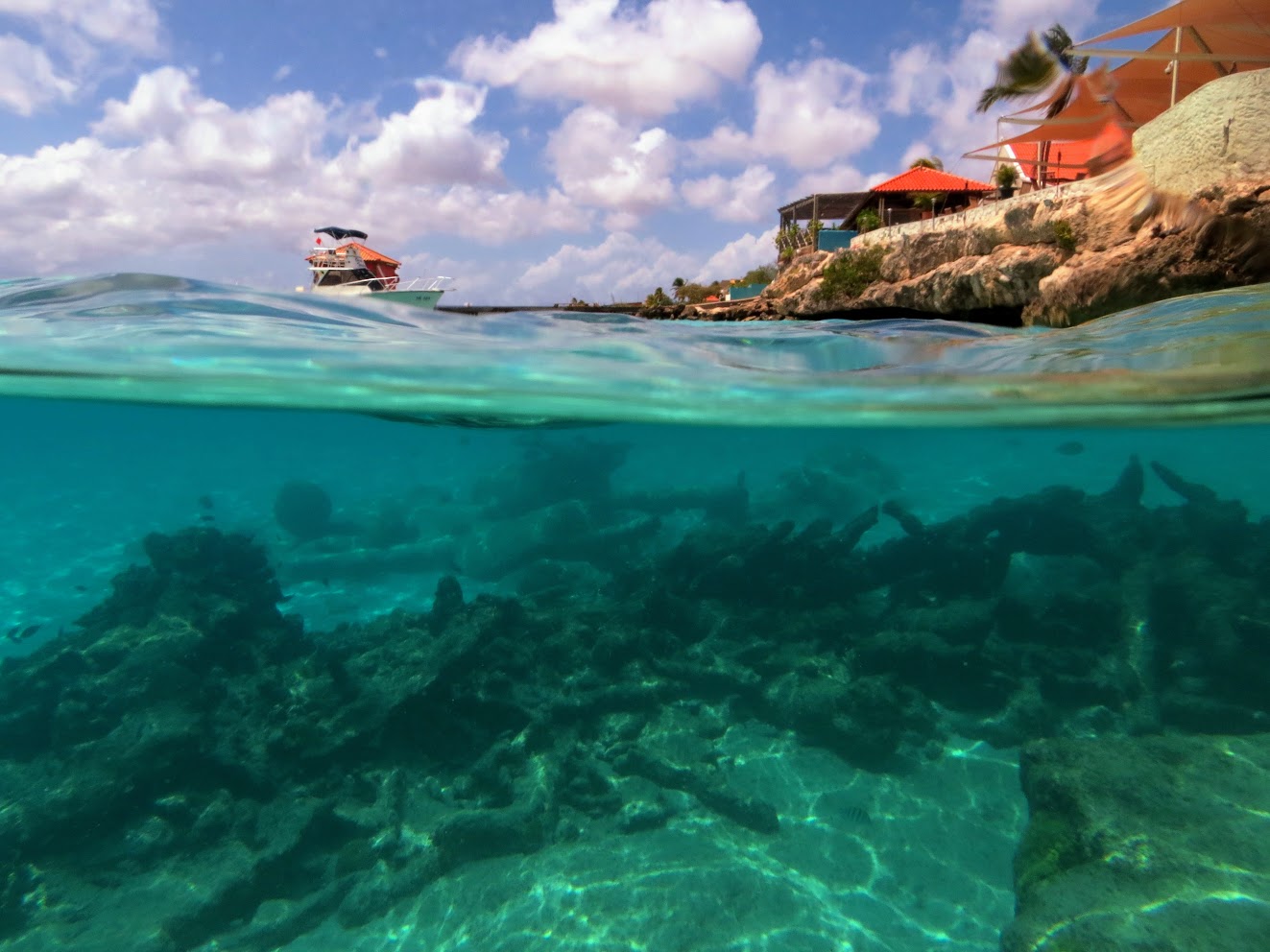
Klein Bonaire — No Name Beach
Klein Bonaire is the uninhabited island sitting just off Bonaire’s west coast — five to ten minutes by water taxi from Kralendijk. No Name Beach is the primary snorkel site and it is, in our experience, the single best snorkeling in Bonaire. The reef begins immediately from the shoreline and the coral health here is exceptional even by Bonaire’s standards. Sea turtles are almost guaranteed. The fish diversity is extraordinary — parrotfish, angelfish, triggerfish, trumpetfish, spotted drums, and dozens of other species moving through dense coral formations in water so clear you can track individual fish twenty meters away.
Getting to Klein Bonaire requires the water taxi — two operators run regular departures from Kralendijk. The Caribe Watertaxi departs from Spice/Eden Beach and Karel’s Beach Bar multiple times daily. The Epic Watertaxi departs from the Nautico Marina. Both run approximately $15 to $20 USD round trip per person.
Klein Bonaire has no facilities — no bathrooms, no shade structures, no food or drink available. Bring everything you need for a half day or full day. The lack of facilities is part of what keeps it from being overrun. Plan to spend at least three to four hours — leaving after one snorkel session would be genuinely wasteful.
Internal link note: For full details on Klein Bonaire and the water taxi schedules, see our complete guide to the best beaches in Bonaire.
1000 Steps (Thousand Steps)
Despite the name, there are 67 steps — still enough to make carrying gear down and back up a workout, but nothing like the name implies. The site is on the northwest coast road and gets its name from the staircase cut into the cliff that provides access to the water. The entry is one of the more dramatic on the island — you descend through the cliff face to a rocky shore, enter the water, and almost immediately encounter a coral wall that drops steeply into deep blue water.
1000 Steps is primarily a dive site — the wall here is spectacular and the depth makes it more interesting for divers than snorkelers — but the shallower reef area in the first ten to fifteen meters is accessible and rewarding for snorkelers who are comfortable in the water. The coral formations in the shallows are dense and the fish populations are healthy. The effort of the entry and exit is worth it for snorkelers who want to experience one of the island’s most dramatic coastal settings.
Salt Pier
The Salt Pier is one of the most photographed snorkel and dive sites in Bonaire and one of the most unusual anywhere in the Caribbean. The pier’s massive wooden pilings have been colonized over decades by coral, sponges, and marine life to the point where each piling is effectively a vertical reef. Glassfish hover in dense silver clouds around the pilings. Hawksbill turtles are resident. Seahorses have been found attached to the coral growth on the pilings. The industrial setting — a working salt loading pier with cargo ships alongside — creates a visual surrealism that is strangely beautiful underwater.
Important: the Salt Pier is a working industrial facility and access is restricted when ships are loading or unloading. Check before you drive out — if a ship is at the pier, the site is closed to snorkelers and divers until it departs. The snorkel and dive community in Kralendijk tracks ship schedules and most dive shops will know when the pier is open.
Karpata
Karpata is one of the best-known sites in northern Bonaire, located near Washington Slagbaai National Park. The entry is from a rocky shore and requires some care but the reef that begins almost immediately from the entry point is exceptional — one of the healthiest and most diverse on the island. The coral wall here drops steeply and the upper section accessible to snorkelers is richly covered. Eagle rays are occasionally spotted in the water column beyond the reef edge.
The northern sites including Karpata tend to be less visited than those closer to Kralendijk, which means the fish behavior is slightly less habituated to human presence. The experience feels more genuinely wild, particularly in the early morning before any other visitors arrive.
Bari Reef
Bari Reef sits directly in front of the Sand Dollar Condominium Resort, making it one of the most convenient shore snorkel sites on the island for guests staying nearby — and worth the short drive for anyone else. The reef is shallow enough to be excellent for beginners and families with children, with coral formations starting in just a few meters of water and extending across a broad area. The fish density here is high and the variety of coral species is impressive. Turtles are common.
Bari Reef is one of the few sites where conditions are good for snorkeling even when the trade winds are up, as the reef layout provides some natural protection from surface chop. A reliable option when other sites are uncomfortable.
Bachelor’s Beach
Bachelor’s Beach on the southern end of the island is a local favorite with excellent snorkeling accessible from a calm, sandy entry. The proximity to the Hilma Hooker — a famous wreck sitting in about 30 meters of water just offshore — makes this a significant dive site, but the shallower reef around the wreck area is accessible to snorkelers and the marine life concentration near the wreck is high. See our best beaches guide for full details on Bachelor’s Beach.
Te Amo Beach
Near the airport on the southwestern tip of the island, Te Amo offers a sandy entry, calm water, and a reef that begins close to shore. Sea turtles are regularly spotted here. The site is accessible and approachable for less confident snorkelers and for families. Details in our best beaches in Bonaire guide.
Snorkel Gear: Renting vs Bringing Your Own
Snorkel gear is available for rent at multiple operators in Kralendijk and at most resort properties. Expect to pay approximately $10 to $15 USD per day for mask, snorkel, and fins. The rental gear is generally functional but varies in quality — if you plan to snorkel daily for a week, paying $70 to $105 in rental fees adds up quickly compared to the cost of bringing your own equipment.
Our honest recommendation: if you own a mask and snorkel that you know fits well and does not leak, bring it. A properly fitting mask that seals reliably makes the entire snorkeling experience better and eliminates the most common source of frustration — a rental mask that leaks no matter how many times you adjust it. Fins can be rented without the same quality concern, but if you have your own booties and open-heel fins, they are worth packing for rocky entry sites.
For travelers who do not own gear and are considering buying rather than renting for a week-long trip, a basic quality mask and snorkel from a brand like Cressi, Tusa, or Mares costs $40 to $80 and pays for itself relative to daily rental costs while providing a better fit than rental equipment. Cressi and Scubapro are well-regarded brands with solid entry-level options.
An underwater camera or a housing for your phone is worth bringing. The photo opportunities — turtles at close range, the Salt Pier pilings, the fish density at Klein Bonaire — are extraordinary and a waterproof case or action camera pays for itself in memories.
Diving in Bonaire: What Makes It World-Class
We snorkel rather than dive, so this section is written honestly as an overview for divers rather than from first-hand experience. But Bonaire’s reputation as a diving destination is so central to understanding the island that any guide to the underwater environment would be incomplete without addressing it.
Bonaire is consistently ranked among the top five shore diving destinations in the world — a designation it has held for decades and that is based on specific, quantifiable factors rather than marketing. The shore accessibility of over 80 named dive sites along the west coast eliminates the boat dependency that characterizes diving on most other Caribbean islands. The reef health provides the coral density and fish diversity that makes each dive genuinely rewarding. The visibility — regularly exceeding 30 meters — allows divers to appreciate the full scale of the coral walls and the open water beyond them. The calm west coast conditions minimize the currents and surface chop that make diving physically demanding elsewhere.
The wall diving is Bonaire’s signature experience for divers. The west coast reef drops steeply from the shallow terrace into a wall that in some places falls to depths beyond 60 meters — the limit of the marine park protection. Diving the wall at sites like Karpata, 1000 Steps, and the sites north of Kralendijk puts divers inside a three-dimensional coral environment that has no equivalent in the Caribbean for sheer visual impact.
The wreck diving adds another dimension. The Hilma Hooker — a 71-meter cargo ship that sank in 1984 near Bachelor’s Beach — is one of the most accessible wreck dives in the Caribbean, sitting in 30 meters of water with good visibility and an extraordinary density of marine life that has colonized the structure over four decades.
Dive Operators in Bonaire
Bonaire has an excellent selection of PADI and SSI certified dive operators ranging from resort-based operations to independent dive shops. The major operators worth knowing:
Buddy Dive Resort is one of the most established operations on the island with a full-service dive center, equipment rental, air and nitrox fills, and guided dive programs. Their shore diving access from the resort’s private pier makes it one of the most convenient bases for dedicated divers.
Captain Don’s Habitat has historical significance — Captain Don Stewart was one of the founders of Bonaire’s marine conservation movement and the dive operation at his resort carries that legacy. The atmosphere among the diving community there is genuine and knowledgeable.
Tourism Bonaire’s official dive operator listing covers the full range of certified operators on the island and is worth consulting for current availability and pricing.
For travelers new to diving, Bonaire is one of the best places in the world to learn. The calm west coast conditions, the shore accessibility, and the immediate visual reward of the reef make the learning experience significantly more motivating than typical certification courses in less dramatic environments. Most operators offer PADI Open Water certification courses over three to four days.
Night Snorkeling and Diving
Bonaire’s reef transforms at night. Species that are invisible or hidden during daylight — octopus hunting across the sandy bottom, tarpon hunting in the dark water column, Spanish lobsters moving across the reef, sleeping parrotfish wrapped in their mucus cocoons — become active and visible. The bioluminescence in the water on dark nights can be extraordinary, particularly when disturbed by movement.
Several operators in Kralendijk offer guided night snorkel and night dive tours, typically departing from shore sites close to town. The experience is genuinely different from daytime snorkeling — disorienting in ways that quickly become thrilling, and revelatory about the extent to which the reef has a completely different population of active animals after dark. If you are spending more than four or five days on Bonaire, a night snorkel is worth adding to your itinerary.
Marine Life: What You Will See
The marine life diversity in Bonaire is one of the most compelling arguments for visiting. On a single snorkel session at a good site, it is realistic to encounter:
Sea turtles — hawksbill and green turtles are both resident and common. Bonaire has one of the most important sea turtle nesting and foraging populations in the southern Caribbean. Encounters at close range are routine rather than exceptional.
Parrotfish — multiple species in multiple size classes, constantly working the coral and producing the fine white sand that makes Caribbean beaches what they are. The large terminal-phase males — brilliant blue and green — are among the most visually striking fish on the reef.
French and queen angelfish — among the most vividly colored fish in the Caribbean, moving slowly and deliberately through the coral. The juvenile French angelfish — black with yellow vertical stripes — is one of the most beautiful fish in the ocean.
Spotted eagle rays — not guaranteed but not rare at the right sites. The Salt Pier and the deeper edges of the reef at northern sites are the most reliable locations. An eagle ray moving through the water column — wings rippling, spotted pattern catching the light — is the kind of encounter that makes you stay in the water long past when you planned to get out.
Octopus — more commonly seen at dusk and after dark but occasionally spotted during the day in their dens in the reef. One of the most intelligent animals in the ocean and endlessly fascinating to watch.
Moray eels — common in the reef crevices, typically with just their heads visible as they breathe with their characteristic rhythmic jaw movement. Green morays and spotted morays are both present.
Trumpetfish — the long, pipe-shaped ambush predators that hang vertically in the water column or align themselves with sea rods to approach prey. A fish that looks designed by someone who had never seen a fish.
Glassfish and silversides — at the Salt Pier and in schools at several other sites, these small transparent or silver fish aggregate in dense clouds that move as a single organism. Swimming through a cloud of silversides while a tarpon hunts from below is one of the more viscerally exciting things snorkeling can deliver.
Conservation: How to Be a Responsible Snorkeler in Bonaire
Bonaire’s reef is exceptional because visitors and locals have protected it for decades. Every visitor has a role in continuing that protection.
Never touch the coral. A single touch can kill the polyps in the area of contact — damage that takes years to recover. Maintain awareness of where your hands and fins are at all times. This is particularly important in shallower areas where fin kicks can disturb the coral below you.
Do not chase or harass marine life. Sea turtles, rays, and fish will approach you on their own terms if you are calm and non-threatening. Chasing them causes stress and disrupts feeding and resting behavior. Float calmly and let the animals come to you.
Reef-safe sunscreen only. As covered earlier — chemical sunscreens are harmful and effectively banned. Bring mineral sunscreen from home.
Take nothing. No shells, no coral fragments, no anything. The marine park rule is absolute and the ecological logic behind it is sound — even collecting shells removes habitat and food sources for hermit crabs and other species that depend on them.
Stay off the sandy bottom near the reef. Fin kicks that stir up sand near coral smother the polyps and can cause significant damage. Stay horizontal and in control of your position in the water column.
For more on the marine park rules and Bonaire’s conservation approach, the Bonaire National Marine Park website is the authoritative source.
Planning Your Snorkeling Around Your Stay
The beauty of Bonaire’s shore snorkeling is that it requires almost no planning beyond having gear and knowing where the entry points are. But a few practical notes help you get the most out of it.
Prioritize Klein Bonaire on a morning with calm conditions — check the wind before committing to the water taxi trip. The experience on a calm day is extraordinary. On a choppy day it is still good but the surface conditions make it harder work.
Do the Salt Pier early in your trip to check whether ships are scheduled — if access is restricted on the day you planned, you want to know early enough to reschedider rather than arriving to find a freighter alongside the pier.
Explore the northern sites — Karpata, 1000 Steps, the sites within Washington Slagbaai National Park — on a day when you are combining them with a park visit. The drive north through the park and down to Boka Slagbaai with snorkel stops along the way makes an excellent full day.
Leave at least one session for Te Amo or Bachelor’s Beach in the south — the sites are different in character from the north and west coast sites and the southern end of the island has its own distinct atmosphere.
For the full picture of what is on the surface above the water at each of these locations, see our best beaches in Bonaire guide and our complete Bonaire travel guide.
The Honest Assessment
Bonaire’s underwater world is the reason the island exists as a travel destination and the reason people who have been there return. The combination of reef health, shore accessibility, visibility, and marine life diversity is genuinely world-class — not in the way that tourism marketing uses that phrase but in the specific sense that there are very few places on earth where the snorkeling and diving experience is as immediately rewarding, as accessible, and as consistently excellent across as many sites.
If you are coming to Bonaire and are not planning to spend significant time in the water, you are going to the wrong island. If you are coming to Bonaire specifically because of what is in the water, you are going to exactly the right one.