Gdańsk is one of Poland’s most unique destinations, blending historic architecture, maritime history, and coastal access along the Baltic Sea. Unlike inland cities like Kraków or Warsaw, Gdańsk offers a different rhythm — one that combines sightseeing with waterfront experiences and a strong local identity.
Two days is the ideal amount of time to experience Gdańsk without feeling rushed. The city’s compact historic center makes it easy to explore efficiently, while still leaving room to enjoy the coast and surrounding areas.
This itinerary is designed to help you experience Gdańsk in a practical, structured way — combining key sights, neighborhoods, and food.
If you’re planning your trip in more detail, start with the 👉 Gdańsk City Guide , and use 👉 What to Eat in Gdańsk and 👉 Where to Stay in Gdańsk to refine your experience.
How to Use This Gdańsk Itinerary
This itinerary is structured to minimize travel time while maximizing what you see and experience.
In general:
- Day 1 focuses on the historic center and waterfront
- Day 2 combines coastal exploration with deeper city experiences
Gdańsk is very walkable within the Main Town, but public transport becomes useful when heading toward the beach or nearby areas.
Day 1: Main Town, Waterfront & Historic Gdańsk
Your first day should focus on the Main Town (Główne Miasto) — the heart of Gdańsk and where most of the city’s iconic sights are located.
Start at Długi Targ (Long Market), the main street running through the historic center. This area is lined with colorful facades, historic buildings, and restaurants, creating one of the most visually distinctive settings in Poland.
Take your time walking through:
- Neptune’s Fountain
- Artus Court
- The Golden House
- St. Mary’s Church
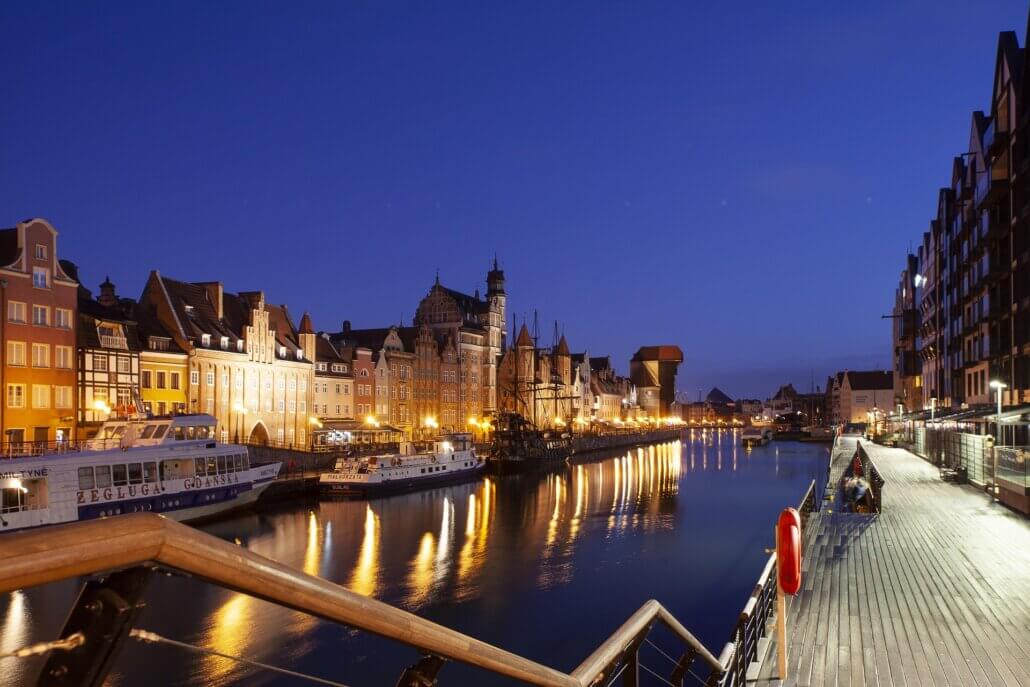
From there, head toward the Motława River waterfront, one of the defining features of Gdańsk. The riverside promenade offers a mix of historic structures and modern activity, including the famous medieval crane (Żuraw).
This is a great area to slow down, take photos, and get a sense of the city’s maritime identity.
Lunch: Start with Seafood
Day 1 is the perfect time to begin exploring Gdańsk’s coastal food culture. Unlike Kraków, seafood plays a major role here.
Look for:
- Fresh Baltic fish (especially cod)
- Herring dishes
- Traditional Polish soups
For specific recommendations, use 👉 What to Eat in Gdańsk to avoid tourist-heavy spots and find better options.
Afternoon: Explore Beyond the Main Street
After lunch, continue exploring the historic center, but move slightly off the main tourist path.
Walk through:
- Side streets near the waterfront
- Smaller squares and quieter areas
- The Old Town (Stare Miasto) just north of Main Town
This gives you a more complete view of Gdańsk beyond the main highlights.
If you’re interested in museums, this is also a good time to visit one — Gdańsk has several tied to its maritime and WWII history.
Evening: Waterfront Dining
For dinner, return to the waterfront.
This is one of the best places in the city to enjoy:
- Seafood-focused meals
- Traditional Polish dishes in a scenic setting
- A slower, more relaxed dining experience
After dinner, take a walk along the river. The lighting, reflections, and atmosphere make this one of the most enjoyable times to experience Gdańsk.
Day 2: Coast, Local Areas & a Different Side of Gdańsk
Day 2 shifts away from the historic center and gives you a broader perspective on the city.
Morning: Head to the Beach
Start your day by heading toward Brzeźno or Jelitkowo, two of Gdańsk’s main beach areas.
You can get there via:
- Tram
- Taxi / rideshare
- Train (toward Sopot if extending further)
The beaches along the Baltic Sea offer a completely different atmosphere from the Old Town.
Even if you’re not planning to swim, this area is great for:
- Walking along the coast
- Experiencing a quieter side of the city
- Seeing how locals spend time
Midday: Continue to Sopot (Optional but Recommended)
If you want to extend your experience, continue to Sopot, a nearby coastal town known for its pier and seaside atmosphere.
This is an easy extension and adds variety to your trip.
You can:
- Walk along the pier
- Have lunch near the beach
- Enjoy a more resort-style environment
Lunch: Coastal Dining
Day 2 is another opportunity to focus on seafood or lighter meals.
Look for:
- Grilled fish
- Casual beachside dining
- Simple, fresh dishes
Again, refer to 👉 What to Eat in Gdańsk for specific places.
Afternoon: Return & Explore Local Neighborhoods
Head back toward central Gdańsk in the afternoon.
This is a good time to explore:
- Wrzeszcz (more local, modern district)
- Quieter parts of the city outside the main tourist zones
Alternatively, you can return to Main Town and revisit areas at a slower pace.
Evening: Final Dinner & Wrap-Up
For your final night, choose a more intentional dinner.
This could be:
- A refined Polish meal
- A modern restaurant
- A return to a favorite area
Gdańsk’s food scene offers a good mix of traditional and contemporary options, making it worth planning your final meal carefully.
Where to Stay for This Itinerary
Location plays a big role in how smoothly this itinerary works.
For most travelers:
- Main Town is best for first-time visits and convenience
- Old Town offers a quieter but still central option
- Beach areas work if you want a coastal-focused stay
For full recommendations, see 👉 Where to Stay in Gdańsk
What to Eat Along the Way
Food is a key part of the Gdańsk experience, especially given its coastal setting.
Across two days, aim to try:
- Fresh Baltic fish
- Herring dishes
- Pierogi
- Traditional soups
- Café pastries
Rather than guessing where to go, use 👉 What to Eat in Gdańsk to guide your choices.
Getting Around Gdańsk
Gdańsk is easy to navigate with a combination of walking and public transport.
In general:
- Main Town is fully walkable
- Trams connect you to coastal areas
- Trains are useful for Sopot and Gdynia
- Taxis are affordable
When to Visit Gdańsk
Timing affects how much you can enjoy the coastal aspect of the city.
In general:
- Summer is best for beach access and outdoor dining
- Spring and fall offer fewer crowds
- Winter is quieter but less coastal-focused
Final Thoughts: Planning the Perfect 2 Days in Gdańsk
Gdańsk stands out because it offers something different from other Polish cities — a combination of history, water, and coastal life.
This itinerary works because it:
- Balances historic exploration with coastal experiences
- Keeps travel efficient
- Allows flexibility based on your interests
For the best overall experience, use this itinerary alongside:
Together, these give you a complete framework for planning your trip — from where to stay to what to eat and how to experience Gdańsk in a way that fits your travel style.