Portugal is one of the easiest countries in Europe to plan a trip around — and one of the most commonly rushed. The temptation is to cram in as many stops as possible, moving between cities every day in pursuit of variety. The result is a trip that covers a lot of ground without understanding any of it. Portugal rewards the opposite approach: fewer destinations, more time in each, and the willingness to let the rhythm of the country reveal itself slowly.
This 7-day Portugal itinerary is designed specifically for first-time visitors. It balances Lisbon, Porto, and the Algarve — the three most important regions for understanding the country — while keeping travel efficient and realistic. You will experience historic neighborhoods, coastal landscapes, exceptional food culture, and the distinct identity of each region without feeling rushed or exhausted by constant movement.
The itinerary follows a logical geographic flow: Lisbon first, then north to Porto by train, then south to the Algarve by air. This minimizes backtracking, keeps travel time manageable, and means you end the trip on the coast — the ideal way to wind down before departure.
Throughout this itinerary, reference our full destination guides for deeper planning:
Lisbon City Guide
What to Eat in Lisbon
Where to Stay in Lisbon
Porto City Guide
What to Eat in Porto
Where to Stay in Porto
Algarve Travel Guide
What to Eat in the Algarve
Where to Stay in the Algarve
For our full Portugal overview, see our Portugal travel guide.
How This Itinerary Is Structured
This itinerary follows a south-to-north-to-south flow that minimizes backtracking and keeps each travel day efficient:
– Start in Lisbon (3 nights)
– Travel north to Porto by train (2 nights)
– Fly south to the Algarve (2 nights)
– Return home from Faro or back to Lisbon
You will spend three nights in Lisbon, two nights in Porto, and two nights in the Algarve. This is the best balance for a first Portugal trip — enough time in each destination to understand its character without rushing, and enough variety to experience three genuinely distinct faces of the country.
Day 1: Arrival in Lisbon — First Impressions
Arrive in Lisbon and plan for a deliberately light first day. The city rewards a slow introduction — Lisbon is not a place to assault on arrival but one to ease into, letting its atmosphere settle around you before attempting to understand it.
After landing at Lisbon Humberto Delgado Airport, take the metro Red Line (Aeroporto station) directly into the city center — approximately 25 minutes to Marquês de Pombal or Baixa-Chiado, and far cheaper than a taxi. Check into your hotel in Chiado, Baixa, or Príncipe Real — all excellent central bases that put you within walking distance of the city’s main areas.
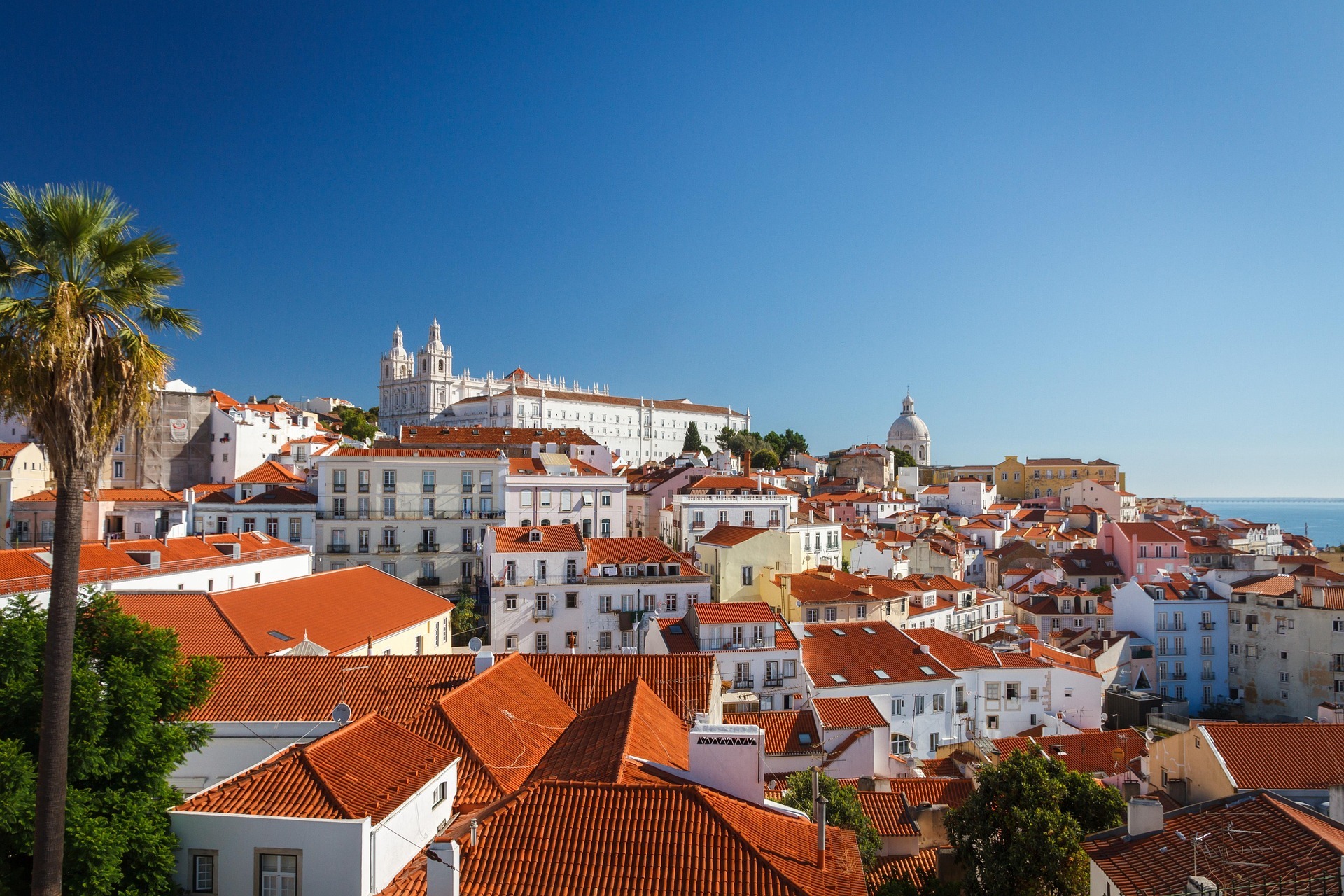
Spend the afternoon on foot in the Baixa — Lisbon’s flat, elegant Pombaline grid, rebuilt after the catastrophic 1755 earthquake in one of the earliest examples of modern urban planning. Walk south through the grid to the Praça do Comércio, the vast riverside square that opens directly onto the Tagus. The square — three sides of elegant arcaded buildings framing the wide river and the distant southern shore — is one of the finest urban spaces in Europe, and arriving at it for the first time, with the Atlantic light on the water, is a genuinely affecting introduction to Lisbon.
Walk the waterfront west toward Cais do Sodré, stop for a bica (espresso) at a waterfront café, and simply observe the city moving around you. The pace of Lisbon — unhurried, warm, possessed of a particular quality of afternoon light — begins to be felt here. In the evening, head into Chiado or Bairro Alto for dinner. Keep it simple: a traditional tasca, a glass of Alentejo red, and a prato do dia. Your goal today is to arrive, not to conquer.
👉 Where to Stay in Lisbon: The best Lisbon neighborhoods and hotels for every budget →
Day 2: Alfama, the Miradouros, and Lisbon’s Historic Soul
Your first full Lisbon day should be dedicated to Alfama — the oldest neighborhood in the city, a Moorish quarter that survived the 1755 earthquake and has changed remarkably little in character since. Start early, before the tour groups arrive, and give yourself the morning to get genuinely lost in it.
Begin at the Largo das Portas do Sol viewpoint at the top of Alfama and walk downhill through the labyrinth of narrow lanes, whitewashed walls, and stairways that define the neighborhood. Stop at the Miradouro de Santa Luzia — a tiled viewpoint overlooking the Alfama rooftops and the Tagus — and the Miradouro da Graça, the highest viewpoint in the city with the finest panoramic view of Lisbon spread out below. The miradouros are not tourist attractions so much as a way of life in Lisbon; locals gather at them with wine and conversation in the late afternoon.
Visit the São Jorge Castle mid-morning before the heat builds — the views from the battlements over the city and river are extraordinary, and the archaeological site within the walls reveals 2,500 years of continuous occupation. From the castle, make your way down through Mouraria — the most multicultural neighborhood in Lisbon, less visited than Alfama and more authentically lived-in — for lunch at one of the traditional tascas hidden in the back streets.
In the afternoon, move west through Chiado and Príncipe Real. The Bertrand bookshop on Rua Garrett — founded in 1732, the oldest operating bookshop in the world — is worth a stop; the garden square of Príncipe Real, shaded by enormous ancient trees, is the finest place in the city to sit and do nothing in particular. In the evening, eat in Alfama — this is the night to book a casa de fado for a dinner of traditional Portuguese food alongside live fado music, which in a good small venue is one of the most genuinely moving musical experiences available anywhere.
👉 What to Eat in Lisbon: Bacalhau, pastéis de nata, the tascas & Lisbon’s extraordinary food scene →
Day 3: Belém and Lisbon’s Age of Discovery
Day three focuses on Belém — the riverside district 6km west of the city center where the great Portuguese explorers departed for Africa, India, and Brazil in the 15th and 16th centuries. Take Tram 15E from Praça da Figueira or a taxi west along the waterfront; the journey takes approximately 20 minutes.
The Jerónimos Monastery is the first and most important stop — the greatest building in Portugal, a masterpiece of Manueline architecture built to give thanks for Vasco da Gama’s successful voyage to India. Book tickets online in advance to avoid queues. The south portal, carved with an almost hallucinatory density of nautical and botanical ornament, is one of the great works of European decorative art. The interior cloister — double-storied, serene, extraordinarily beautiful — rewards 30 minutes of quiet contemplation. Allow 1.5 hours for the monastery.
Before leaving Belém, stop at Pastéis de Belém — the bakery directly across from the monastery that has been producing the original pastel de nata since 1837. The custard tart here — flakier, more complex, and more carefully caramelized than any imitation — is one of the great food experiences in Portugal. Eat one warm, dusted with cinnamon and powdered sugar, at a marble table in the tiled interior. The queue moves fast; do not skip it.
The Torre de Belém — the ornate Manueline watchtower standing in the Tagus at the western edge of Belém — and the Monument to the Discoveries are both within easy walking distance of the monastery. The afternoon can be spent returning to central Lisbon for the neighborhoods or attractions you haven’t yet covered — the National Tile Museum (Museu do Azulejo) in eastern Alfama is the finest specialist museum in the city and one of the most rewarding hours available in Lisbon. For your final Lisbon evening, choose a restaurant in Príncipe Real or Chiado — this is the night for something slightly more ambitious than a tasca.
👉 Lisbon City Guide: Full coverage of Lisbon’s neighborhoods, monuments & experiences →
Day 4: Train to Porto — Arrival by the Douro
On day four, travel from Lisbon to Porto. The Alfa Pendular high-speed train from Lisbon Oriente station to Porto Campanhã takes approximately 2 hours 45 minutes and is the definitive way to make this journey — comfortable, scenic, and significantly less stressful than flying. Book in advance through CP (Comboios de Portugal) at cp.pt; advance fares are substantially cheaper than walk-up prices. Take the morning departure to maximize your first afternoon in Porto.
Arrive at Porto Campanhã and take the metro to the city center — São Bento station is the best arrival point for the historic Ribeira district. Check into your hotel in Ribeira or Baixa, the two best central bases in Porto. Before you do anything else, stop inside São Bento station itself: the entrance hall, lined with 20,000 blue azulejo tiles depicting scenes from Portuguese history, is one of the most extraordinary interior spaces in the country.
Spend your first Porto afternoon walking down to Ribeira — the medieval riverside quarter of colorful houses, wine barges, and restaurant terraces facing the Douro and the port wine lodges of Vila Nova de Gaia on the opposite bank. Walk across the upper level of the Dom Luís bridge for the finest panoramic view of the city, the river, and the Gaia wine lodges below. The bridge walk, free and taking about ten minutes, is one of the great urban views in the Iberian Peninsula.
In the evening, eat near the river. Porto’s food scene is richer and more distinctive than its reputation suggests — see our What to Eat in Porto guide for specific recommendations. This is the night to order the francesinha — Porto’s extraordinary layered meat sandwich in spiced tomato and beer sauce — at least once. It is excessive, deeply savory, and entirely specific to Porto.
👉 Porto City Guide: The Douro, port wine, Dom Luís bridge & Portugal’s most characterful city →
Day 5: Porto’s Culture, Port Wine, and the Douro
Your full day in Porto should balance the city’s cultural landmarks with its defining food and wine experience. Start the morning in Baixa — Porto’s central commercial district, compact and very walkable. The Livraria Lello on Rua das Carmelitas, a neo-Gothic bookshop of extraordinary beauty (said to have inspired J.K. Rowling’s descriptions of Diagon Alley), is worth the small entry fee, redeemable against a book purchase. The Clérigos Tower, Porto’s baroque landmark, has a bell tower open for climbing with fine views over the city’s red rooftops and the river. The Igreja de Santo Ildefonso, its facade covered in 20,000 azulejo tiles, is one of the finest tiled church exteriors in Portugal.
From Baixa, work your way through the backstreets of the Bonfim neighborhood — Porto’s most creative and increasingly interesting district, with independent restaurants, wine bars, and the kind of street life that has moved away from the most tourist-saturated Ribeira streets. Lunch here at one of the natural wine bars or modern Portuguese restaurants that have made this neighborhood the most exciting eating destination in the city.
In the afternoon, cross the Dom Luís bridge to Vila Nova de Gaia for the port wine lodge experience — essential Porto, and one of the most specifically Portuguese afternoons available anywhere in the country. The great port wine houses (Graham’s, Taylor’s, Sandeman, Ramos Pinto) all have lodges open for tours and tastings; Graham’s Six Grapes and Taylor’s have the finest facilities and the best views from their terraces over the Douro. Allow two hours for a lodge tour and tasting. End the afternoon on a Gaia riverside terrace with a glass of tawny port and the Porto skyline in front of you — one of the finest simple pleasures of a Portugal trip.
👉 What to Eat in Porto: The francesinha, port wine, fresh seafood & Porto’s remarkable food scene →
👉 Where to Stay in Porto: The best Porto neighborhoods and hotels →
Day 6: Fly to the Algarve — Arrival on the Coast
On day six, travel from Porto to the Algarve. The most efficient option is a short domestic flight from Porto Francisco Sá Carneiro Airport (OPO) to Faro Airport (FAO) — flights take approximately one hour and run multiple times daily with TAP Air Portugal and Ryanair. Book in advance; prices are low when booked ahead. The alternative — train from Porto to Lagos via Lisbon — takes the better part of a day and is only practical if you have very early morning departure flexibility.
Pick up a rental car at Faro Airport — essential for the Algarve, where the best beaches, coastal headlands, and inland villages require independent transport. The drive from Faro to the western Algarve town of Lagos, the best base for first-time visitors, takes approximately one hour along the A22 motorway. Lagos gives you immediate access to the dramatic western Algarve coastline — the limestone cliffs, sea caves, and golden sand beaches that constitute some of the finest coastal scenery in Europe.
Spend the afternoon of day six settling in and making your first contact with the Algarve coast. Walk down to Meia Praia, the long beach north of Lagos, or take the short ferry across the river mouth to the old town beaches of Praia da Batata and Praia dos Estudantes. The shift from the dense urban energy of Porto to the wide Atlantic horizon of the Algarve is dramatic and welcome. Have a long, relaxed dinner at a Lagos waterfront restaurant focused on fresh grilled fish — the beginning of two days of the finest seafood in Portugal.
👉 Algarve Travel Guide: Ponta da Piedade, Lagos, Sagres & Europe’s finest southern coastline →
Day 7: The Algarve Coast — Cliffs, Beaches, and Seafood
Your final full day is dedicated entirely to the western Algarve — one of the most beautiful coastal landscapes in Europe and the finest conclusion to a Portugal trip. The day should be unscheduled in spirit even if it has a geographic logic: drive the coast, find the beaches and headlands that appeal to you, eat well, and let the Atlantic do its work.
Start the morning at the Ponta da Piedade headland, 3km south of Lagos — a labyrinth of golden limestone stacks, sea arches, grottos, and turquoise water that is among the most beautiful coastal formations on the Atlantic seaboard. The clifftop walk from Lagos to Ponta da Piedade takes approximately 45 minutes and passes a series of extraordinary beaches — Praia do Camilo, carved into the cliff face and reached by a wooden stairway, is one of the finest small beaches in Portugal. Boat tours depart from Lagos marina into the sea caves below Ponta da Piedade; if the sea is calm, this is worth the hour.
Drive west from Lagos toward Sagres — the small town at the southwestern tip of continental Europe, where Henry the Navigator established his school of navigation in the 15th century and from which the great Portuguese voyages of discovery departed into the unknown Atlantic. The Sagres Fortress, on the clifftop above the town, gives the most dramatic sense of standing at the edge of the known world that Portugal offers. The beaches west of Sagres — Praia do Beliche, Praia do Tonel — are wild, wind-exposed, and magnificent.
For lunch, find a simple seafood restaurant in Sagres town or return to Lagos — grilled sea bream, fresh clams in white wine and coriander, percebes (goose barnacles) if they’re on the menu. This is Algarve eating at its most essential: fish pulled from the Atlantic that morning, cooked simply over charcoal, eaten in the sun. Spend the afternoon at whichever beach appealed most in the morning, and save the final evening for a long dinner in Lagos.
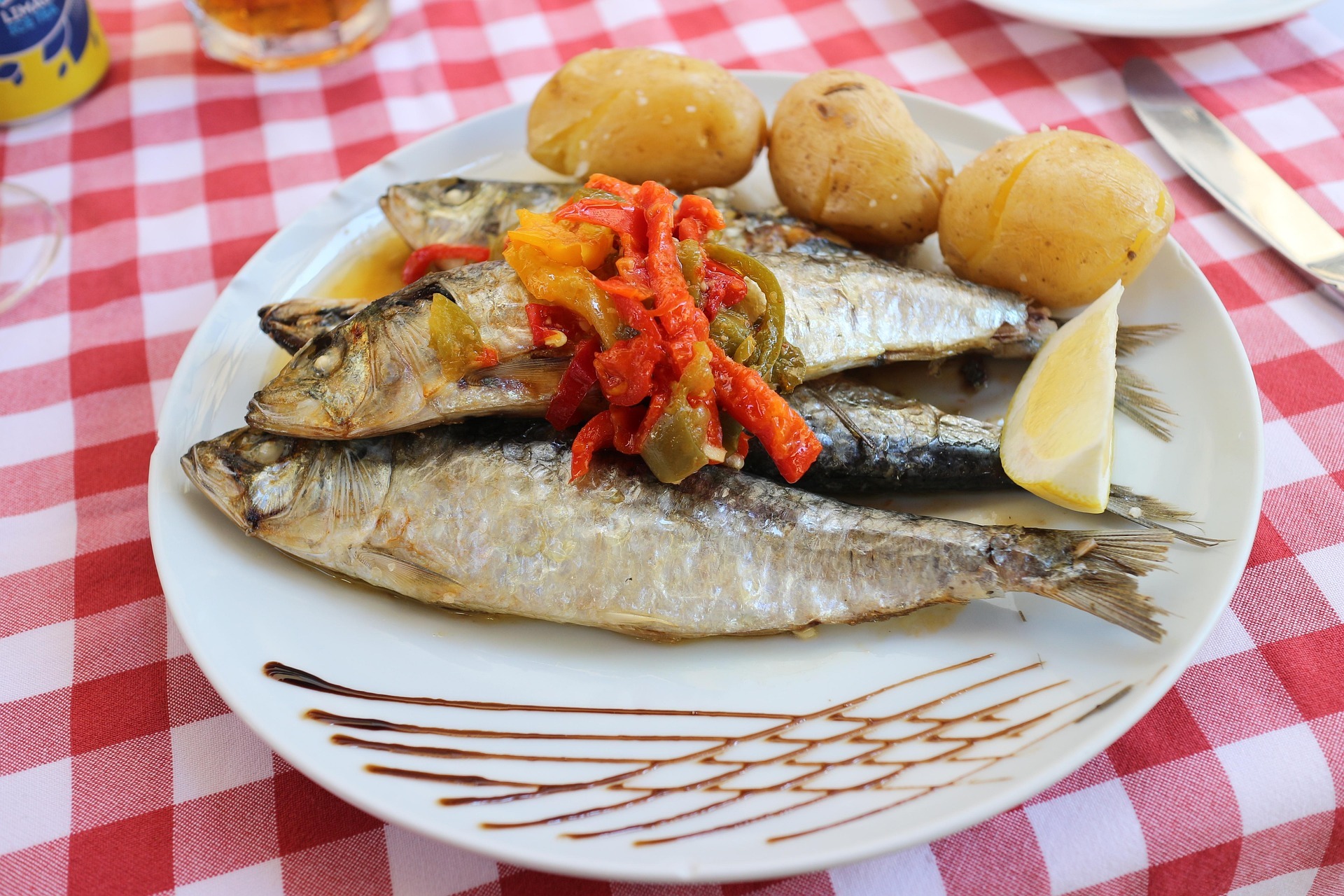
👉 What to Eat in the Algarve: Grilled sardines, cataplana, fresh seafood & the Algarve’s coastal food culture →
👉 Where to Stay in the Algarve: The best Algarve towns and hotels for every type of visitor →
Departure
Depending on your flights, depart from Faro Airport — the most convenient option if ending in the Algarve, approximately one hour from Lagos by car. If your international flight is from Lisbon, the drive from Lagos to Lisbon takes approximately 2.5 hours; alternatively, return the rental car at Faro and take the train from Faro to Lisbon Oriente (approximately 2.5 hours, book in advance).
Why This Itinerary Works
This itinerary works because it respects the distinct identity of each destination rather than treating Portugal as a single interchangeable backdrop. Lisbon and Porto are genuinely different cities — different in architecture, food, pace, and character — and the Algarve is different again. Moving between them with enough time in each to feel the difference is the essential structure of a first Portugal trip.
Three nights in Lisbon gives you enough time for Alfama, Belém, and the miradouros without rushing. Two nights in Porto is genuinely enough for the port wine lodges, the riverfront, and the best of the city’s food scene. Two nights in the Algarve is tight but sufficient for the western coast’s most essential experiences — Ponta da Piedade, Sagres, and the seafood culture that defines the region.
Many first-time visitors are tempted to add Sintra, Évora, the Douro Valley, or Óbidos to a 7-day itinerary. These are all excellent destinations — covered in our Portugal travel guide — but adding them to this structure creates a trip that moves too fast to experience anything properly. If you have ten days, add Sintra as a day trip from Lisbon and the Douro Valley as a day trip from Porto. If you have two weeks, extend Lisbon to four nights and add Évora as an overnight. For seven days, focus.
Adjusting This Itinerary
If your priorities differ from the standard first-timer framework, the itinerary adjusts easily:
More time in Lisbon: Add a fourth night and use the extra day for the Sintra day trip (40 minutes by train from Rossio station) or the Arrábida coast south of the city. Both are among the finest day trips in Portugal.
More time in the Algarve: Add a third night and use the extra day to drive the eastern Algarve — Tavira, the Ria Formosa natural park, the barrier island beaches accessed by ferry. The eastern Algarve is quieter, more traditional, and less visited than the western coast.
Skip Porto: If city travel is not your priority, replace the two Porto nights with two additional Algarve nights and use the time to explore both the western and eastern coasts at leisure. This is the right structure for travelers whose primary interest is beaches and coastal relaxation.
Extending beyond 7 days: The most rewarding additions in order of priority are Sintra (day trip from Lisbon), the Douro Valley (day trip from Porto), and Évora (overnight from Lisbon). Each adds a genuinely distinct dimension to the Portugal experience.
Planning Your Portugal Trip
Use this itinerary alongside our full destination guides for each city:
Lisbon City Guide
What to Eat in Lisbon
Where to Stay in Lisbon
Porto City Guide
What to Eat in Porto
Where to Stay in Porto
Algarve Travel Guide
What to Eat in the Algarve
Where to Stay in the Algarve
For our full Portugal overview, see our Portugal travel guide.