The best time to visit Florence is April, early May, September, or October. All four windows deliver the combination of good weather, manageable museum queues, and a city that feels more alive than overrun. Florence in July and August is hot, extremely crowded, and the least favorable version of the experience. Florence in January or February is quiet, affordable, and genuinely underrated. The right month depends on what you’re optimizing for — this guide covers all twelve.
Florence is more weather-sensitive than Rome or Venice as a visitor experience. The city’s narrow medieval streets trap heat in summer and channel cold in winter, its museums fill to uncomfortable density in peak season, and its greatest outdoor experiences — the walk up to Piazzale Michelangelo at golden hour, lunch on a Oltrarno terrace, exploring the Boboli Gardens — are most rewarding in mild temperatures. Getting the timing right makes a meaningful difference to the quality of the trip.
👉 Planning your Florence trip? See our Florence city guide, our how many days in Florence guide, and our what to eat in Florence guide for full destination coverage.
Florence’s Climate at a Glance
Florence sits in the Arno River valley, surrounded by hills on three sides. This geography gives the city a more extreme microclimate than coastal cities: hotter in summer, colder in winter, with lower air circulation that intensifies both. Summer heat in Florence is more intense than in Rome — the city can reach 38–40°C (100–104°F) in July heatwaves, and the valley geography means heat doesn’t dissipate easily overnight. Winters are genuinely cold by Italian standards — frost is common, and occasional snow is not unusual.
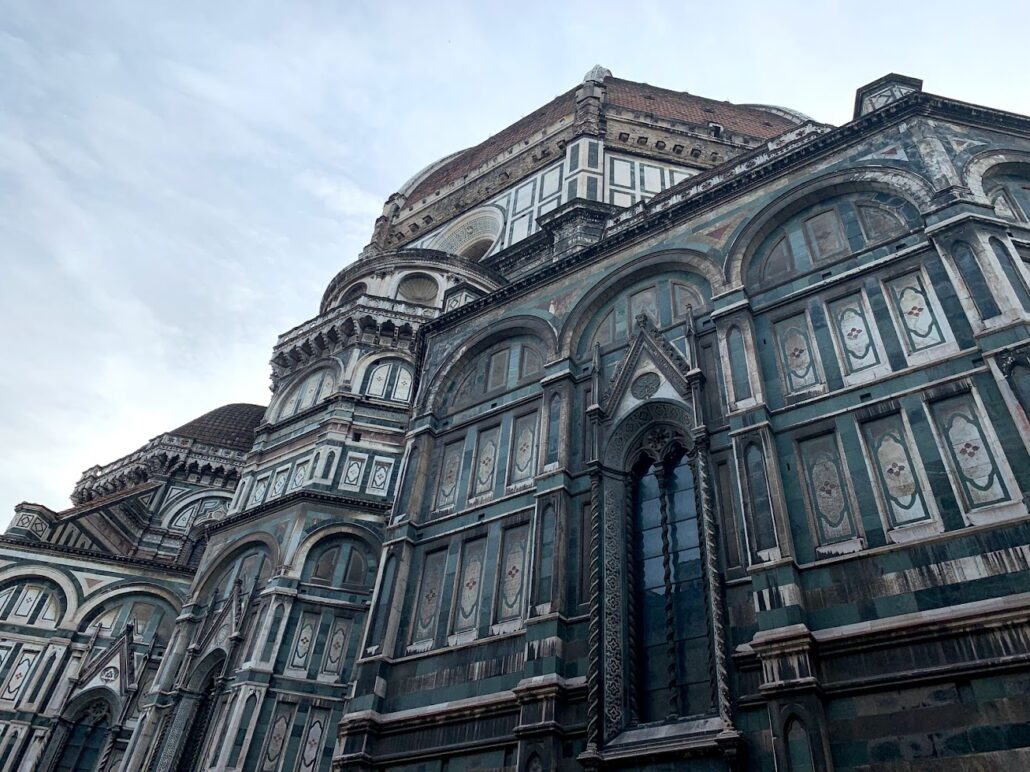
The hills surrounding Florence create exceptional viewpoint opportunities that are most rewarding in clear weather. The late afternoon and evening light on Brunelleschi’s dome, seen from Fiesole or Piazzale Michelangelo, is one of the most famous views in Italy — and it requires clear air and good light to be at its best. Spring and autumn reliably provide both.
Month-by-Month Breakdown
January
Weather: Cold, 4–11°C. Frost common, particularly in the morning. Occasional snow, though accumulation in the city center is rare. Rain possible throughout the month.
Crowds: Minimum. January is Florence’s quietest month for tourism. The Uffizi, Accademia, and Borghese are all accessible without the crushing queues of spring and summer.
Prices: Lowest hotel rates of the year. January offers the best accommodation value in Florence.
What’s happening: Epiphany (January 6) closes many businesses. The city returns to its local rhythm quickly after the holiday period ends. Sales (saldi) begin in early January at Florence’s excellent clothing and leather shops.
Verdict: Underrated. Cold, certainly, but Florence’s museums, restaurants, and markets are operating fully and at their most accessible. The Uffizi in January, with pre-booked tickets and almost no competition for space in front of the Botticellis, is a markedly different and better experience than the same visit in June. Pack for genuine cold.
February
Weather: Cold to cool, 5–13°C. Some years see early warming by late February; others remain solidly winter. Rain is common.
Crowds: Very low. February is quiet except for Valentine’s Day, which draws a small peak of romantic travelers, and any Carnival weekend events.
Prices: Still very low. One of the two most affordable months alongside January.
What’s happening: Carnival (Carnevale) — Florence’s Carnival is not as elaborate as Venice’s, but there are events in the city and in nearby towns. The Schiacciata alla Fiorentina (the orange-scented carnival cake) appears in bakeries from late January through Shrove Tuesday — one of the more specifically seasonal Florentine food experiences.
Verdict: Good for budget travelers and those focused on art and food. The Oltrarno’s trattorias are at their most local-feeling in winter, when the seasonal menu items — ribollita, pappa al pomodoro, hearty Florentine soups — are at their best. Cold but worthwhile.
March
Weather: Transitional. Early March often still cold; late March begins warming, 10–17°C. Variable — some years deliver spring warmth in mid-March, others stay grey through the month.
Crowds: Building from the February low. If Easter falls in late March, Holy Week brings a significant surge of visitors.
Prices: Rising from the winter low but still below peak season.
What’s happening: The Florentine New Year was historically celebrated on March 25 (the Feast of the Annunciation) — the Annunziata church in Piazza della Santissima Annunziata holds a traditional fair on this date. If Easter falls in March, plan accordingly for higher crowds and prices.
Verdict: A mixed month that rewards checking the specific forecast for your dates. Early March is still off-season with good value; late March in a warm year can be excellent. The variable weather makes it harder to count on the outdoor experiences that define Florence at its best.
April
Weather: Spring. 14–20°C. Longer days, good sunshine with occasional rain. The light in April is outstanding — clear, warm, with a quality that makes the dome’s terracotta against the Tuscan hills particularly beautiful.
Crowds: Rising significantly. April is the beginning of peak season, and the Easter holiday period (if Easter falls in April) is extremely busy. Outside of Easter week specifically, early April is better than late April for crowd levels.
Prices: Peak season pricing begins in April. Hotel rates and flight prices rise significantly from March.
What’s happening: The Scoppio del Carro (Explosion of the Cart) — a traditional Florentine Easter Sunday ceremony in the Piazza del Duomo involving a decorated ox cart and fireworks. One of the most visually extraordinary local traditions in the city. Easter Sunday at the Duomo draws large crowds but the ceremony itself is genuinely worth seeing.
Verdict: One of the best months to visit, particularly early April. The weather is ideal, the city is beautiful, and while crowds are present they have not yet reached summer intensity. The Scoppio del Carro on Easter Sunday is a specific reason to be in Florence at that time if your schedule allows.
May
Weather: Warm and excellent. 17–24°C. One of the most reliably pleasant months of the year. Long days with good light.
Crowds: High and building toward summer peak. May is among the busiest months for tourism in Florence. The Uffizi and Accademia require tickets booked months in advance.
Prices: Peak season. Among the most expensive months for accommodation.
What’s happening: The Maggio Musicale Fiorentino — one of Europe’s oldest and most prestigious music and opera festivals — runs from late April through June at the Teatro del Maggio Musicale Fiorentino. Booking tickets at operadifirenze.it for performances during your visit is worth doing in advance.
Verdict: Beautiful weather but maximum advance planning required. May in Florence rewards organized travelers who have booked everything weeks ahead. Spontaneous visitors will find the Uffizi fully booked and the major restaurants crowded on weekend evenings. Still very much worth visiting if you’re prepared.
June
Weather: Hot and sunny. 22–30°C, heading toward summer heat by the end of the month. Very long days — sunset in Florence in late June is after 9pm.
Crowds: Very high. June is full peak season alongside July and August.
Prices: Peak. Among the highest accommodation prices of the year.
What’s happening: The Feast of San Giovanni (June 24) — Florence’s patron saint — is one of the city’s most important annual celebrations, culminating in a fireworks display over the Arno visible from the Ponte Vecchio and the Lungarno. The Calcio Storico Fiorentino — a historic form of football played in medieval costume in the Piazza Santa Croce — traditionally takes place in June. Both are worth planning around if your visit falls then.
Verdict: The long June evenings are one of Florence’s genuine pleasures — the warm light on the Arno at 8:30pm, outdoor dining in the Oltrarno, the city operating at its most sociable. The crowds and heat are real costs. An early-rising strategy (7am at the Duomo, 8:15am at the Uffizi) manages both effectively.
July
Weather: Hot. 24–35°C, frequently above 33°C. Florence’s valley geography makes it hotter than Rome or the coast. The narrow streets of the historic center trap heat intensely at midday.
Crowds: Maximum. July is the peak tourist month in Florence.
Prices: Maximum.
What’s happening: The Maggio Musicale festival has concluded by July, but summer outdoor events — concerts, cinema, cultural events — run throughout the month in the Boboli Gardens and various outdoor venues.
Verdict: The most challenging month. The heat in Florence in July is more oppressive than in Rome or Venice due to the valley geography. An air-conditioned museum itinerary works reasonably well — the Uffizi and Accademia are cooler than the street outside. But the outdoor experiences that make Florence distinctive are at their worst in July. Avoidable if any other month is possible.
August
Weather: Peak heat. 25–37°C. Heatwaves are common. The city can be genuinely stifling in the second and third weeks of August.
Crowds: High with international tourists; lower with locals, many of whom leave Florence in August as they do throughout Italy.
Prices: Peak in early August, sometimes softening after Ferragosto (August 15).
What’s happening: Ferragosto (August 15) — Italy’s main summer holiday. Many Florence restaurants, shops, and local businesses close for one to two weeks around this date. The centro storico becomes a more tourist-dominated environment as local life retreats to the Tuscan countryside.
Verdict: Not recommended for most visitors. The heat is the primary deterrent. If August is unavoidable, base the itinerary primarily around the air-conditioned museums, plan outdoor activity for early morning and evening, and avoid the middle five hours of the day outside wherever possible. Check restaurant and business closures around Ferragosto carefully.
September
Weather: Warm transitioning to pleasant. 19–28°C early September, 16–23°C by month’s end. The heat breaks noticeably from late summer by mid-to-late September. Light begins its autumn quality — warmer, lower angle, more beautiful on stone.
Crowds: Falling from August peak. The school year starting in most countries pulls families out of Florence, and by mid-September the major attractions are noticeably less congested than August.
Prices: Softening from peak. Hotel prices begin to fall in September.
What’s happening: The grape harvest (vendemmia) begins in the Chianti vineyards south of Florence in September — wine estate visits and harvest events are at their most active. Several estates in the Chianti Classico zone host harvest festivals that are accessible from Florence as day trips.
Verdict: Excellent, particularly from mid-September. The grape harvest context gives Florence visits in September a specifically Tuscan seasonal character that no other month replicates. The transition from summer to autumn brings some of the best conditions for both outdoor sightseeing and vineyard visits.
October
Weather: Mild and beautiful. 13–21°C. Some rain, particularly in the second half. The autumn light in Florence is exceptional — the warm stone of the buildings, the terracotta dome, the Tuscan hills going golden — this is the month that generates the best photographs.
Crowds: Moderate and manageable. October is one of the most balanced months of the year for the combination of good conditions and reasonable crowd levels.
Prices: Moderate. Below peak season but not yet at winter lows.
What’s happening: The olive harvest begins in the hills around Florence in October and November — the new-season olive oil (olio nuovo) arrives in Florence’s best restaurants in November with a grassy, peppery freshness that extra-virgin olive oil loses as it ages. Porcini mushrooms and white truffles from the surrounding hills appear on Florentine menus. October is one of the best months for eating in Florence.
Verdict: One of the two best months to visit (alongside April). The combination of autumn light, seasonal food at its peak, moderate crowds, and comfortable sightseeing temperatures makes October a particularly strong choice for visitors who can be flexible with timing.
November
Weather: Cool and wet. 9–15°C. November is one of Florence’s rainiest months. Overcast days are frequent. Occasional cold snaps bring temperatures below 8°C.
Crowds: Low. November is quiet and the city returns to its local rhythm.
Prices: Low. Good hotel values available, particularly mid-week.
What’s happening: New season olive oil (olio nuovo) arrives in November — the single best month to taste Florentine olive oil at restaurants and oil producers. Truffle season continues from October. The concert and opera season at the Teatro del Maggio is active.
Verdict: Good for food-focused visitors and those who prefer a quieter, more local experience. Pack waterproofs and layers. The Uffizi and Accademia in November are genuinely accessible — the difference in queue times between a November visit and a May visit for walk-up tickets is several hours.
December
Weather: Cold. 5–11°C. Rain and occasional frost. Snow is possible, particularly in late December, though accumulation in the city center is uncommon. Cold evenings are the norm.
Crowds: Variable. Early December is quiet; the two weeks before Christmas and the week between Christmas and New Year are moderately busy with seasonal visitors.
Prices: Low in early December, rising for Christmas and New Year.
What’s happening: Christmas markets in the Piazza Santa Croce and Piazza della Repubblica. The nativity scene (presepe) tradition is strong in Florence — churches throughout the city display elaborate presepi. New Year’s Eve celebrations in various piazzas.
Verdict: Early December is genuinely excellent — one of the best-kept secrets for visiting Florence. Low crowds, affordable rates, Christmas atmosphere, and new olive oil still fresh on restaurant tables. The cold is real but manageable, and Florence’s stone buildings lit for Christmas against the winter evening sky have a beauty that summer cannot replicate.
How Florence Compares to Rome for Seasonal Visits
Florence and Rome have similar climate profiles but Florence’s valley geography creates more extreme seasonal swings. Summer is hotter in Florence than Rome. Winter is colder. The shoulder seasons — spring and autumn — are comparable in quality, with Florence having the edge for October specifically due to the grape harvest context and the autumn light on Tuscan landscape.
If you’re visiting both cities on the same trip, the seasonal considerations are the same — the shoulder seasons are better than summer for both. The specific advantage Florence has over Rome in the off-season is the relative size of the crowds: the Uffizi and Accademia in January have genuinely short queues in a way that the Vatican and Colosseum — which draw year-round pilgrimage and tourist traffic regardless of season — do not.
👉 For the full Rome seasonal comparison, see our best time to visit Rome guide. For how to sequence Florence and Rome in the same trip, our Rome vs. Florence comparison and our Rome to Florence transport guide cover the logistics.
Summary: Best Months by Priority
Best overall: October, April, early May, late September
Best for budget: January, February, early December
Best for food (seasonal): October–November (olive oil, truffles, mushrooms), September (grape harvest), April–May (artichokes, spring vegetables, schiacciata con l’uva in autumn)
Best for low crowds: January, February, November
Avoid if possible: July, August
Worth it with advance planning: April–May, September–October (book museum tickets months ahead)
👉 Once you have your dates, our how many days in Florence guide helps build the itinerary, our what to eat in Florence guide covers the seasonal food landscape, and our Florence city guide covers everything else you need.