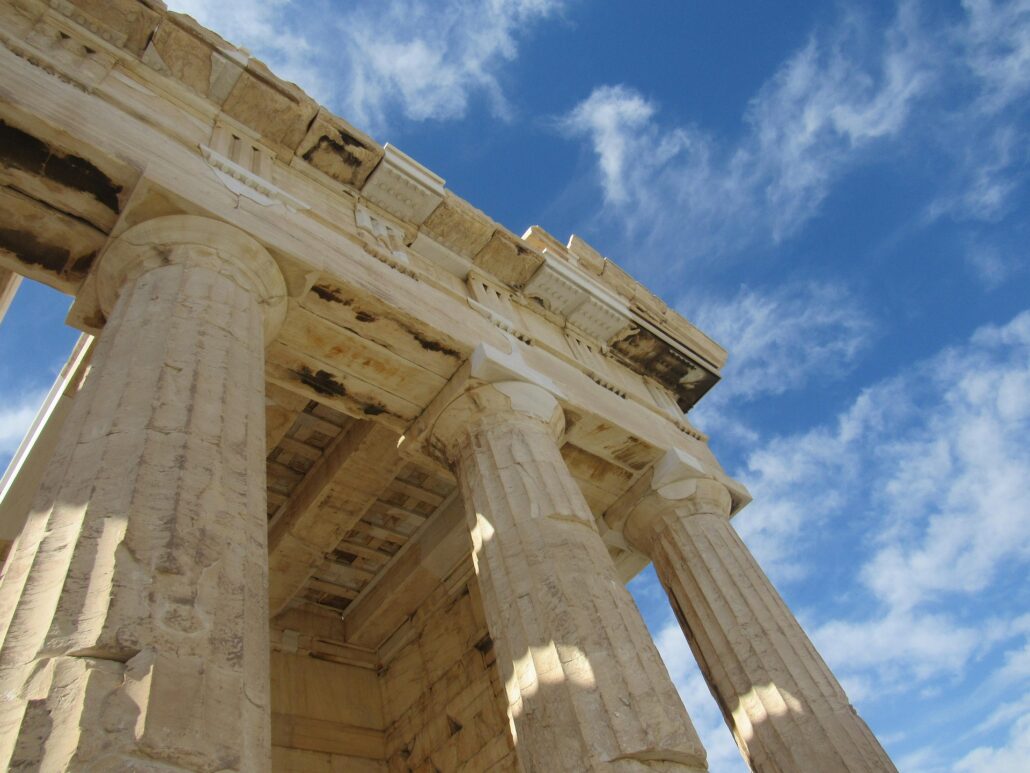
Yes. The Athens Acropolis is worth it — not just worth it, but one of the most important things you can do in Europe. The question is not really whether to go. The question is how to go, when to go, and what to expect so that the reality matches what you came for rather than disappointing you with crowds and heat and poor logistics.
This is the honest assessment that most travel articles don’t give you: the Acropolis at the wrong time, in the wrong season, approached with the wrong expectations, can be a frustrating experience. The same site at 8am on a May morning, with a clear sky and the hill largely to yourself, is one of the most extraordinary experiences available to any traveler anywhere in the world. The difference between those two experiences is planning, not luck.
Here is everything you need to know to make sure your Acropolis visit belongs in the second category rather than the first.
What Makes the Acropolis Worth Visiting
The Acropolis is a limestone hill rising 156 meters above the city of Athens, crowned by a complex of ancient buildings that were constructed primarily in the 5th century BC under the Athenian statesman Pericles, at the height of the city’s power and cultural influence. The buildings on the hill are among the most technically accomplished and visually refined structures ever built by human hands.
The Parthenon, the central temple dedicated to Athena, is the most famous of them — and justifiably so. Built between 447 and 432 BC, it was constructed with an extraordinary set of deliberate visual corrections. The columns lean slightly inward. The stylobate (the platform the columns stand on) curves upward slightly in the center. The corner columns are slightly thicker than the others. Every one of these corrections was designed to compensate for the optical illusions that would otherwise make a perfectly straight building appear to sag. The Parthenon looks straight because it is not straight. That degree of intellectual and technical sophistication, visible in a building nearly 2,500 years old, is what makes the Acropolis something more than a ruin.
The Erechtheion, on the north side of the hill, is the second most important structure — a complex temple built on irregular terrain to accommodate multiple sacred sites. Its most famous feature is the Porch of the Caryatids, where six female figures serve as the columns supporting the roof. The figures on the monument today are copies; the originals are in the Acropolis Museum. Standing below them and looking up is one of the strangest and most moving experiences on the hill.
The Propylaea — the monumental gateway through which you enter the Acropolis — is itself a major architectural achievement, a 5th-century BC structure built across sloping terrain with a sophistication that rivals the temples it leads to. Most visitors pass through it quickly without understanding what they are walking through. Take a moment.
The Temple of Athena Nike, small and perfectly formed on a bastion to the right of the Propylaea entrance, was the first building you see arriving at the hill and one of the finest examples of the Ionic order in Greece.
All of this sits on a hill in the center of a living city of four million people, visible from almost everywhere in Athens, changing color through the day from honey-gold to white to amber at sunset. That relationship between the ancient monument and the modern city — the way Athens has grown around and below the hill for 2,500 years — is itself part of what makes the Acropolis worth experiencing.
The Honest Negatives
The crowds in peak season are significant. July and August bring cruise passengers, tour groups, and independent travelers in numbers that make certain parts of the hill genuinely unpleasant. The area immediately in front of the Parthenon — the most photographed spot — can feel like a concert venue in the middle of the afternoon, with hundreds of people pressing for the same angle. If you visit in peak season at midday, you will have a different experience from the one this article describes.
The heat in summer is a practical problem, not just a comfort issue. The Acropolis rock absorbs and radiates heat in a way that makes the surface temperature significantly higher than the air temperature. In July and August, afternoon visits are not just hot — they can be dangerous for older visitors, people with health conditions, and children. The site has limited shade.
The Parthenon is scaffolded. It has been under ongoing restoration since 1975 and will likely remain so for decades more. Photographs in travel articles frequently use older images or carefully chosen angles to show it without scaffolding. The scaffolding is visible on a visit. It does not ruin the experience — the scale and quality of the building are still fully apparent — but if you are expecting the unobstructed postcard image, you should know in advance that scaffolding is present.
The terrain is uneven and physically demanding. The path up the hill and across the rock surface is stone — ancient stone, worn smooth, often sloping. Comfortable closed-toe shoes with grip are essential. People have twisted ankles here. High heels are, genuinely, prohibited on the site.
When to Visit: The Single Most Important Decision
Timing your Acropolis visit correctly matters more than almost any other planning decision for a trip to Athens. Here are the specific windows that make the most difference.
Best time of day: Opening time. The Acropolis opens at 8am. Arriving at 8am, particularly in April through October, means you will have 30–90 minutes on the hill before the first tour groups arrive. The light in the morning is also better for photography — softer and warmer than the flat midday glare. In summer, arriving at 8am also means you are on the hill before the worst heat of the day. There is no downside to arriving at opening time.
If morning is genuinely impossible, late afternoon is the second option. The site stays open until sunset in summer (check current hours on the official website before visiting). After 5pm in summer, the crowd thins and the light turns golden. The Parthenon in the late afternoon light is extraordinary. The trade-off is that you will have had a full day of heat before you arrive.
Best time of year: April, May, and early June, or September and October. These shoulder months offer warm, reliable weather, manageable crowds, and the site at something close to its best. May is particularly good — the weather is stable, the tourist season has not yet peaked, and the hill is covered in wildflowers in spring.
March can be excellent on clear days, though weather is less reliable. November through February is quieter than any other period and the winter light on the marble is beautiful, but overcast skies and occasional rain are possible.
Avoid July and August if you have any flexibility. If you cannot avoid high summer, the 8am opening visit is not optional — it is the only viable strategy.
The Combined Ticket: What It Covers and Why It Matters
The combined archaeological ticket covers not just the Acropolis but six associated sites: the Ancient Agora, the Roman Agora, Kerameikos, Hadrian’s Library, the Temple of Olympian Zeus, and the south slope sites including the Theatre of Dionysus and the Odeon of Herodes Atticus. The ticket is valid for five days from first use, which means you do not need to visit every site on the same day.
This is genuinely good value — the combined ticket costs significantly less than separate entry to each site. More importantly, it gives you permission to spread the ancient Athens experience across your entire stay rather than trying to cram everything into a single exhausting day. Visit the Acropolis on day one. Visit the Ancient Agora on day two at your own pace. The combined ticket makes Athens’s ancient sites a sustained experience rather than a sprint.
The ticket does not cover the Acropolis Museum, which requires a separate purchase. The Acropolis Museum is not optional. It is one of the finest archaeological museums in Europe and gives the Acropolis itself its full meaning.
The Acropolis Museum: Why You Cannot Skip It
The Acropolis Museum, which opened in 2009 at the base of the south slope, was built to house the surviving original sculptures and objects from the hill in a purpose-designed facility with natural light and a direct view of the Parthenon from the upper floor. It is one of the best museums in Europe.
The ground floor covers the slopes of the Acropolis itself — the sanctuaries, houses, and objects found during excavation, displayed over a glass floor through which earlier excavations are visible below your feet. The middle floors house the Archaic sculpture collection, which includes korai (female figures) and a wealth of pre-classical Greek art that was buried on the hill after the Persian sack of Athens in 480 BC and preserved in the soil for 2,400 years. The faces on the Archaic kore figures — serene, slightly smiling — are among the most beautiful objects in Greek art.
The top floor is the Parthenon Gallery, a glass-enclosed room aligned precisely with the Parthenon visible outside the windows. Here the surviving sections of the Parthenon frieze — the carved band that ran around the exterior of the building depicting the Panathenaic procession — are displayed in their original sequence, alternating between original sections (slightly darker) and white plaster casts filling the gaps where sections were removed by Lord Elgin in the early 19th century and are currently held in the British Museum. The contrast between the originals and the casts makes the case for reunification more powerfully than any argument could.
Allow two hours in the museum minimum. It should be visited either immediately after the Acropolis (so everything you saw on the hill is fresh in your memory) or the day before (so you arrive on the hill already knowing what you are looking for).
The Acropolis vs. Other Athens Sites: How to Prioritize
If you are deciding how to allocate limited time across Athens’s many archaeological sites, here is the honest hierarchy.
The Acropolis and the Acropolis Museum are in a category of their own — non-negotiable, always first. The National Archaeological Museum is the second priority, a world-class collection that gives the broader context of Greek civilization that the Acropolis alone cannot provide. The Ancient Agora is third — the most evocative of the non-Acropolis sites, with the best-preserved classical temple in Greece (the Temple of Hephaestus) and a well-organized museum in the reconstructed Stoa of Attalos.
After those three, priorities depend on your interests. Kerameikos (the ancient cemetery) is atmospheric and rarely crowded. The Temple of Olympian Zeus is impressive in scale if not in surviving detail. The Roman Agora and Hadrian’s Library are interesting supplements rather than essential destinations.
For most three-day itineraries, the Acropolis, Acropolis Museum, Ancient Agora, and National Archaeological Museum are sufficient and more than enough. Adding everything else risks turning your Athens visit into an exhausting obligation rather than an experience.
Practical Visiting Information
Getting there: The Acropolis is most easily reached on foot from the Monastiraki, Thissio, or Acropoli Metro stations. The walk from Monastiraki takes about 15 minutes through the Plaka neighborhood. The Acropoli station (on the M2 Red Line) deposits you closest to the main entrance on the south slope.
Tickets: Buy online at odeion.culture.gr or purchase on arrival at the ticket offices. Online purchase avoids the ticket queue but does not guarantee entry without a separate queue. Timed entry is not currently mandatory but may be introduced — check current requirements before your visit.
What to bring: Water (more than you think you need in summer), sunscreen, a hat, and closed-toe shoes with grip. There is a water fountain near the entrance. There are no shade structures on the hill itself.
Photography: Photography is permitted throughout the site. Tripods are not permitted. The best photographic angles on the Parthenon are from the northwest corner of the hill (where the columns catch the morning light) and from the Propylaea looking back toward the entrance.
Accessibility: A lift provides access to the Acropolis rock for visitors who cannot use the main staircase. The surface of the hill is uneven and requires careful footing.
👉 For how to structure your full Athens visit around the Acropolis and other sites, see our guide on How Many Days in Athens Is Enough?
👉 For where to eat and drink in Athens, see our What to Eat in Athens guide.
The Verdict
The Acropolis is worth it — unequivocally, without qualification. It is one of the most important built achievements in human history and one of the few travel experiences that consistently delivers on the weight of its reputation. The Parthenon is genuinely as impressive as you have been led to believe. The view from the hill over Athens is genuinely moving. The Acropolis Museum is genuinely world-class.
The only caveat is timing. Visit at opening time. Visit in shoulder season if you can. Combine it with the Acropolis Museum on the same day. And give Athens enough days around it that the Acropolis is a beginning rather than the whole story.