Barcelona’s food scene is among the most dynamic in Europe — a city where a century-old market like La Boqueria sits within walking distance of restaurants that have defined the global conversation about contemporary cooking, where pintxos bars from the Basque Country operate alongside traditional Catalan taverns, and where the correct way to eat breakfast involves bread rubbed with tomato and olive oil and nothing else. Understanding what and how to eat in Barcelona is inseparable from understanding Catalan culture — and both are worth the effort.
Catalonia has its own culinary identity, distinct from the rest of Spain in meaningful ways. The cooking here draws on Mediterranean produce, the Pyrenean tradition of cured meats and cheese, and a long seafood culture tied to the Catalan coast. It also sits at the intersection of French and Spanish influences in a way that makes it more varied than the cuisines of either neighboring country. Barcelona is where all of this converges.
👉 Planning your full Barcelona trip? See our Barcelona city guide for complete coverage of neighborhoods, logistics, and what not to miss beyond the food.
Pan con Tomate: Start Here
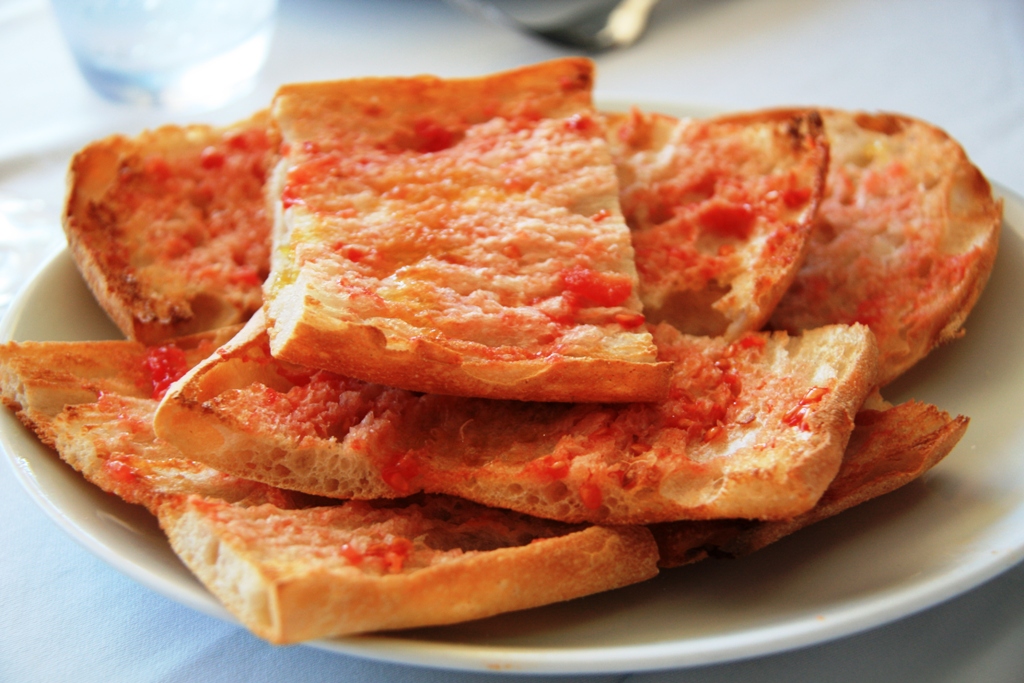
Before anything else: pa amb tomàquet (pan con tomate in Castilian Spanish, pa amb tomàquet in Catalan). Toast or grilled bread rubbed vigorously with the cut face of a ripe tomato until the flesh and juice saturate the surface, then finished with olive oil and salt. That is the entire preparation. It is served at every meal — as breakfast, as a tapa base, as an accompaniment to charcuterie — and is the single most characteristic food of Catalan culture.
The quality depends entirely on three things: the bread (must be substantial enough to absorb the tomato without dissolving), the tomato (must be ripe and juicy — in Barcelona they often use a specific variety called tomata de penjar, a small, intensely flavored hanging tomato), and the olive oil (must be genuinely good — Catalonia produces excellent oil, and restaurants that take the dish seriously use it). Bad pan con tomate, made with a pale tomato and indifferent oil, explains nothing. Good pan con tomate explains everything about Mediterranean cooking.
Order it at every meal. It is never wrong to do so.
Tapas vs. Pintxos: Understanding the Difference
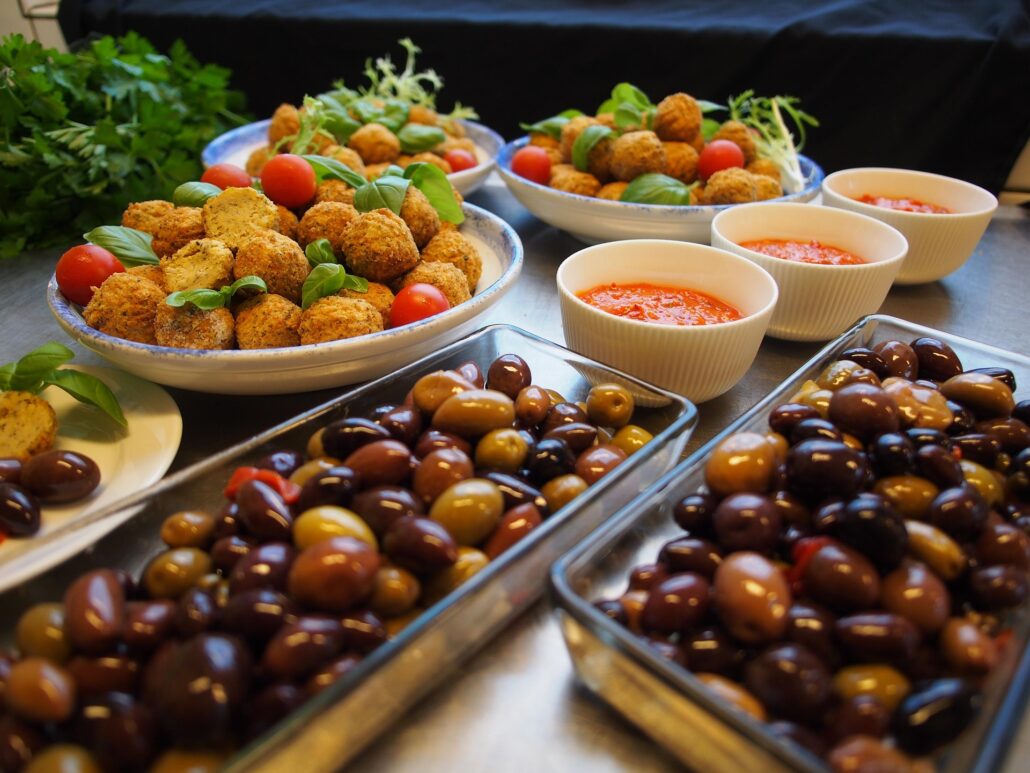
Barcelona sits at a cultural crossroads that produces a sometimes confusing mix of tapas (the Andalusian and broader Spanish small-plate tradition) and pintxos (the Basque Country’s distinct small-bite format, where food is served on small slices of bread secured with a toothpick). Both are widespread in Barcelona. They are not the same thing and are not interchangeable terms.
Tapas — Small plates of food ordered from a menu and shared at the table. In Barcelona, the tapas tradition draws on both Catalan specialties and the broader Spanish tradition. Common tapas include patatas bravas (fried potatoes with a spicy tomato sauce and/or aioli), gambas al ajillo (shrimp in garlic olive oil), jamón ibérico, pan con tomate, croquetas (béchamel-filled fried cylinders with ham, bacallà, or other fillings), boquerones (marinated anchovies), and tortilla española (potato and egg omelette).
Pintxos — The Basque Country’s version of tapas, now widespread in Barcelona particularly in the bars of the Gràcia and Eixample neighborhoods. Small bites — typically a slice of bread topped with any of dozens of combinations (anchovies with roasted pepper, tortilla, cured meats, seafood) — are displayed along the bar and either grabbed by the customer or ordered from a small menu. Pintxos bars operate at pace: the food is replenished frequently and the standing, browsing format is part of the experience. The best pintxos bars are excellent; the tourist-facing ones on Las Ramblas are not worth visiting.
The Essential Catalan Dishes
Esqueixada
A Catalan salt cod salad — bacallà (salt cod) shredded by hand (the name comes from the verb esqueixar, to shred) and dressed with tomato, black olives, onion, olive oil, and vinegar. No cooking involved. The quality of the salt cod — properly desalted over 24–48 hours — is what makes or breaks the dish. A good esqueixada has a clean, briney cod flavor against the acidity of the tomatoes and vinegar, with the olives providing depth. One of the most refreshing first courses in Catalan summer cooking.
Fideuà
Valencia’s fideuà (pronounced fee-day-WAH) has been thoroughly adopted by Barcelona — a paella-format dish made with short noodles (fideos) instead of rice, cooked in a rich seafood broth and finished in the oven or under a heat source to create a slightly crispy top layer of noodles. Served with alioli (Catalan garlic-olive oil emulsion) on the side. The comparison to paella is natural but fideuà has its own specific texture and character — the noodles absorb the broth differently than rice and produce a more intense seafood flavor.
Suquet de Peix
Catalan fisherman’s stew — a broth of fish and shellfish in a base of tomato, onion, garlic, and picada (a Catalan thickening paste of almonds, garlic, parsley, and olive oil ground together). The picada is characteristic of Catalan cooking and appears in many preparations — it adds body, nuttiness, and complexity to a broth that would otherwise be thin. Suquet is a traditional coastal preparation, available at seafood restaurants throughout Barcelona and best in autumn and winter when the shellfish are at their peak.
Botifarra amb Mongetes
Grilled Catalan pork sausage with white beans — one of the most straightforward and most satisfying dishes in Catalan cuisine. The botifarra sausage is seasoned simply with salt and black pepper, grilled over fire, and served alongside beans that have been cooked with garlic and olive oil. It is the Catalan equivalent of a perfect steak and chips — humble, precisely made, completely satisfying. Available at traditional Catalan restaurants (called bodegues or tavernes) throughout the city.
Escudella i Carn d’Olla
Catalonia’s traditional winter stew — a complex preparation involving several cuts of meat (salt pork, chicken, beef, botifarra), vegetables, chickpeas, and large pasta (galets) cooked together in a single pot. The broth is served first as a soup course; the meats and vegetables follow as a second course. Escudella is traditionally eaten at Christmas, but good Catalan restaurants serve it throughout the winter months. It is a commitment of time and appetite, and worth both.
Crema Catalana
The Catalan dessert — a custard of egg yolks, cream, milk, and cinnamon-citrus flavoring (often lemon zest and cinnamon stick) with a caramelized sugar crust, made with a hot iron rather than a blowtorch in the traditional preparation. Crema Catalana predates the French crème brûlée by several centuries and the two are not the same: the Catalan version uses more egg yolk and less cream, producing a denser, more intensely flavored custard. It is available on the dessert menu of virtually every Catalan restaurant in Barcelona and the quality range is wide — at its best, it is one of the finest desserts in European cooking.
Jamón: What You Need to Know
Cured ham is fundamental to Spanish food culture and Barcelona has some of the best jamón in the country. Understanding the categories makes ordering — and buying to take home — much more purposeful.
Jamón Serrano — The baseline cured ham, made from white pigs and cured for 12–24 months. Widely available, relatively affordable, consistently good. The everyday ham of Spanish food culture.
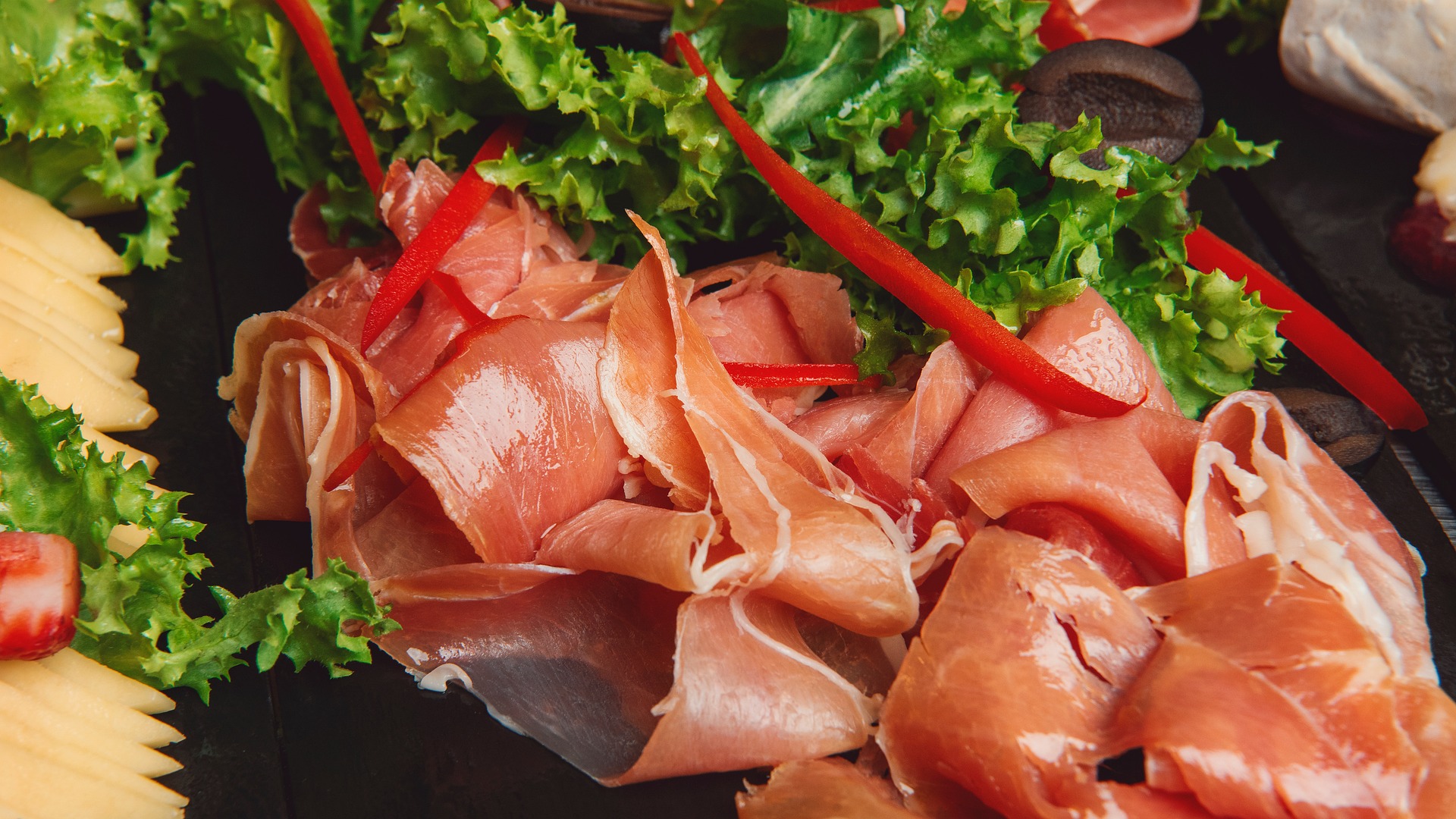
Jamón Ibérico — Made from Iberian black-hoofed pigs, with a higher proportion of intramuscular fat that produces a distinctive texture and a complex, nutty, slightly sweet flavor. Three quality tiers: de cebo (grain-fed), de cebo de campo (partly pasture-raised), and de bellota (acorn-fed, the highest category). The de bellota designation indicates pigs that have been raised in the dehesa (oak pasture) and fed entirely on acorns during the montanera season — the fat takes on a unique composition that is detectable in the flavor.
Jamón Ibérico de bellota is one of Spain’s great food products. Buying a small amount at a good charcutería and eating it on pan con tomate is a meal in itself. The Mercat de la Boqueria and the Mercat de Santa Caterina both have charcutería stalls with excellent jamón. La Boqueria’s tourist-facing stalls nearest the Las Ramblas entrance charge inflated prices — go deeper into the market.
Barcelona’s Markets
Mercat de la Boqueria
Barcelona’s most famous market and one of the most visited food markets in Europe. La Boqueria has been operating in some form since the 13th century, and the current iron-framed market hall on Las Ramblas dates to the 19th century. The market’s reputation is justified and its reality requires some navigation: the stalls near the Las Ramblas entrance are heavily tourist-oriented with inflated prices and are not where locals shop. Go deeper into the market — the back sections have genuine produce vendors, excellent meat and charcuterie stalls, and a fishmonger section that represents what the Mediterranean provides with exceptional clarity.
The bars and small restaurants inside La Boqueria — particularly El Quim de la Boqueria, a bar counter known for excellent eggs and market produce — are worth eating at, even though the market itself is crowded. Visit in the morning when the market is freshest and the tourist density is lower. Official market information at boqueria.barcelona.
Mercat de Santa Caterina
A market in the El Born neighborhood with a striking undulating tile roof designed by Enric Miralles. Less famous than La Boqueria and significantly less touristy — Santa Caterina serves its neighborhood genuinely, with excellent produce, fish, meat, and a good prepared food section. The scale is more manageable than La Boqueria and the experience more closely approximates what a functioning Barcelona market looks like. An excellent alternative to La Boqueria for visitors who want market culture without the tourist density.
Mercat de l’Abaceria (Mercat de Gràcia)
A covered market in the Gràcia neighborhood — the most authentically local of Barcelona’s major markets, serving the residents of one of the city’s most interesting neighborhoods. The food stalls are good; the surrounding neighborhood has excellent tapas bars and restaurants. Worth visiting if your Barcelona itinerary includes time in Gràcia, which it should.
Where to Eat by Neighborhood
El Born
Barcelona’s most food-forward neighborhood — a dense concentration of wine bars, pintxos bars, seafood restaurants, and contemporary Catalan cooking in a compact historic area. The streets around the Santa Caterina market and the Basílica de Santa Maria del Mar are excellent for both lunch and dinner. El Born has some of the city’s best natural wine bars and is where the more serious Barcelona food conversation tends to happen.
Barceloneta
The seafood neighborhood — the historic fishing district adjacent to the beach, still the best place in Barcelona for grilled fish, fideuà, suquet, and fresh shellfish. The tourist-facing restaurants directly on the beachfront are not the best options; the places on the interior streets of Barceloneta and around the market are more reliable. The Barceloneta Market fish stalls are a good reference point for what the sea is providing on any given day.
Gràcia
A village-like neighborhood within the city, with a distinct identity and an excellent food scene that caters primarily to its residents rather than visitors. Pintxos bars, Catalan tavernes, and casual wine bars fill the streets around the neighborhood’s plazas. One of the best areas in Barcelona for an evening meal without tourist pricing.
Eixample
Barcelona’s 19th-century grid neighborhood has the highest concentration of upscale restaurants in the city, including a cluster of destination restaurants on the streets around the Passeig de Gràcia. The Esquerra de l’Eixample (Left Eixample) has a strong bar and restaurant scene. This is also where many of Barcelona’s best pintxos bars are concentrated.
Las Ramblas: A Note
The restaurants directly on Las Ramblas — Barcelona’s most famous boulevard — are almost without exception tourist-facing and overpriced for their quality. La Boqueria market is worth visiting; the restaurants flanking the boulevard are not. Eat one street back in any direction for dramatically better food at lower prices.
Coffee and Breakfast in Barcelona
Barcelona’s breakfast culture is built around coffee and simple food. The café amb llet (coffee with milk, similar to a large flat white) is the standard morning drink. Paired with pan con tomate, a croissant, or a small pastry, this is what Barcelonans eat in the morning at the city’s countless neighborhood cafés.
The granjastand bakery tradition — café-bakery hybrids that serve coffee, pastries, and simple food from early morning — is characteristic of Barcelona and worth finding over the more internationally standardized coffee shop options that have proliferated in the tourist areas.
A note on coffee: asking for a cortado (a small coffee with a small amount of warm milk) is standard. A café solo is a straight espresso. The larger milk-heavy formats familiar from international chain coffee culture are available but not the culturally native option.
Wine and Drinks
Cava — Catalonia’s sparkling wine, made by the traditional method (same as Champagne) primarily from the Penedès wine region southwest of Barcelona. Cava ranges from inexpensive and cheerful to genuinely complex and age-worthy at the Reserva and Gran Reserva level. It is everywhere in Barcelona, reasonably priced, and an excellent aperitivo drink. For guidance on quality producers, Wine-Searcher covers the full Cava landscape with producer information and reviews.
Priorat and Montsant — Two of Catalonia’s most important red wine regions. Priorat, a small appellation in the mountains west of Tarragona, produces some of Spain’s most powerful and age-worthy wines from Garnacha and Cariñena grapes grown in llicorella (a schist and quartz soil unique to the region). At its best — from producers like Clos Mogador or Alvaro Palacios — Priorat is a world-class wine by any standard. Montsant, the larger appellation surrounding Priorat, produces wines of similar character at lower prices.
Vermut — The vermouth culture of Barcelona is one of the city’s great pleasures. Sunday vermut — a pre-lunch ritual of drinking chilled vermouth on ice with a slice of orange and an olive, often accompanied by olives, boquerones, and chips — is a Barcelona institution. Bars in the Gràcia and El Born neighborhoods are the best places to participate. Local vermouth producers include Yzaguirre and Miró, both of which make good rojo (red) and blanco (white) vermouths.
Practical Notes for Eating in Barcelona
Meal times — Catalans eat late. Lunch is from 2pm to 4pm. Dinner starts at 9pm and rarely before 8:30pm at a genuine restaurant. Showing up at a Barcelona restaurant at 7pm for dinner will result in an empty room. The kitchen may not even be open. Plan accordingly.
Menu del día — At lunch, most Barcelona restaurants offer a set menu (menu del día) of two or three courses plus bread, a drink, and dessert at a fixed price (typically €12–18). This is one of the best food values in Europe and how most working Barcelonans eat lunch. Ordering à la carte at the same restaurants at the same meal will cost two to three times more for equivalent food. The menu del día operates Monday through Friday at most places and occasionally on Saturday.
Reservations — Essential at destination restaurants. For casual tapas bars and pintxos spots, walk-in is the norm. Book through TheFork (Catalan: ElTenedor) for most Barcelona restaurant reservations.
Tipping — Not mandatory in Spain. Rounding up the bill or leaving small change is appreciated. A 10% tip at a mid-range restaurant where service has been attentive is generous by local standards.
For current restaurant recommendations across all categories and price ranges, Time Out Barcelona and the Barcelona section of Gambero Rosso are both reliable references updated regularly with new openings and current quality assessments.
👉 For full planning coverage of Barcelona — neighborhoods, logistics, what to see — see our Barcelona city guide. If you’re combining Barcelona and Madrid in the same trip, our Spain destination guide covers the full picture.