Our first trip to Europe was not carefully planned. We were younger, working with limited PTO, and found a discounted round-trip fare from Orlando to London over the Thanksgiving holiday — Thursday and Friday off meant five days total if we burned two vacation days. We booked it before we had a hotel, before we had a plan, and before we had any real sense of what we were getting into. We flew into London, stayed three nights, loved it completely, and then — on the Friday — took the Eurostar through the Channel Tunnel to Paris for a day trip via Gare du Nord.
The Paris day trip did not go well. What happened at Gare du Nord is a story we’ve told many times and written about separately. The short version is that we experienced firsthand why we now tell every first-time Europe traveler to be specifically careful in Paris in ways they don’t need to be in London, Edinburgh, or Barcelona. We came home from that trip with two very different memories: London, which exceeded every expectation we had, and Paris, which confirmed some of the warnings we’d half-dismissed before we went.
That first trip — the budget booking, the Thanksgiving window, the Eurostar adventure, all of it — taught us more about how to plan a European trip than any amount of advance research would have. This article is everything we know now that we wish we’d known then, written specifically for first-time travelers who are trying to figure out where to begin.
The Most Important Decision: Your Entry Point

The single most consequential decision in planning a first Europe trip is where you fly in. Most first-time visitors default to the obvious — London, Paris, Rome — without thinking carefully about what the flight actually involves, what connecting through a hub means in terms of energy expenditure, and whether the city they’ve chosen is actually the right starting point for the kind of trip they want.
Here is the principle we now apply to every Europe trip we plan, and the one we give to everyone who asks us for advice: choose the destination that your home airport can reach with the fewest connections. This sounds like obvious logistical advice. It is much more than that.
A first-time international traveler who flies from South Florida to a European city via one connection is arriving tired but functional. A first-time international traveler who flies South Florida → New York → London → Paris (because Paris was the dream destination) is arriving exhausted, disoriented, carrying luggage through multiple airport transitions, and spending the first day of their European trip recovering from the journey rather than experiencing the city. We have seen this ruin first Europe trips more reliably than almost any other single factor. The first layover you add doesn’t just add time — it adds stress, adds the possibility of missed connections, adds the physical cost of navigating an unfamiliar transit hub, and eats into the already limited energy reserves of someone crossing seven time zones for the first time.
From South Florida, Miami International (MIA) and Fort Lauderdale (FLL) both have direct transatlantic routes. American Airlines flies direct from Miami to London Heathrow, Madrid, Barcelona, and several other European cities. British Airways and Virgin Atlantic fly direct from Miami to London. These direct routes are worth a premium over a connecting itinerary — the money saved on a cheaper connecting flight is spent in energy and in the first day of your trip.
The cities directly reachable from South Florida without a connection — London, Madrid, Barcelona — happen to be among the finest possible entry points for a first Europe trip. This is fortunate. Start with what your airport gives you direct access to.
Where We Recommend Starting — And Why
London — Our First Choice for Most First-Timers

London is where we started and, after many subsequent European trips, we still consider it the best possible entry point for most first-time visitors from the United States. The reasons are partly practical and partly experiential.
The practical case: English is the language, the currency is straightforward, the Tube is the easiest major city metro system to navigate as a first-time visitor, and the cultural familiarity of a city that shares so much linguistic and historical heritage with America means the cognitive overhead of arrival is lower than anywhere else in Europe. You are not translating menus, not guessing at transit signs, not navigating currency confusion. You can focus entirely on the city.
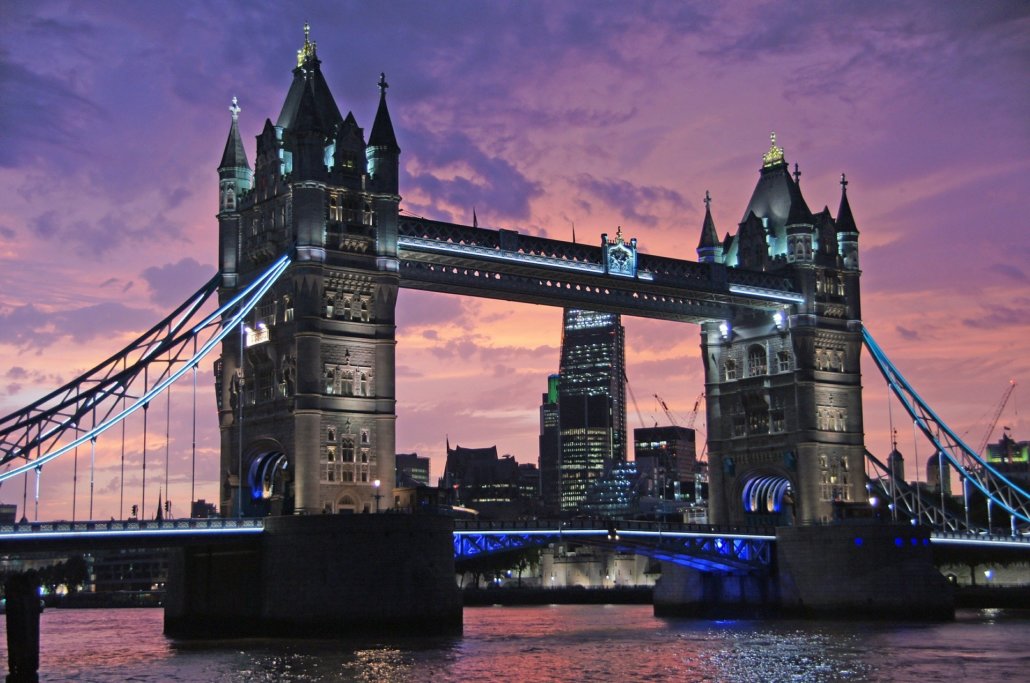
The experiential case: London is one of the greatest cities in the world, and it delivers immediately. The South Bank walk from Tower Bridge to Tate Modern, Borough Market, the National Gallery (free), Westminster Abbey, the Tower of London — these are experiences of genuine world-class quality that reward first-time visitors without requiring any particular cultural preparation. And London is a city that reveals new layers on every subsequent visit; starting here doesn’t exhaust it, it introduces it.
We stayed three nights on that first Thanksgiving trip and found it inadequate. We have been back multiple times since and still find new things. If you’re going for the first time with 8–11 nights total, we’d suggest three nights in London minimum, ideally four, before moving on. See our London City Guide for the full breakdown.
Barcelona — The Best Alternative Entry Point

If London doesn’t fit your routing or your interests, Barcelona is our second recommendation for a first Europe trip — and for some travelers, it’s actually the better starting point. The combination of Gaudí’s architecture (the Sagrada Família alone justifies the flight), the Gothic Quarter, La Boqueria, and the beaches makes Barcelona one of the most immediately rewarding cities in Europe for a first visit. The food is extraordinary, the weather is reliably better than London, and the city’s energy is unlike anything available in northern Europe.
Barcelona is also directly reachable from Miami on several carriers and is a natural gateway to Spain — from there, Madrid is 2.5 hours by high-speed train, Seville is 5.5 hours, and the rest of the country opens up efficiently. See our Barcelona City Guide for everything you need.
Edinburgh — The Underrated First Trip

We mention Edinburgh specifically because it surprises first-time visitors more than almost any other European city. Most Americans don’t put Scotland on the first-trip list — that’s a mistake. Edinburgh is one of the most dramatically situated and most completely atmospheric cities in Europe, the English language is spoken (with an accent worth listening to), and the combination of the castle, the Royal Mile, Arthur’s Seat, and the general intensity of a Scottish city with centuries of layered history gives a first-time European visitor everything they came for. Flights from the US east coast connect through London or Dublin easily. Worth considering for anyone who wants something more distinctive than the standard first-trip circuit.
See our Edinburgh City Guide for the full picture.
Cities We’d Steer First-Timers Away From Starting With
This section will generate some disagreement, and we’re comfortable with that. These are honest assessments based on our experience of what works for first-time visitors and what doesn’t.
Paris — Not as a Starting Point (And Take the Safety Warning Seriously)
Paris is the most mythologized destination in Europe and, for first-time visitors who arrive with the expectations that mythology creates, frequently the most disappointing. The city has genuine magnificence — the Louvre, the Musée d’Orsay, Notre-Dame, the Marais — but it also has specific safety considerations that catch unprepared visitors, particularly around major transit hubs. Our experience at Gare du Nord on that first Thanksgiving trip is not an isolated story; it is one of the most commonly reported first-time Paris experiences among American tourists.
We are not saying don’t go to Paris. We are saying: don’t start with Paris on your first European trip, research the specific safety considerations before you go (particularly around Gare du Nord and the northern arrondissements), and arrive with adjusted expectations rather than the romanticized image the city has been given by a century of films and literature. We’ve written about this in detail — see our full Paris piece.
Nice — Overhyped for What It Delivers
Nice is frequently on first-Europe itineraries as a glamorous French Riviera destination. The reality is a city that, outside the old town and the proximity to Monaco, is somewhat disappointing — there are grittier and less safe areas than the tourist brochures suggest, the beach is pebbled rather than sandy, and the general sense of a beautiful location somewhat undermined by its surroundings is difficult to shake. If you want the south of France, the day trips from Nice to Monaco and Èze are excellent, but we wouldn’t make Nice itself a first-Europe destination. See our honest Nice assessment.
Dresden — Little to Reward the First-Time Visitor
Dresden appears on some European itinerary lists because of its Baroque reconstruction and its WWII history. Both are real; neither is enough to justify prioritizing it over the cities we’ve listed above on a first trip. The rebuilt city center has a slightly artificial quality — the reconstruction after the firebombing of 1945 is impressive as an engineering achievement but gives the historic center a newness that the medieval originals of Edinburgh, Bath, or York don’t have. Interesting for a specialist interest in German history; not the right starting point for a first-time European trip.
How Long Do You Actually Need?
Our first Europe trip was five days total — three nights in London, one day trip to Paris. We came home knowing we had scratched the surface of London and had a complicated relationship with Paris. Five days is not enough for a first Europe trip if you want to do it properly.
Most of our Europe trips now run 8–11 nights total, and this is the window we recommend for first-timers. Here’s why: the transatlantic flight is 8–9 hours from South Florida to London or Barcelona. Jet lag on the eastbound crossing typically costs the first day of the trip — you arrive in the morning having slept poorly on the plane, pushed through to local bedtime, and wake up on day two actually ready to engage with the city. On a 5-day trip, you’ve lost 20% of your time to jet lag. On a 10-day trip, you’ve lost 10% and have real days left to explore.
Our suggested itinerary structures for different trip lengths:
8 Nights: Two Cities
Pick two cities with a direct rail or short flight connection. London and Edinburgh (4.5 hours by train) is our favorite two-city combination — two extraordinary cities, both English-speaking, connected efficiently by the East Coast Main Line. London and Barcelona (2.5-hour flight) is the best warm-weather combination. Four nights in each gives enough time to do both properly without feeling rushed.
10 Nights: Two or Three Cities
London, Paris, and Barcelona in 10 nights is the classic first-Europe itinerary — but given our Paris reservations, we’d substitute Edinburgh or Amsterdam for Paris and make it London, Amsterdam, and Barcelona, or London, Edinburgh, and Barcelona. The rail and air connections work efficiently; the variety of experiences (English-language city, canal city, Mediterranean city) gives the broadest possible first-Europe picture.
11 Nights: The Sweet Spot
Eleven nights allows three solid cities at three to four nights each with a day buffer. Our suggested first-Europe itinerary for 11 nights: London (4 nights, including a day trip to Bath or Canterbury — both reachable in under 90 minutes), Edinburgh (3 nights), Barcelona (4 nights). This covers England, Scotland, and Spain; requires one flight in the middle (London to Edinburgh is 1.5 hours); and gives genuine depth at each destination rather than a rushed transit circuit.
The Logistics That First-Timers Most Commonly Get Wrong
Underestimating Jet Lag
Flying east across the Atlantic shifts your body clock by 5–7 hours depending on your origin. Most first-time international travelers significantly underestimate how this feels in practice. The eastbound crossing is harder than westbound; arriving in London at 7am local time after a red-eye flight when your body thinks it’s 2am is not a pleasant state in which to navigate a new city. Our protocol: book the earliest possible flight (maximizing daylight hours on arrival day), stay awake until 9–10pm local time on day one no matter how tired you are, go to bed at a normal local hour, and wake up on day two largely adjusted. Don’t plan ambitious sightseeing for arrival day.
Over-Packing the Itinerary
First-time Europe travelers frequently try to visit five or six cities in ten days — a schedule that turns a vacation into a logistics exercise and leaves you seeing nothing properly. The math: a city every two nights means one full day of sightseeing per city (the first day is transit and arrival, the second day is sightseeing, the third morning is departure). That’s one day in Paris. One day in Rome. One day in Amsterdam. You will come home having been to six cities and having genuinely experienced none of them. Three cities in ten nights, done thoroughly, is infinitely more rewarding than six cities rushed.
Booking Flights with Tight Connections
When booking the transatlantic leg and any connections within Europe, build in more connection time than the booking system suggests is adequate. A one-hour connection at Heathrow when your incoming flight is delayed by 45 minutes is a missed connection and a ruined first day. For transatlantic arrivals connecting to a European flight, we allow a minimum of two hours at the connecting airport — three hours if the connecting airport is Heathrow (which is large enough to make a 90-minute connection genuinely risky). Pay the extra £30 for the comfortable connection. You will not regret it.
Not Getting Travel Insurance
A first international trip is exactly the circumstance for which travel insurance exists. Missed connections, flight cancellations, lost luggage, medical emergencies — all of these are significantly more stressful on a first international trip than on a fifteenth. Travel insurance is inexpensive relative to the total trip cost and provides meaningful protection against the scenarios most likely to ruin a first-time international trip. Buy it when you book, not as an afterthought.
Our Actual First-Trip Recommendation

If you asked us today where a first-time European traveler from South Florida should go, and they have ten nights available, this is what we’d say:
Fly direct from Miami to London Heathrow. Four nights in London — the South Bank walk, the National Gallery, Borough Market, Westminster Abbey, one evening in Shoreditch. Day trip to Bath on day three (1.5 hours by train from Paddington — the Roman Baths, the Royal Crescent, back in time for dinner in London). Then fly or take the train to Edinburgh for three nights — the Royal Mile, the castle, Arthur’s Seat at dawn, a whisky bar in the evening. End with three nights in Barcelona — the Sagrada Família (book in advance), the Gothic Quarter, La Boqueria, the beach.
That itinerary — London, Edinburgh, Barcelona — covers England, Scotland, and Spain; gives you the medieval, the Georgian, and the Mediterranean in a single trip; keeps you in English-speaking cities for the first seven nights while you adjust to the rhythm of international travel; and ends with Barcelona’s warmth and light as the final impression. Total internal flights: one (Edinburgh to Barcelona, approximately two hours). Total cost: manageable if booked in advance.
It is not the itinerary everyone would choose. It is the one that, based on our experience and the experience of the many first-time Europe travelers we’ve talked with over the years, delivers the most complete and the most rewarding first picture of the continent.
Plan it carefully, book early, build in connection time, give each city three or four nights, and go.
Start Planning: Our Europe Destination Guides
We have first-hand coverage of the cities mentioned in this article. Start with the destinations that match your itinerary:
- London City Guide — the Tower, the National Gallery, Borough Market & the world’s most layered city
- Edinburgh City Guide — the Castle, the Royal Mile, Arthur’s Seat & Scotland’s extraordinary capital
- Barcelona City Guide — Gaudí, the Gothic Quarter, La Boqueria & a city we keep returning to
- Amsterdam City Guide — the canals, the Rijksmuseum, De Pijp & a city that rewards slow exploration
- Bath City Guide — Roman Baths, Georgian architecture & England’s most elegant day trip from London
- United Kingdom Travel Guide — England, Scotland, Wales & where to start
- Spain Travel Guide — Barcelona, Madrid, Seville, Granada & how to plan your first visit